


A headshot package for a large corporate team is a structured photography service that delivers consistent, retouched portraits across an entire workforce through a single contracted engagement. The industry term for this service is bulk headshot photography, and it covers everything from onsite session logistics to file delivery formats and new-hire reshoot policies. For corporate managers and HR professionals, getting this right means protecting brand alignment, controlling costs, and keeping your team’s public image sharp across LinkedIn, the company website, and internal directories. Metroplex Headshots works with organizations of all sizes to make this process predictable and efficient.
What headshot package works best for your corporate team size?
Team size is the single biggest factor in choosing the right corporate team headshots format. The wrong choice costs you money and pulls employees away from their work for far longer than necessary.
Onsite photography is preferred for teams of 20 or more. Moving 50 people to a studio costs a full day of productivity, while an onsite session costs roughly 10 minutes per employee. That difference is not trivial when you are coordinating schedules across departments.
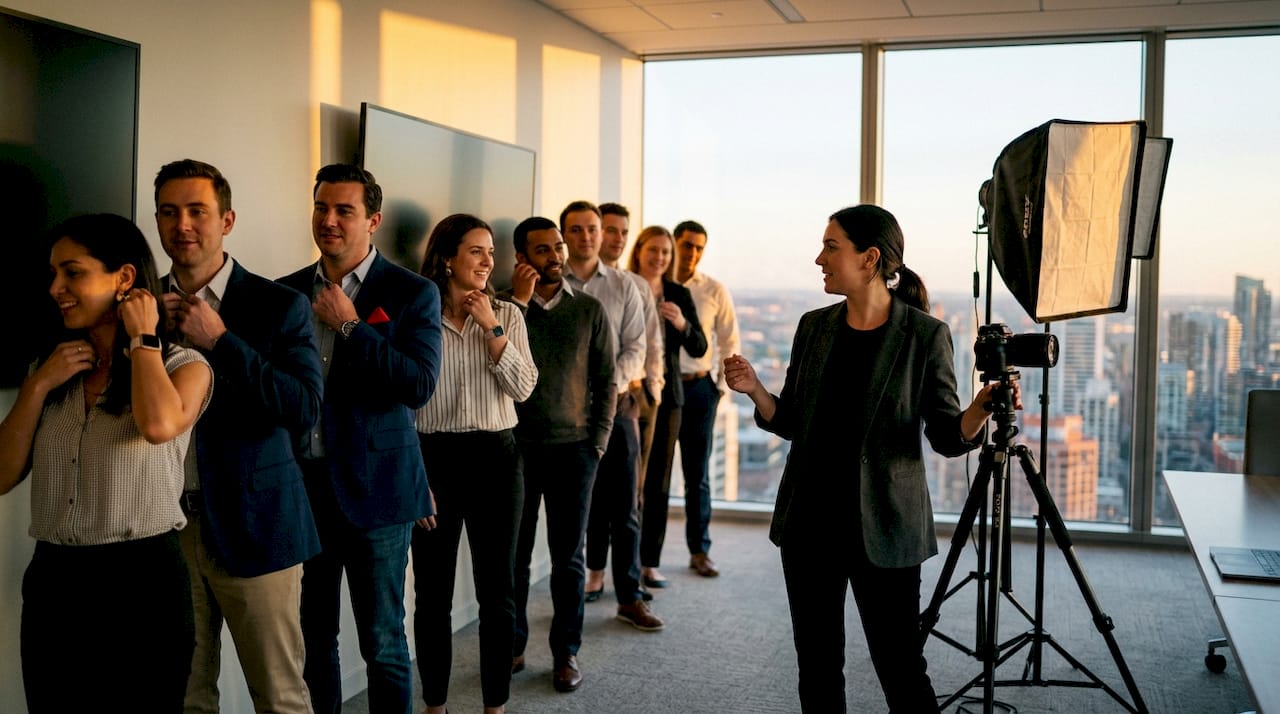
Studio sessions make sense for teams of 10 or fewer, especially when your brand calls for premium controlled backgrounds or specific lighting setups that are difficult to replicate in an office environment. Executive headshots for teams at the leadership level often fall into this category, where the investment in a controlled environment pays off in image quality and executive presence.
Here is a quick reference for matching your team size to the right format:
| Team size | Recommended format | Key advantage |
|---|---|---|
| 1–10 employees | Studio session | Premium environment, controlled lighting |
| 11–30 employees | Onsite or hybrid | Reduced travel time, moderate volume |
| 31–100 employees | Onsite, batch scheduling | Minimal productivity loss |
| 100+ employees | Onsite, multi-day | Maximum efficiency, dedicated editing support |
Pro Tip: If your team spans multiple office locations, plan separate onsite sessions at each site rather than requiring employees to travel. This keeps your per-person time low and your attendance rate high.
For distributed teams, a company-wide headshot guide can help you coordinate across locations without sacrificing visual consistency.
How does pricing work for a large team photo package?
Large business photography pricing follows a per-seat model with volume discount thresholds. Per-seat pricing typically ranges from $75 to $350 depending on team size, with discounts kicking in at 20, 50, and 100 employee thresholds. A team of 1–10 employees generally pays $200–$350 per seat, while a team of 76–200 employees can expect $75–$125 per seat.
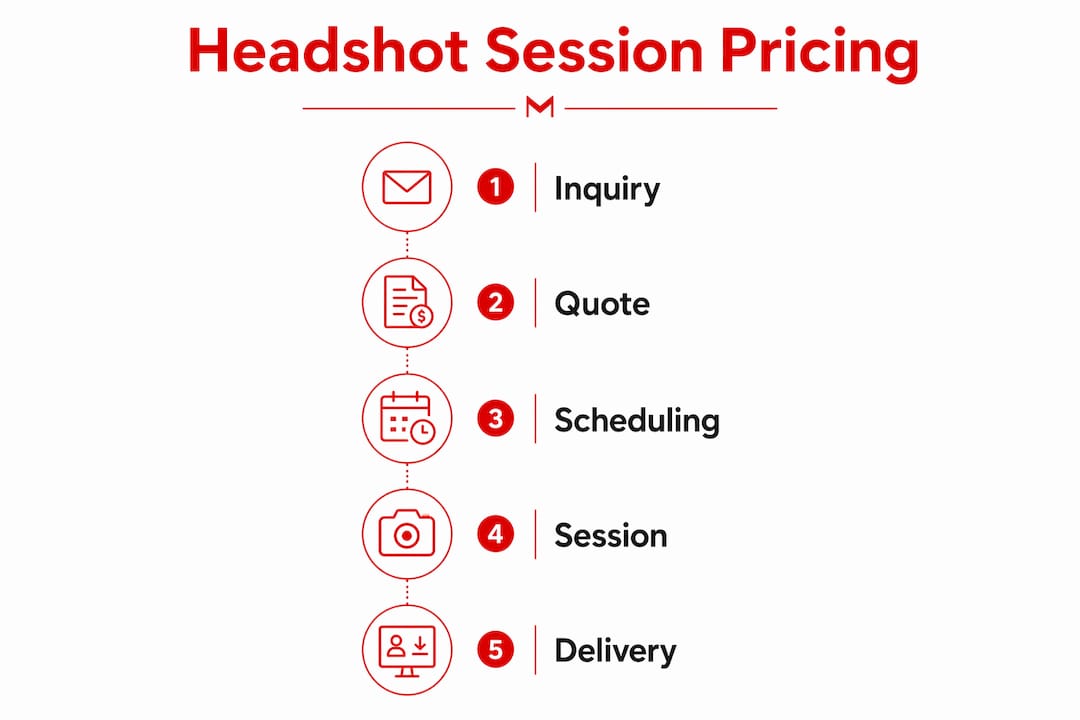
Large team sessions overall typically run from $7,500 to $25,000 depending on size and complexity, with multi-day onsite shoots and dedicated editing support included at the higher end. That range reflects the real cost of professional production at scale, not just the photographer’s time.
Beyond the base rate, your quote should account for these additional fee categories:
- New-hire reshoots: Expect $150–$250 per seat for personnel added within 90 days of the main shoot.
- Rush delivery: Same-day or 24-hour turnaround typically carries a premium above standard delivery.
- Retouching: Some packages include basic retouching; others charge per image for advanced work.
- Licensing: Confirm whether your contract covers unlimited internal use or restricts file distribution.
Contract terms matter as much as the price itself. Standard corporate agreements include net-30 payment terms, cancellation clauses, and reshoot policies. Typical cancellation fees run 50% if cancelled 14 days before the session and 100% within 48 hours. Understanding these terms before you sign protects your budget if schedules shift.
Pro Tip: Ask for a line-item quote rather than a flat package price. A detailed breakdown makes it easier to compare bids and identify where you can negotiate without cutting quality.
How do you plan and execute a large corporate headshot session?
Execution is where most large team photo packages succeed or fail. The planning phase sets the conditions for everything that follows.
Pre-shoot preparation
Start with a standardized visual brief. A clear visual brief covering lighting mood, background color, wardrobe guidelines, crop style, and desired expression reduces on-set variation and protects brand consistency across every portrait. Share this brief with employees at least one week before the session so they arrive prepared.
Use scheduling software to assign each employee a specific time slot. Batch shooting in 10-minute intervals keeps the line moving and prevents bottlenecks. Send calendar invites with wardrobe reminders attached. For guidance on what employees should wear and how to prepare, a professional headshot prep guide covers the details that make a real difference in final image quality.
Session day execution
Run the session in strict order. Assign a point of contact from your HR team to manage the queue and handle last-minute schedule changes. The photographer should not be managing logistics. That division of responsibility keeps the shoot moving at pace.
Same-day preview delivery within 2 hours is a key differentiator in mid-market corporate photography. Clients who need images for product launches or press releases cannot wait a week. Confirm this capability with your vendor before booking.
Post-production workflow
Retouching standards should be defined in writing before the shoot. Specify whether you want skin smoothing, background cleanup, color correction, or all three. Consistent retouching across every image is what separates a professional company portrait package from a collection of individual photos. Confirm file delivery formats, typically high-resolution JPEGs for print and web-optimized versions for digital use, and agree on a delivery timeline.
High-quality images do more than fill a directory. Professional photos on your website directly affect how visitors perceive your brand’s credibility and trustworthiness.
How do you maintain headshot consistency as your team grows?
Brand alignment does not stop after the main shoot. Teams grow, people leave, and company branding evolves. Without a plan for ongoing updates, visual drift sets in and your team’s public image becomes inconsistent.
The most effective approach is to treat your headshot library as a living asset rather than a one-time project. Here is how to manage it:
- Establish a reshoot policy. Set a contracted per-seat rate for new hires who join within 90 days of the main session. This keeps the visual standard consistent without requiring a full rebooking.
- Schedule annual or biannual refresh sessions. A standing appointment each year prevents the library from aging out of sync with your brand.
- Maintain your visual brief as a reference document. Every new session should reference the same lighting, background, and crop specifications used in the original shoot. Standardizing employee headshots company-wide requires this kind of documented consistency.
- Consider a hybrid production model. Hybrid headshot production combines traditional photography for leadership and AI-assisted images for large or distributed teams. This model enables faster, more cost-effective updates for fast-growing organizations without sacrificing quality at the top.
- Build a centralized headshot library. Store all approved images in a shared drive with clear naming conventions. HR and marketing teams can pull current images without hunting through email threads.
The goal is a system, not a single event. Companies that treat team branding photography as an ongoing process maintain a stronger, more credible public image than those who schedule shoots reactively.
Key Takeaways
A well-structured headshot package for a large corporate team requires matching your session format to team size, locking in clear contract terms, and building a system for ongoing consistency rather than treating photography as a one-time event.
| Point | Details |
|---|---|
| Match format to team size | Use onsite sessions for 20+ employees to avoid productivity loss; studios suit smaller groups. |
| Understand per-seat pricing | Volume discounts apply at 20, 50, and 100 employee thresholds, ranging from $75 to $350 per seat. |
| Lock in contract terms | Confirm net-30 payment, cancellation fees, and reshoot policies before signing any agreement. |
| Standardize with a visual brief | Define lighting, background, wardrobe, and crop style in writing before every session. |
| Plan for ongoing updates | Build a reshoot policy and annual refresh schedule to prevent visual drift over time. |
What I have learned from running large team headshot projects
I’m Traci Schowmeyer, and after working through dozens of large-scale corporate headshot projects, the lesson that surprises most managers is this: the photography itself is rarely the hard part. The hard part is operational discipline.
The teams that get the best results are the ones who treat the shoot like a production, not a photo day. They assign an internal coordinator. They send wardrobe guidance two weeks out, not two days. They define retouching standards before the photographer arrives, not after they see the proofs.
The single most underrated element is same-day preview delivery. When employees can see a selection of their images within two hours, approval rates go up and reshoot requests go down. People feel respected, and the project closes faster. Vendors who cannot offer this are not built for corporate volume work.
I also push back hard on the idea that onsite shoots compromise quality. For teams over 30, onsite is almost always the right call. The productivity math is clear, and a skilled photographer brings the studio to you. The background, the lighting, the consistency. All of it travels.
Finally, do not skip the contract review. Cancellation terms, reshoot fees, and file licensing details look like fine print until something goes wrong. Read every clause. A well-written contract protects both sides and sets the tone for a professional working relationship.
— Traci Schowmeyer
Metroplex Headshots for your large team photography needs
Metroplex Headshots specializes in corporate headshot packages built for organizations that need consistent, professional results across large teams without the logistical headaches. From onsite session coordination to standardized retouching and fast file delivery, every project is managed with clear pricing and defined deliverables from the start.
Whether you are planning a first-time company-wide shoot or refreshing an existing headshot library, Metroplex Headshots brings the structure and experience to make it work. Explore the corporate photography workflow to see how projects move from brief to delivery, and reach out to discuss a package built for your team’s size and timeline.
FAQ
What is a headshot package for a large corporate team?
A headshot package for a large corporate team is a contracted photography service that delivers consistent, retouched portraits for an entire workforce through a single organized engagement, typically with volume pricing and onsite session options.
How much does a large team headshot session cost?
Large team sessions typically range from $7,500 to $25,000 depending on team size and complexity, with per-seat rates dropping from $200–$350 for small groups to $75–$125 for teams of 76–200 employees.
Should large teams shoot onsite or at a studio?
Onsite photography is the better choice for teams of 20 or more because it eliminates travel time and limits productivity loss to roughly 10 minutes per employee rather than a full day.
How do companies handle new-hire headshots after the main session?
Most corporate headshot contracts include a reshoot clause for new hires, with per-seat fees typically ranging from $150 to $250 for personnel added within 90 days of the original shoot.
How often should a company update its team headshots?
Annual or biannual refresh sessions are the standard practice for maintaining visual consistency, with a standing visual brief used to match new portraits to the existing headshot library.

