


Headshot photographer selection criteria are the specific standards used to evaluate whether a photographer can deliver professional images that strengthen your personal brand and business image. Choosing the right photographer is not a matter of finding the cheapest option or the one with the most Instagram followers. The decision requires a structured evaluation of technical skill, artistic consistency, communication habits, and practical logistics. Metroplex Headshots defines this process as identifying a photographer whose work, process, and style align with the professional image you want to project. Get this decision right, and your headshot becomes a digital handshake that opens doors before you say a word.
What technical and artistic qualities distinguish a top headshot photographer?
The most reliable headshot photographer selection criteria start with technical competence. A photographer who cannot control light, depth, and focus will produce images that undermine your credibility rather than build it.
Aperture and focal length
Professional headshots require apertures between f/2.8 and f/5.6 to achieve sharp subject focus with a softly blurred background. That background separation is what gives headshots their clean, professional look. Focal lengths in the 85–135mm range compress facial features naturally and avoid the distortion that wider lenses create. A photographer who shoots headshots at 35mm or uses a kit lens is working outside industry standards.
Lighting that sculpts, not flattens
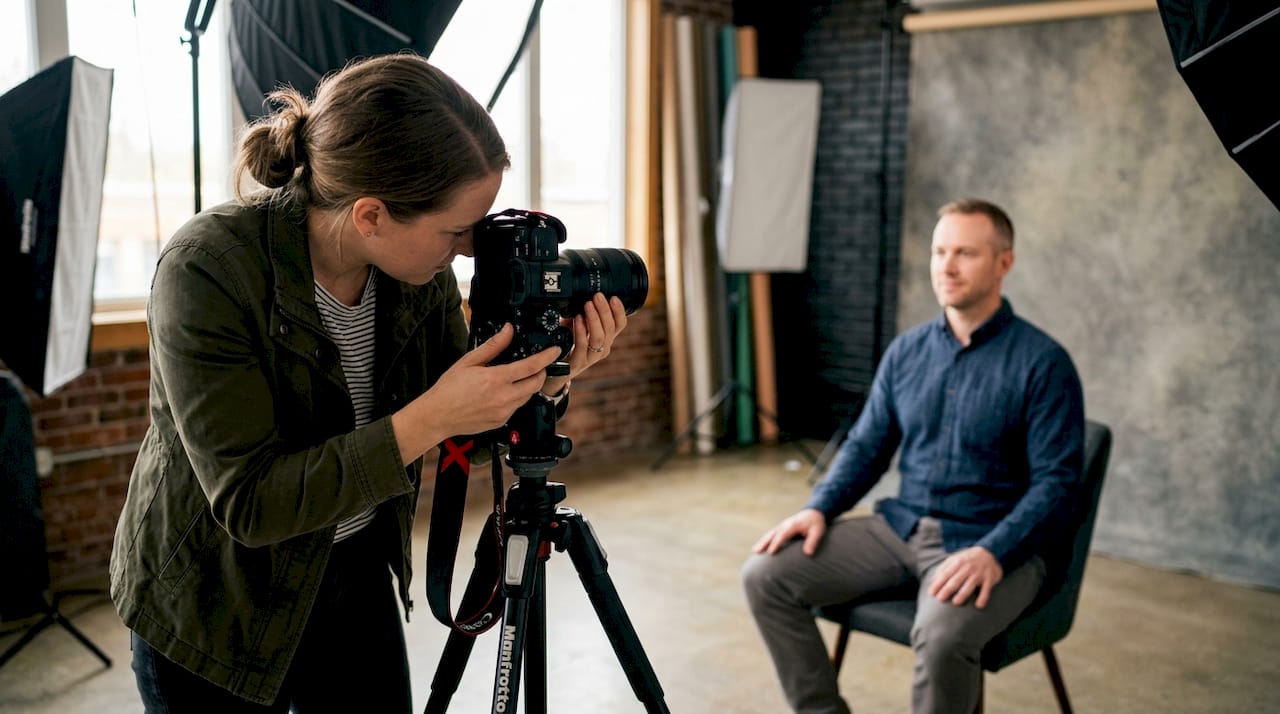
On-camera flash produces flat, one-dimensional lighting that removes depth from the face. Top photographers use off-camera strobes, softboxes, or natural window light to sculpt facial features and create dimension. The difference is visible immediately. Flat lighting makes a subject look like a passport photo. Dimensional lighting creates presence.
The eyes rule everything
Sharp focus on the eyes is non-negotiable. A headshot where the eyes are soft loses impact regardless of how well everything else is executed. The eyes are where viewers connect with the subject. A photographer who consistently nails eye focus in their portfolio has mastered the single most important technical skill in headshot photography.
Style and background choices
Neutral or slightly warm tones with clean backgrounds increase perceived professionalism and brand alignment. Studio, outdoor, and in-office settings each serve different brand identities. A corporate attorney benefits from a clean studio background. A creative director may want an environmental shot that reflects their workspace. Review headshot style examples before your consultation so you can communicate your vision clearly.
Pro Tip: Ask any photographer you are considering to show you five consecutive images from a single session, not five cherry-picked favorites from five different shoots. Consecutive images reveal consistency, which is the real measure of skill.
- Aperture f/2.8–f/5.6 for subject sharpness and background blur
- Focal length 85–135mm for natural facial proportions
- Off-camera lighting for dimensional, sculpted results
- Clean or contextually relevant backgrounds for brand alignment
- Consistent eye focus across every image in the session
How do you evaluate a photographer’s portfolio and client feedback?
Portfolio evaluation is the second pillar of any solid photographer checklist. A strong portfolio is not a collection of the photographer’s ten best images taken over five years. It is evidence of repeatable, consistent quality.
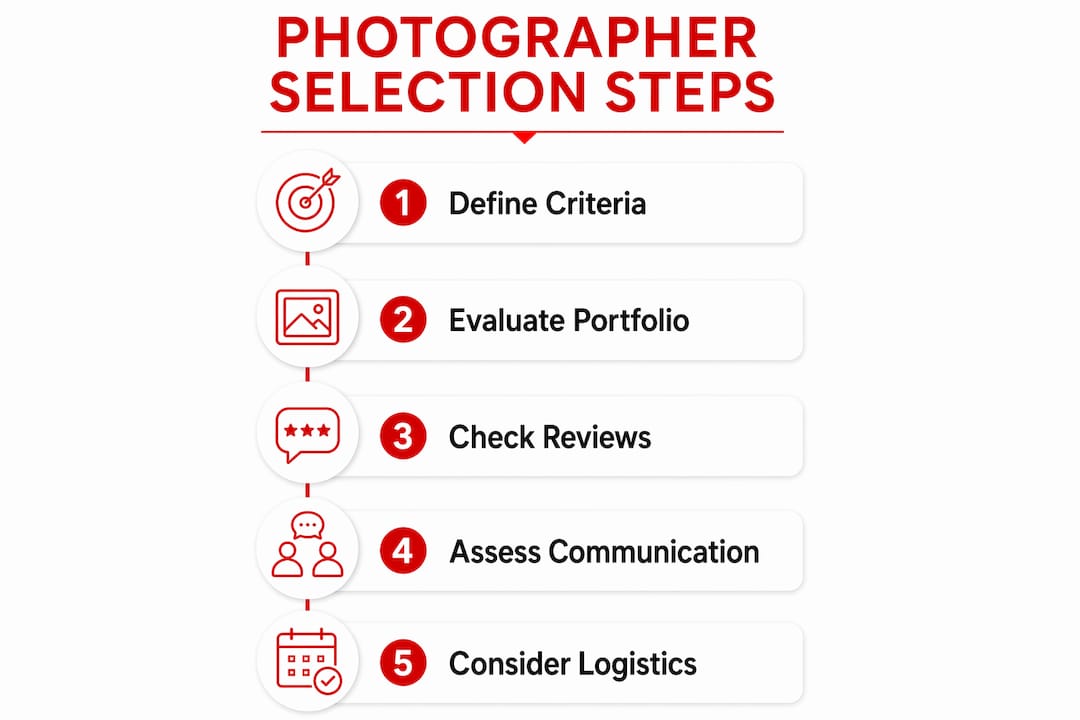
Consistent portfolio quality across images builds client confidence more than sheer volume of photos. A photographer who shows mastery of one lighting setup and one posing approach across an entire gallery is more trustworthy than one who posts wildly different styles with unpredictable results. Visual drift between images signals that the photographer has not yet found a reliable process.
When reviewing a portfolio, look beyond social media. Instagram grids are curated highlights, not representative samples. Request a full gallery from a recent session. Pay attention to whether the lighting, background quality, and expression coaching remain consistent from the first image to the last.
Client testimonials reveal what the portfolio cannot. A photographer may produce technically sound images but deliver a stressful experience that leaves clients tense in front of the camera. Look for reviews that mention how the photographer made the subject feel, not just how the photos turned out. Comfort during the session directly affects the quality of expressions in the final images.
Red flags to watch for during portfolio review:
- Significant variation in lighting quality between sessions
- Soft or missed eye focus in more than one or two images
- Backgrounds that change style randomly without a clear brand rationale
- No client testimonials or reviews on any platform
- Social media presence built entirely on behind-the-scenes content with few finished images
Pro Tip: Search the photographer’s name alongside the word “review” on Google rather than relying only on testimonials posted on their own website. Third-party reviews are harder to filter and more reliable.
For executives evaluating photographers for team or corporate use, the corporate headshot vendor selection process adds additional criteria around scalability and brand consistency across multiple subjects.
What professional traits and communication skills matter when choosing a headshot photographer?
Technical skill gets you sharp images. Communication skills get you images that actually look like you at your best. The two are equally important when evaluating how to select a headshot photographer.
Clear communication and responsiveness are strong indicators of photographer professionalism. A photographer who takes three days to answer a basic inquiry will likely be slow to deliver your final images and unresponsive when you have questions about retouching. Responsiveness before the session predicts the entire client experience.
The best photographers guide you through posing and expression coaching during the shoot. This is a skill that goes beyond technical photography. A photographer who simply points a camera and fires the shutter without directing you will capture how you look when you are uncertain and self-conscious. A photographer who coaches you into natural expressions captures how you look when you are confident and engaged. That difference shows up clearly in the final images.
Ask about delivery timelines and retouching policies before you book. Standard professional turnaround for retouched images runs one to two weeks. Photographers who promise same-day delivery often skip meaningful retouching. Photographers who quote six to eight weeks without explanation may have workflow problems. Clarity on these details before the session prevents frustration afterward.
Pro Tip: During your initial consultation, notice whether the photographer asks questions about your brand, your industry, and how you plan to use the images. A photographer who asks nothing and jumps straight to pricing is not thinking about your brand alignment. One who asks thoughtful questions is.
Wardrobe also plays a role in how well the session goes. Pairing the right photographer with the right outfit creates a cohesive result. Corporate headshot wardrobe guidelines can help you prepare before your session so the photographer has the best possible material to work with.
How do pricing, turnaround, and logistics influence your decision?
Practical factors matter in any photographer evaluation, but they should inform your decision rather than drive it. Price-only decisions are the most common mistake professionals make when choosing a headshot photographer.
| Factor | What to look for | Red flag |
|---|---|---|
| Session length | 30–60 minutes for a focused headshot session | Sessions under 20 minutes with no explanation |
| Retouching | Included or clearly priced retouching policy | No mention of retouching in the package |
| Turnaround | 1–2 weeks for final retouched images | Vague delivery timelines or “when I get to it” responses |
| Location | Studio, on-site, or outdoor options available | Only one rigid option with no flexibility |
| Pricing transparency | Clear package pricing with deliverables listed | Hourly rates with no estimate of total cost |
A photographer who charges significantly less than the market rate is usually cutting corners somewhere. That may mean fewer retouched images, a shorter session with less time for expression coaching, or equipment that cannot produce the lighting quality your brand deserves. The cost of a poor headshot is not just the session fee. It is the cost of every first impression that image makes on your behalf.
Session length is a practical logistics factor that directly affects quality. Professional headshot sessions typically last 30–60 minutes, which is enough time to try multiple looks, adjust lighting, and coach natural expressions without fatiguing the subject. Sessions shorter than that rarely allow enough time to get past the initial stiffness most people feel in front of a camera.
Location flexibility matters for professionals who need on-site sessions at their office or prefer a specific environmental backdrop. Confirm whether the photographer brings portable lighting equipment for on-site work. A photographer who relies solely on ambient light in an unfamiliar office will produce inconsistent results. Review professional headshot session preparation to understand what a well-run session looks like from the client side.
Key Takeaways
The most effective headshot photographer selection combines technical evaluation, portfolio consistency, communication quality, and practical logistics to produce images that genuinely represent your brand.
| Point | Details |
|---|---|
| Technical standards matter | Look for aperture f/2.8–f/5.6, focal length 85–135mm, and off-camera lighting as baseline requirements. |
| Consistency beats quantity | A portfolio showing repeatable quality across full sessions is more reliable than a handful of standout images. |
| Communication predicts experience | Responsiveness and expression coaching before and during the session directly affect the final result. |
| Price reflects value | Below-market pricing usually means fewer retouched images, shorter sessions, or weaker equipment. |
| Session length affects quality | A 30–60 minute session gives enough time for coaching, multiple looks, and natural expressions. |
What I’ve learned about choosing the right photographer for your brand
I’m Traci Schowmeyer, and after working in professional headshot photography for years, the mistake I see most often is professionals treating their headshot session like a commodity purchase. They sort by price, book the cheapest option, and then wonder why the images feel flat and generic.
The photographers who consistently produce standout work share one trait: they treat the session as a collaboration, not a transaction. They ask about your industry, your audience, and the emotion you want to convey. They coach you through the session rather than simply pointing a camera. That collaborative approach is the secret sauce of professional branding photography, and you can identify it before you book by paying attention to how a photographer communicates during the inquiry process.
Flashy social media accounts with inconsistent image quality are a warning sign I have learned to take seriously. A photographer with 50,000 followers but wildly variable lighting and focus quality across their feed has prioritized marketing over craft. A photographer with a modest following and a gallery of consistently excellent images has prioritized the work. Choose the work.
The other thing I tell every professional I work with: your headshot is not just a photo. It is an extension of your brand. Every time someone searches your name, visits your LinkedIn profile, or reads your email signature, that image is doing work on your behalf. Invest in it accordingly.
— Traci Schowmeyer
Metroplex Headshots: professional headshots built around your brand
Metroplex Headshots applies every criterion covered in this guide to every session. Portfolio consistency, dimensional lighting, expression coaching, and clear communication are built into the process, not offered as upgrades.
Whether you are a solo professional building your personal brand or an executive representing a larger organization, Metroplex Headshots delivers retouched images that reflect who you are and what your business stands for. Sessions are structured to give you enough time for multiple looks and genuine expression coaching. Explore headshot photo examples to see the quality and consistency you can expect, then connect with Metroplex Headshots to discuss a session that fits your brand.
FAQ
What aperture should a headshot photographer use?
Professional headshots require an aperture between f/2.8 and f/5.6 to achieve sharp subject focus and a blurred background. This range is the industry standard for separating the subject from the background cleanly.
How long should a professional headshot session last?
A professional headshot session typically lasts 30–60 minutes. That window allows time for lighting adjustments, multiple wardrobe looks, and expression coaching without fatiguing the subject.
What is the biggest red flag in a photographer’s portfolio?
Inconsistent lighting quality and soft eye focus across images are the clearest signs that a photographer lacks a reliable process. Consistent quality across a full session gallery is a stronger indicator of skill than a few standout images.
How do I know if a photographer is a good communicator?
Responsiveness during the inquiry stage is the most reliable signal. A photographer who answers questions promptly, asks about your brand goals, and explains their process clearly before the session will deliver a better experience and better results.
Should I choose a photographer based on price?
Price should inform your decision but not drive it. Below-market rates often reflect shorter sessions, fewer retouched images, or equipment limitations that affect final quality. Evaluate value by comparing what is included in the package, not just the total cost.

