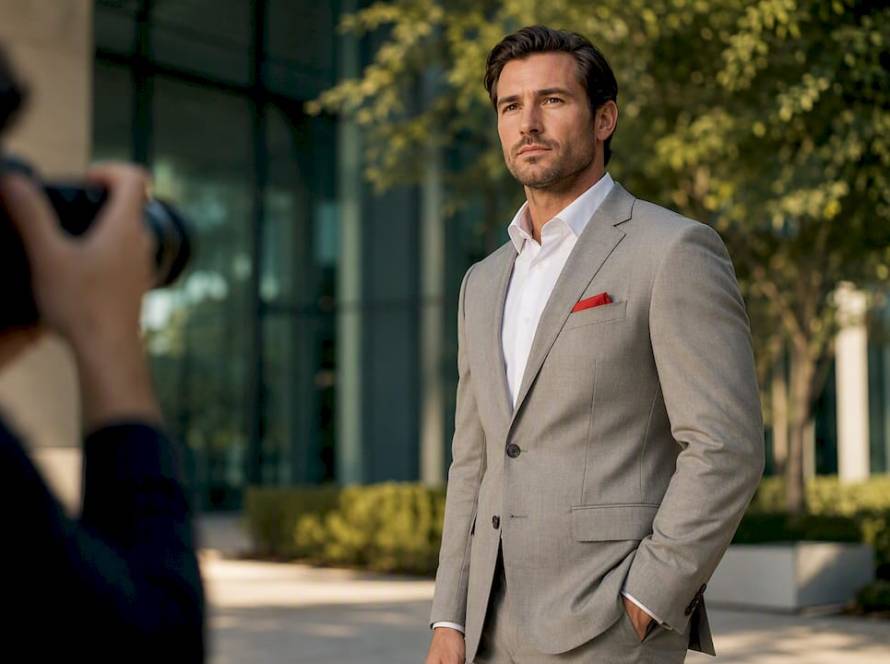
Updated professional headshots materially help career growth by increasing your visibility, building immediate trust, and driving measurable recruiter engagement. Profiles with professional photos receive substantially more views and recruiter contact than those without, and a headshot functions as a “visual handshake” that communicates competence and likability in milliseconds. Your single best first step: update your LinkedIn photo with a professionally retouched image, then track profile views for 60 days against your baseline.
Key Takeaways
An updated professional headshot is one of the highest-return personal branding moves available to career-focused professionals, with measurable gains in profile visibility, recruiter engagement, and client trust.
| Point | Details |
|---|---|
| Visibility gains are immediate | Professional photos produce substantially more LinkedIn profile views and recruiter contacts than casual or missing photos. |
| Update every 18–36 months | Sooner if you change roles, industries, or your appearance shifts noticeably from your current photo. |
| Set a goal before you book | Define your target audience, the KPI you will track, and a 60-day measurement window before the session. |
| Distribute across all channels | Update LinkedIn, company bio, speaker pages, and email signature simultaneously to eliminate visual drift. |
| Metroplex Headshots | Offers goal-aligned consultations, real-time review, retouching, and expedited delivery for Dallas–Fort Worth professionals. |
Table of Contents
- What are the top benefits of an updated headshot for career growth?
- How does an updated headshot actually drive career outcomes?
- When should you update your headshot?
- How do you set headshot goals that map to career outcomes?
- What does a complete headshot session checklist look like?
- How do you measure the ROI of an updated headshot?
- Metroplex Headshots gives career-driven professionals a clear edge
- What most professionals get wrong about headshot strategy
- Sources
What are the top benefits of an updated headshot for career growth?
An updated professional headshot works across every stage of your career, from landing recruiter attention to closing client deals. Here is what changes when you replace an outdated image with a polished, intentional portrait:
- Credibility on first contact. Recruiters form an impression of your LinkedIn photo in roughly 100 milliseconds, well before they read a single line of your experience. A sharp, current image signals that you take your professional presence seriously.
- Higher LinkedIn profile views. Professional photos produce substantially more profile views and recruiter contacts than casual or missing photos, according to LinkedIn-derived analysis.
- Better connection acceptance rates. Professionals with polished headshots see stronger acceptance rates on outbound connection requests, because the photo reduces perceived risk for the recipient.
- Stronger networking opens. A current image that matches your in-person appearance removes friction at conferences, follow-up calls, and introductory meetings. People recognize you immediately, which builds rapport faster.
- Improved conversion on sales and pitch outreach. Your headshot appears in email signatures, proposal covers, and CRM profiles. A confident, well-lit image reinforces the trust your message is trying to build.
- Internal brand cohesion for executives. When your photo matches your current role, title, and appearance, it signals alignment between who you are and how your organization presents itself. Corporate headshots function as a branding investment, not a cosmetic expense.
Pro Tip: Wear a solid, mid-tone color that contrasts with your background. Patterns and logos pull attention away from your face, and studies on visual hierarchy consistently show that faces command attention when they are not competing with busy clothing.
How does an updated headshot actually drive career outcomes?
The mechanism is both algorithmic and deeply human. On LinkedIn, profiles with professional photos rank higher in recruiter searches and appear more frequently in feeds, giving you a structural visibility advantage before any human judgment occurs. That algorithmic lift compounds over time: more impressions lead to more connection requests, more messages, and more opportunities surfacing organically.

The human side is equally direct. Recruiters spend an average of about six seconds reviewing a resume, and image judgments influence whether they read further at all. A photo that looks current, well-lit, and confident signals executive presence before your title does. One that looks five years old, poorly lit, or visibly forced creates doubt that your written credentials then have to overcome.

The same logic applies beyond LinkedIn. Speaker bio pages, press features, company websites, and sales prospecting emails all carry your photo. A consistent, current image across those channels builds what you might call visual brand alignment, the sense that the person in the photo and the professional being described are unmistakably the same person. That coherence builds trust faster than any tagline.
For executive networking success, the headshot often does the heavy lifting before a handshake ever happens.
When should you update your headshot?
Most professionals wait too long. A good rule of thumb: update every 18–36 months, and sooner if any of the following triggers apply.
- You received a promotion or title change. Your image should reflect your current level of authority, not where you were two roles ago.
- You changed industries or pivoted your focus. A headshot styled for a startup environment reads differently than one suited to a law firm or healthcare system.
- Your appearance has changed noticeably. Significant changes in hair, facial hair, weight, or eyewear mean your photo no longer accurately represents you, which creates a trust gap at first meetings.
- Your current photo is more than three years old. Visual drift accumulates gradually, but three years is typically the threshold where the gap becomes noticeable to others even if it feels subtle to you.
- Your styling looks dated. Collar widths, background colors, and lighting trends shift. An image that screams a specific decade undermines the currency of your personal brand.
- You are stepping into a high-visibility role. CEOs, board members, speakers, and media-facing professionals need images that hold up under scrutiny at larger sizes and in print. Senior leaders benefit from a specific approach that accounts for those demands.
- You are launching a new venture or product. A fresh image signals a fresh chapter and reinforces the narrative you are building.
How do you set headshot goals that map to career outcomes?
Walking into a session without a goal is the most common mistake professionals make. A goal-aligned session produces images you can actually measure against career results.
Use this template before you book:
- Outcome: What career result do you want? (More recruiter messages, more speaking invites, higher client conversion from outreach)
- Target audience: Who needs to trust you from this image? (Recruiters, C-suite buyers, conference organizers, patients, investors)
- KPI to track: What metric will you check? (LinkedIn profile views, connection acceptance rate, inbound messages, proposal acceptance rate)
- Deadline: When will you evaluate? (30, 60, or 90 days post-update)
Example: “Increase recruiter messages by a measurable amount within 60 days by updating my LinkedIn photo with a headshot styled for a senior finance role.”
Style and tone should match your career stage. Entry-level professionals benefit from approachable, open expressions with lighter backgrounds. Mid-career professionals can lean into confidence and directness. Executives often want gravitas balanced with warmth, a combination that takes deliberate expression coaching to achieve. Your personal branding headshot strategy should reflect where you are going, not just where you are now.
Bring this short consultation checklist to your session:
- Two or three wardrobe options (solid colors, no logos)
- Three to five reference images that capture the tone you want
- A clear statement of your target audience and primary use platform
- Confirmation of retouching scope and image licensing terms
- Your distribution plan (LinkedIn, company bio, speaker page, email signature)
What does a complete headshot session checklist look like?
A well-run session has three distinct phases, and skipping any one of them costs you usable images.
- Before the session. Confirm wardrobe options with your photographer in advance. Bring pressed, solid-color clothing in two or three options. Groom the day before, not the morning of, to avoid redness or irritation. Collect reference images and share them ahead of time. Confirm the crop options you need (tight headshot, mid-body, full-body for speaker pages) and agree on background style and retouching deliverables.
- During the session. Ask for real-time image review on a monitor or tablet so you can course-correct expression and posture without waiting until delivery. Capture both posed and candid frames; the candid frames often produce the most natural expressions. Request variety in crop and background so you have options for different platforms.
- After the session. Request high-resolution files in both JPEG and PNG. Confirm the licensing terms in writing, specifically whether you can use images commercially, on third-party platforms, and in print. If you need images quickly, ask about expedited delivery upfront. Review retouched images carefully: good retouching removes temporary blemishes and corrects lighting without altering your fundamental appearance.
Pro Tip: To get a natural expression during the shoot, think of something that genuinely made you laugh or feel proud right before the shutter fires. Photographers call this “expression priming,” and it produces warmth that no amount of coaching can replicate after the fact.
One caution worth noting: AI-generated headshots that look noticeably artificial can quietly undermine credibility. A traditional session with a skilled photographer still slightly outperforms AI formats on recruiter contact and interview metrics, even when both beat casual or missing photos by a wide margin.
How do you measure the ROI of an updated headshot?
Start with a baseline before you update anything. Screenshot your LinkedIn analytics (profile views, search appearances, and connection acceptance rate) and note your average recruiter message volume over the prior 30 days. Then update your photo and track the same metrics at the 30, 60, and 90-day marks.
| Metric | No professional photo | AI headshot | Traditional professional photo |
|---|---|---|---|
| Profile views | Baseline low | Substantially higher | Highest |
| Recruiter contacts | Baseline low | Substantially higher | Highest |
| Connection acceptance | Baseline low | Higher | Higher |
| Recruiter sentiment | Neutral/negative | 67% neutral | Broadly positive |
Key figure: In a study of 3,247 job seekers, traditional professional photos outperformed AI-generated headshots on recruiter contact and interview metrics, though both exceeded casual or missing photos by a significant margin.
For sales and client-facing roles, track proposal acceptance rates and inbound inquiry volume before and after updating your headshot across your website bio, email signature, and CRM profile. The portrait investment ROI compounds when you distribute the image consistently rather than updating only one platform.
Metroplex Headshots gives career-driven professionals a clear edge
Career-focused professionals in Dallas–Fort Worth get a session built around results, not just good-looking photos. Metroplex Headshots offers goal-alignment consultations before every session, real-time image review during the shoot, professional retouching, and expedited delivery options so you are not waiting weeks to update your profiles. Both in-studio and on-location sessions are available, including a mobile studio that comes to your office or event.

Consumer apps and smartphone filters can produce a passable image, but they cannot replicate expression coaching, lighting calibrated to your features, or the brand alignment that comes from working with a photographer who understands executive presence. The difference shows up in your metrics. Review session prep and wardrobe guidance to arrive ready, then book your session to put a career-ready image to work across every platform where your name appears.
What most professionals get wrong about headshot strategy
The conventional wisdom says “get a good photo.” That framing misses the point entirely. A headshot is not a static credential; it is a living signal that either confirms or contradicts everything else you are communicating about your career trajectory.
The professionals who see the clearest results from updated headshots are the ones who treat the session as a strategic brief, not a photo appointment. They arrive knowing exactly who needs to trust them from that image, what platform will carry it first, and what metric they will check in 60 days. That intentionality shows in the final image in ways that are hard to articulate but immediately felt by the person viewing it.
The other thing most guides understate: distribution matters as much as the photo itself. An excellent headshot sitting only on LinkedIn while your company bio still shows a three-year-old casual photo creates visual drift that quietly signals inconsistency. Update every channel at once, and your digital footprint starts working as a coherent whole rather than a collection of disconnected impressions.