

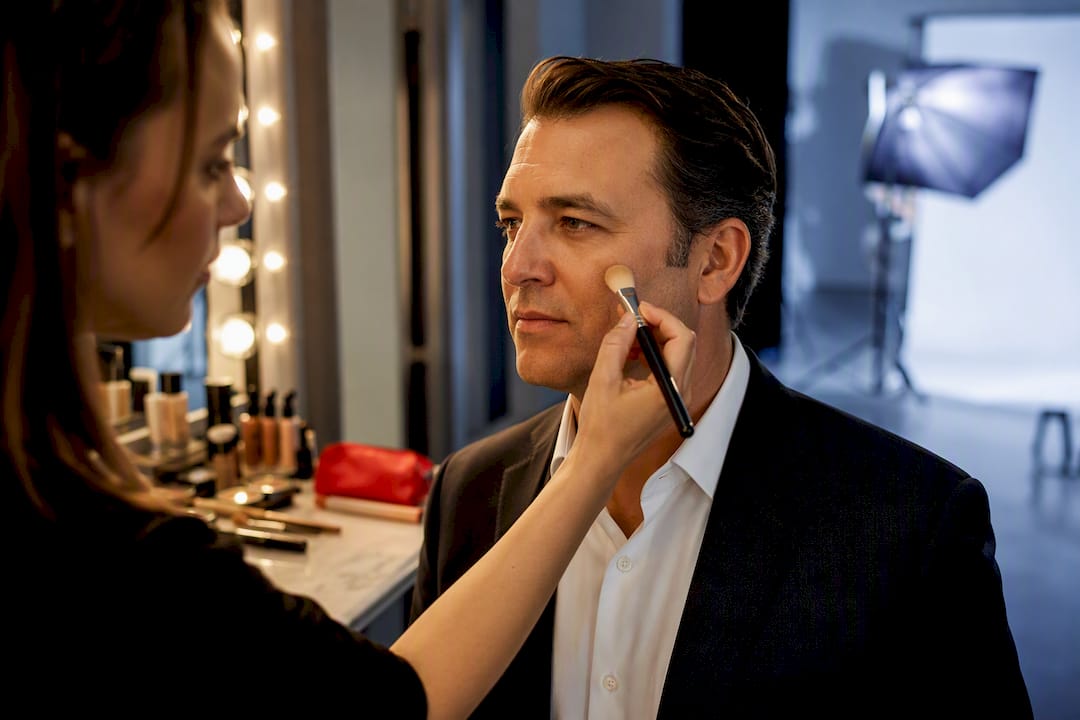
For headshots, aim for natural, camera-ready makeup that evens skin tone, controls shine, and subtly defines eyes and brows. Test your products under flash or studio lighting before the shoot, not during it, since colors and finishes shift under strong light. Pack a small touch-up kit so you can hold that look through every setup change.
TL;DR:
- Test all makeup products under flash or studio lighting before the shoot to avoid unwanted reflections and color shifts during photography.
- Use lightweight foundation matched carefully to your skin tone, applying concealer only where needed, and avoid SPF or shimmery powders that cause flashback.
- Define eyes with neutral matte shadows, tightline, and natural brows, avoiding heavy liners or dramatic eye makeup that distract from your expression.
- Keep lip color close to your natural shade in a satin or creamy finish, and carry a touch-up kit with essentials to maintain the look throughout the session.
- Collaborate with a professional stylist and conduct a flash test beforehand to ensure consistent, polished results that withstand studio lighting and camera scrutiny.
Table of Contents
- What Is Headshot Makeup, and Why Does It Differ From Everyday Makeup?
- How Should You Prep Your Skin the Week Before a Headshot?
- How Do You Choose a Foundation That Won’t Flashback?
- What’s the Best Way to Define Eyes and Brows for the Camera?
- How Do You Pick Lip Color and Finish for Headshots?
- How Should Hair and Wardrobe Work With Your Makeup?
- What Makeup Mistakes Do Photographers See Most, and How Do You Fix Them?
- What Should Be in Your Day-Of Checklist and Touch-Up Kit?
- Why Does Professional, Camera-Aware Styling Matter?
- Why the “Less Is More” Advice Usually Gets Half the Story Right
- How Metroplex Headshots Handles Makeup and Styling On Set
- Sources
What Is Headshot Makeup, and Why Does It Differ From Everyday Makeup?
Headshot makeup, sometimes called photography makeup or camera-ready makeup, is a distinct discipline from your daily routine. Regular makeup gets judged at arm’s length in natural light. Headshot makeup gets scrutinized in high resolution, under studio strobes, magnified on a screen. The camera emphasizes texture and uneven tone in ways the naked eye simply doesn’t catch, and what looks subtle in a bathroom mirror can vanish entirely under flash, while heavy products can suddenly read as harsh or cakey.
That’s the core tension this guide solves. You’re not trying to look “made up.” You’re trying to look like the sharpest, most rested version of yourself, one that holds up at 4,000 pixels wide on a company website. Every recommendation below, from foundation choice to brow filling, gets filtered through one question: how does this perform in front of a lens?
How Should You Prep Your Skin the Week Before a Headshot?
Skin prep starts well before you sit in the makeup chair. Skin preparation should begin about a week out: hydrate consistently, skip any new skincare actives that might irritate or purge your skin, and do a light exfoliation two to three days before the shoot, never the morning of.
Hydration matters more than most people realize. Drinking enough water through the week helps skin look smoother and more even under strong light, which is exactly what a headshot camera rewards.
On the day itself, keep it simple:
- Cleanse gently. No new products, no harsh scrubs.
- Apply a lightweight moisturizer suited to your skin type.
- Choose a primer that matches your finish goal: mattifying for oily zones, satin for normal-to-dry skin.
- Stop retinol or strong exfoliants at least 48 hours out to avoid flaking or redness that makeup can’t hide.
Pro Tip: If your skin tends to flake after exfoliating, do it four days before instead of two. You want smooth skin on shoot day, not skin still recovering from the treatment.
How Do You Choose a Foundation That Won’t Flashback?
Flashback is the enemy of good headshots. It happens when SPF ingredients or reflective mineral powders bounce light straight back at the lens, leaving a ghostly, washed-out cast across your face. Certain sunscreen filters and shimmer-heavy powders are a known cause of flashback under flash or studio lighting, so testing your products before the actual session matters more than picking a trendy formula.
Match your foundation to your exact skin tone and blend it down into your neck and jawline. A shade that’s perfect on your cheek but stops at your chin is one of the fastest ways to look unnatural in a photo. Favor light-to-medium coverage over full-coverage formulas; concealer targeted at dark circles, redness, or blemishes does more work than a thick layer everywhere.
- Test any SPF-containing base or mineral powder with a camera flash before the shoot day.
- Set only where you actually shine (usually the T-zone), and leave the rest with a light, satin finish.
- Keep concealer application spot-specific rather than face-wide.
One insight from photography-focused makeup guides stands out: camera-ready looks depend on balance, not uniformity. Mattify selectively, and let small satin highlights preserve the natural dimension of your face instead of flattening it.
What’s the Best Way to Define Eyes and Brows for the Camera?
Tight headshot crops leave nowhere for underdefined features to hide. Here’s the order that tends to work:
- Choose neutral, matte or low-shimmer eyeshadows. Glitter and metallics catch flash and create distracting hot spots.
- Tightline along the upper lash line instead of drawing a heavy top liner. It reads as definition without looking drawn-on.
- Curl and lightly coat lashes with mascara, avoiding clumps. One coat, well combed through, beats three rushed ones.
- Shape brows naturally and fill sparingly with a pencil or powder close to your natural color. Brows frame the whole face in a headshot, so gaps or overly harsh lines get noticed fast.
Dramatic winged liner and full smokey eyes rarely translate well for corporate or professional headshots. They pull focus from your expression, which is the entire point of the photo.
How Do You Pick Lip Color and Finish for Headshots?
Choose a shade close to your natural lip color, or one shade richer if you want to look slightly more approachable on camera. Avoid dramatic color changes that don’t match how you present day to day.
- Prefer satin or creamy lip formulas over high-gloss finishes, since gloss tends to create shine hot spots under studio lights.
- Exfoliate lips gently and apply balm the night before so color applies evenly.
- Carry your lip product in your touch-up kit for reapplication between shots.
- Use a long-wear formula if you tend to sip coffee or talk a lot during the session, then blot and reapply rather than redoing the entire lip.
How Should Hair and Wardrobe Work With Your Makeup?
Makeup doesn’t work in isolation. Solid colors that flatter your complexion and contrast against your expected background tend to photograph best; busy patterns and shiny jewelry pull the eye away from your face and can compete with the polish you just spent time creating. If you’re unsure what colors suit your session, this guide on what to wear for headshots breaks it down further.
- Style hair the way you normally would for work, nothing experimental.
- Book any haircut or color touch-up a few days ahead, never the morning of.
- Match your outfit’s contrast level to your studio’s background tone.
What Makeup Mistakes Do Photographers See Most, and How Do You Fix Them?
- SPF or mineral flashback. Swap to a photo-tested foundation and confirm with a quick flash test before the session starts.
- Over-contouring or an overly flat matte base. Soften the edges with a damp sponge and reintroduce a touch of satin highlighter for dimension.
- Underdefined brows and lashes. A quick brow fill and one more light coat of mascara solves this in under two minutes.
- Visible shine mid-session. Blotting papers first, then a light powder dusting; save heavier mattifying products for a full touch-up only if needed.
These four issues account for most of the retakes photographers request, and every one of them is fixable in the makeup chair rather than in editing. For a broader look at what tends to go wrong, this rundown of common headshot mistakes covers related pitfalls beyond makeup alone.
Pro Tip: If you notice flashback on the studio monitor, don’t panic and pile on more powder. Ask for a quick flash-test shot first. Sometimes it’s the light angle, not your makeup, that needs adjusting.
What Should Be in Your Day-Of Checklist and Touch-Up Kit?
Follow a simple sequence on shoot morning: cleanse, moisturize, apply base, set only the T-zone, define eyes and brows, finish lips. That order keeps every layer light and prevents buildup.
Your touch-up kit should be small enough to fit in a pocket or clutch:
- Blotting papers
- Pressed powder
- Concealer stick
- Lip product
- Spoolie brush
- Cotton swabs
- Lint roller
A concise kit like this covers nearly every on-set touch-up without forcing you to redo your whole face between shots.
Before you leave the house, do a quick camera test: take a selfie under a lighting setup similar to your shoot location, check for shine or flashback, and adjust accordingly. If you want a full pre-session walkthrough, the session prep and dressing guide pairs well with this checklist.
Why Does Professional, Camera-Aware Styling Matter?
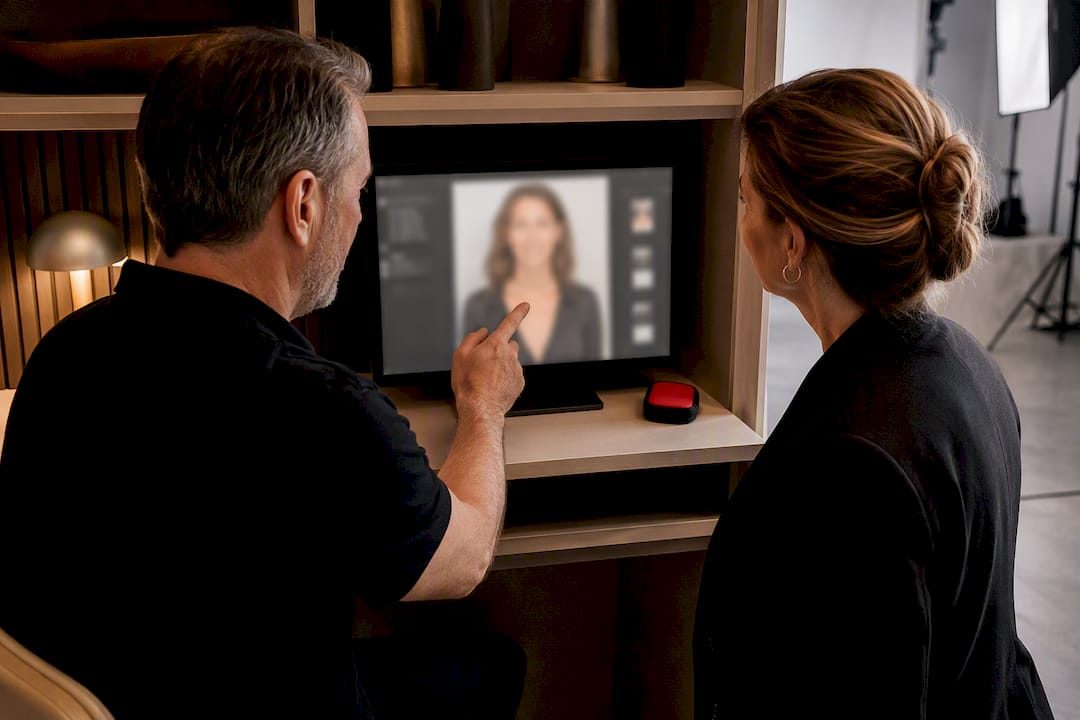
Lighting changes everything about how makeup reads. Studio lighting setups shift how color and texture appear on skin, which is why photographers who understand makeup, not just cameras, tend to produce more consistent results across an entire session.
Professional on-site styling and small adjustments between shots keep a headshot looking polished frame after frame, rather than sharp in one photo and flat in the next. That consistency is what makes a headshot hold up across a LinkedIn profile, a company website, and a printed annual report years apart.
Hiring a pro makes the most sense when your time is limited, when you need the look to stay consistent across dozens of team photos, or when you want a headshot built to last several years without looking dated — explore effective photography lead generation strategies to grow your own business successfully.
Why the “Less Is More” Advice Usually Gets Half the Story Right
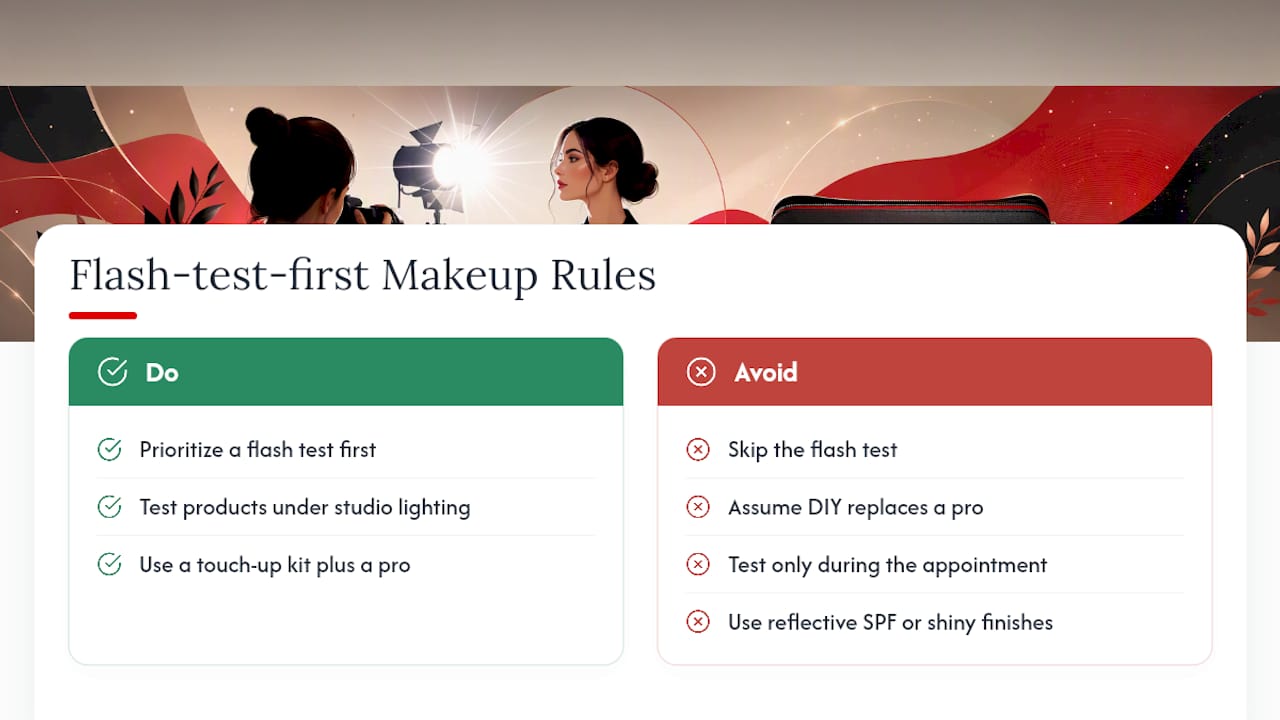
Most guides tell you to keep headshot makeup minimal, and that advice is correct as far as it goes. What it usually skips is the mechanical reason why: cameras don’t just show more, they show differently. A matte powder that looks perfectly natural in daylight can flatten your whole face under a softbox. An SPF moisturizer that’s invisible in the mirror can bounce light straight back at the lens. The real skill isn’t restraint for its own sake. It’s knowing which specific ingredients and finishes behave badly under strobe or flash, and testing for that before the appointment, not during it.
Where I’d push back on the typical checklist article is the assumption that a DIY routine and a professional session are competing options. They’re not. A well-prepped touch-up kit doesn’t replace a makeup artist who knows how a particular studio’s lighting rig renders skin tone, and a professional session doesn’t make hydration or a flash test unnecessary. Do both. Prioritize the flash test first, since it’s the one step people skip that causes the most retakes.
— Traci Schowmeyer
How Metroplex Headshots Handles Makeup and Styling On Set
Getting your own makeup camera-ready is entirely doable with the steps above, but Metroplex Headshots exists for the moments when you’d rather not manage it solo. Sessions include a consultation to talk through skin tone, wardrobe, and lighting ahead of time, on-site adjustments if shine or flashback shows up mid-shoot, fast image delivery, and professional retouching so the final image looks polished without looking altered.

If you’re weighing session types, the professional headshots versus portraits guide lays out exactly what’s included and how the two differ. Even if you book a session, bring the small touch-up kit described above; it gives the photographer something to work with between setups instead of starting from scratch. Ready to lock in a date? Reach out to Metroplex Headshots to check availability for an in-studio or on-location session in the Dallas-Fort Worth area.
Sources
- Makeup for Professional Headshots and Portraits — What the Camera Really Sees
- How to Prepare for Your Corporate Headshot Makeup Session
- Water: How much should you drink every day?

