


Your Headshot is Your First Audition
Bad acting headshots can cost you auditions before you even step into the room. Here’s what makes a headshot fail:
- Poor lighting or harsh shadows that obscure your features
- Outdated photos that don’t reflect your current appearance
- Over-retouching that makes you unrecognizable in person
- Distracting backgrounds or busy wardrobe that pulls focus from your face
- Wrong expression or tone that doesn’t match your casting type
- Low resolution or blurry images that look unprofessional
- Excessive cropping that cuts off your forehead, ears, or chin
Your headshot is your professional calling card in the acting business. Through one look at your headshot, casting directors will form a specific idea of what role they think you may fit in. They get thousands of applications—they may open your resume, they may not. But they’ll definitely look at your photo and make a decision based on that.
The stakes are incredibly high. People make snap judgments based on appearance in just seconds. When we interviewed hundreds of casting directors, the number-one most-mentioned bit of advice for actors was simple but critical: “LOOK LIKE YOUR HEADSHOTS!”
A bad headshot doesn’t have to be blurry or pixelated to hurt you. It just has to miss the mark. Even if no one can explain what’s wrong, they sense it. And that gut reaction influences whether they click, reply, or move on.
I’m Traci Schowmeyer, owner of Metroplex Headshots, and I’ve spent decades helping professionals avoid bad acting headshots by capturing authentic, compelling images that open doors. Understanding what makes a headshot fail is the first step to creating one that succeeds.
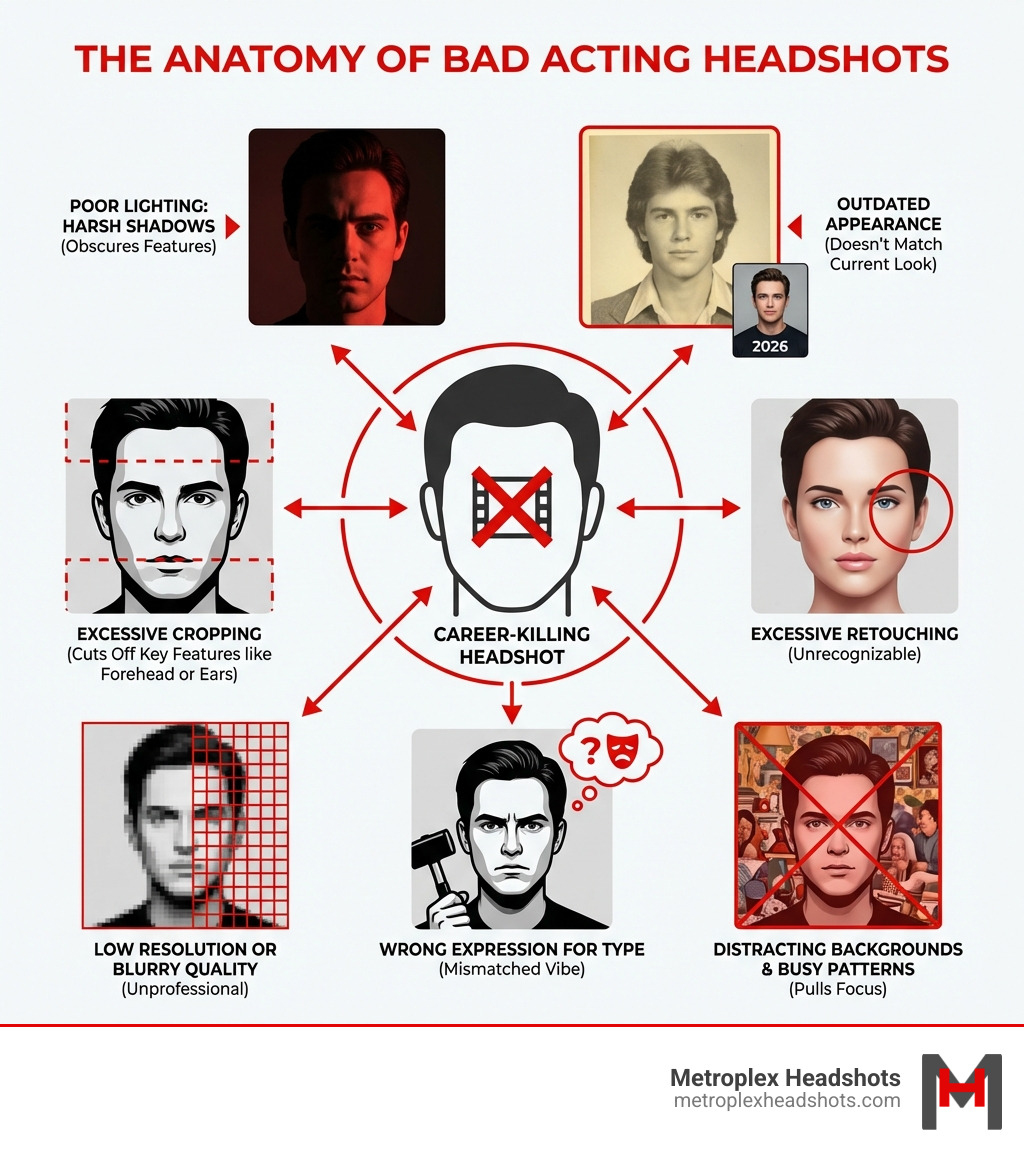
The Anatomy of Bad Acting Headshots: Common Career-Killing Mistakes
A headshot is arguably the most important tool in an actor’s kit, even more so than a resume or education. If your headshot betrays you, it won’t matter if you’ve been to the best acting school or done all the best courses. Your headshot is your trademark, a quick read of the package you’re selling. When it misses the mark, it can quietly cost you opportunities.
So, what are the most common mistakes actors make when choosing or taking headshots? And how does a bad headshot negatively impact an actor’s career opportunities? Let’s dive into the anatomy of bad acting headshots.
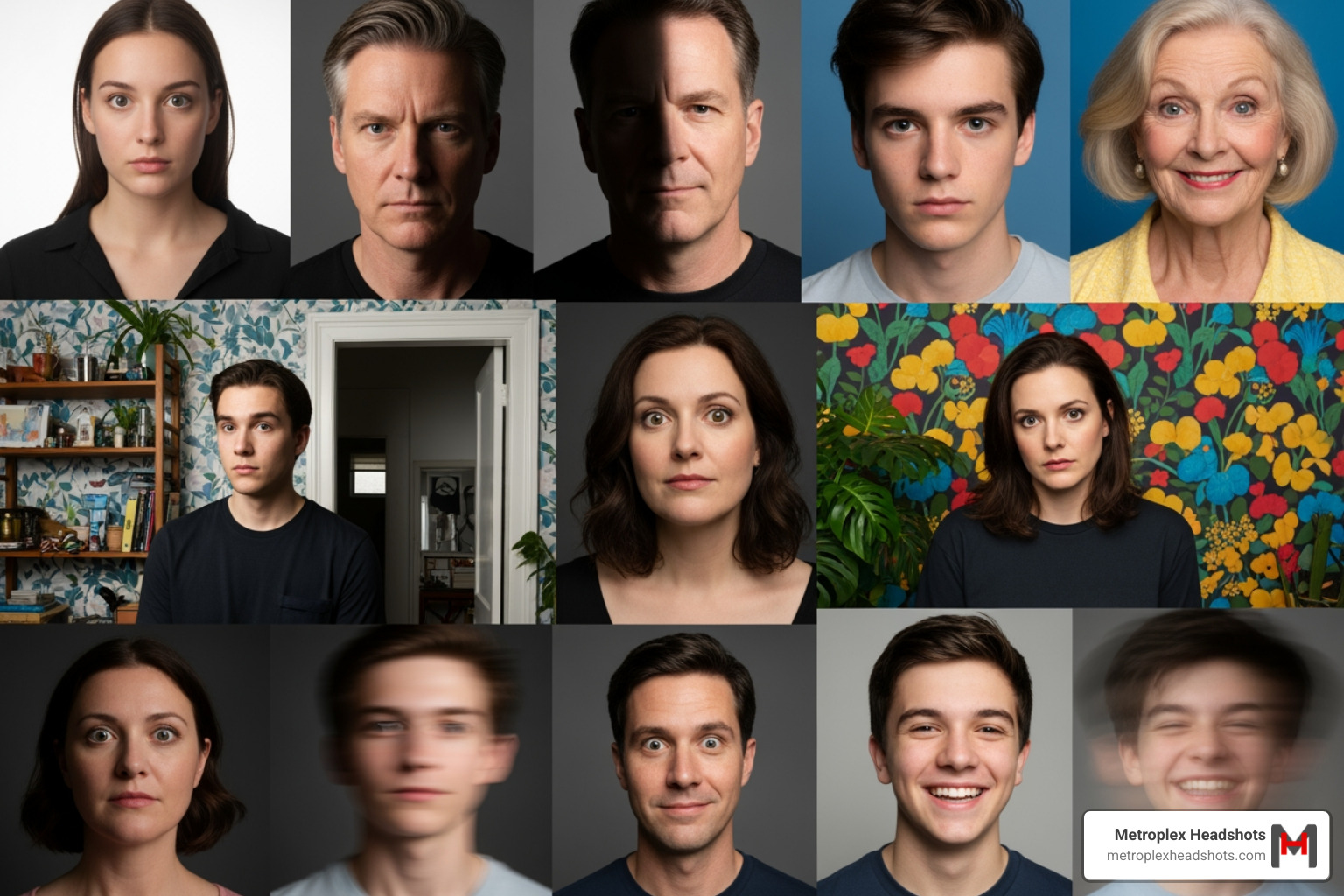
Technical Flaws That Create Bad Acting Headshots
Even before we get to expressions or wardrobe, technical issues can immediately render a headshot unusable. These are the foundational problems that shout “unprofessional” to casting directors.
- Poor Lighting and Harsh Shadows: Lighting is everything in photography, especially for a headshot where your face is the star. Bad lighting can create unflattering shadows, wash out your features, or make you look tired or unapproachable. We’ve seen headshots where permanent distinguishing features on an actor’s face have been washed out in lighting or in the editing process. This is a headshot that does not serve you.
- Blurry or Low-Resolution Images: This might seem obvious, but we still encounter headshots that are pixelated or out of focus. A blurry image instantly looks amateurish and makes it hard for casting directors to clearly see your face, which is their primary goal.
- Distracting Backgrounds: Your headshot should keep the focus squarely on you. Distracting backgrounds, bold prints, or busy elements pull attention away from your face and toward all the wrong things. Even small issues create friction, like a cluttered background or a background that’s too bright or dark. The background should be simple, neutral, and ideally blurred to ensure you stand out.
- Awkward or Excessive Cropping: This is a surprisingly common and frustrating mistake. We’ve seen dozens of headshots where actors had no foreheads whatsoever. Actors are losing an ear here, a chin there, an eyebrow or two in their headshots. A headshot needs to be cropped carefully to show your full face and a bit of your shoulders, allowing casting directors to see your complete look. When parts of your head are missing, it looks sloppy and can even prevent you from being considered.
- Over-Editing and Unnatural Retouching: While some retouching is standard to clean up blemishes or even skin tone, excessive editing is a huge red flag. Heavy filters, over-smoothing skin, or drastically altering your features (like making you look significantly younger or thinner) creates a headshot that doesn’t actually look like you. This leads to the cardinal sin in casting: misrepresentation. As we discussed in our article, An AI Headshot Versus a Real Headshot: Reasons Why the Difference Matters, authenticity is key.
Misrepresentation and Mixed Signals
Beyond technical issues, a headshot can fail if it sends the wrong message or, worse, misrepresents who you are. The number-one most-mentioned bit of advice from casting directors is, “LOOK LIKE YOUR HEADSHOTS!” If you don’t, you’re setting yourself up for disappointment and wasting everyone’s time.
- Looking Nothing Like Your Photo: This is perhaps the most egregious mistake. If your headshot shows a version of you that no longer exists—or never truly did—you’re creating a problem. Casting directors want to see the person who will walk into the audition room. If you look drastically different, they’ll feel misled, and that’s a quick way to get crossed off the list. Some actors seek headshots purely for self-validation or to feel glamorous, rather than as a professional marketing tool. This can lead to images that are beautiful but ineffective.
- Glamour Shot vs. Headshot: An acting headshot is a marketing tool, not a modeling portfolio piece. While you want to look your best, the goal isn’t to look like you’re posing for a magazine cover. A headshot should reveal your personality and potential for character, not just your ability to look conventionally attractive or the photographer’s lighting skills.
- Inappropriate Wardrobe or Styling: Your clothing and styling should support your casting type, not distract from it. Bold prints, logos, trendy fashion, ruffles, lace, or excessive jewelry can pull focus from your face. We’ve seen actors come to sessions with clothes they would never normally wear for a role, resulting in a headshot that doesn’t represent their authentic self or casting type.
- Wrong Character Type or Vague Expression: The best actor headshots capture specific “types” for the actors in them. If you’re going for detective roles, you should try to capture that “detective” look. A generic, vague “I can play anything” headshot is less likely to get you noticed. An extremely neutral or blank expression, or one that looks forced or confused, fails to convey personality or potential. Your expression should be present, grounded, and engaging, hinting at the character within.
- Using Props, Selfies, or Group Photos: A headshot should be a clean, direct image of you. Props, like hats or sunglasses, obscure your face and distract from your essence. Selfies or photos cropped from group shots are immediate giveaways of unprofessionalism and lack the quality and intention of a proper headshot. Avoid these at all costs.
Why Outdated Photos Become Bad Acting Headshots
Time moves quickly, and so do hairstyles, fashion trends, and, well, us! What was a great headshot five years ago might be a detrimental one today.
- Changes in Appearance: If your hair length, color, or style has changed significantly, your headshot is outdated. The same goes for facial hair, glasses, or significant changes in weight. Casting directors rely on your headshot to know what you look like now.
- Significant Aging: As we age, our faces change. A headshot that reflects a much younger version of you will lead to confusion and frustration in the audition room. Subtle signs of age are signs of experience, not flaws, and should be acceptd in an up-to-date headshot.
- Outdated Fashion: Clothing styles evolve. What was fashionable even a few years ago can look dated today, subtly signaling that you might not be current with industry trends.
- Not Reflecting Your Current Brand: As actors grow, their “type” or the roles they target might shift. An outdated headshot might pigeonhole you into roles you no longer want or are suitable for, preventing you from showcasing your evolved range.
- The “Look Like Your Headshot” Rule: This advice from casting directors isn’t just about honesty; it’s about efficiency. They need to quickly identify you and confirm you’re the person they called in. If your headshot doesn’t reflect your current appearance, you’re wasting their time and yours, and you’ll likely be passed over. It’s time to upgrade if you no longer look like the person in the photo, or if you’d hesitate to show it to a client or recruiter.
From “No” to “Yes”: The Key Elements of a Winning Headshot
So, what are the key elements of a good headshot that casting directors look for? And how can actors ensure their headshot accurately reflects their current appearance and the roles they are targeting? A winning headshot is a powerful tool. It builds trust and makes casting directors say “yes!” It’s clear, compelling, and authentically you. As we discussed in Good Headshots vs. Bad Headshots, the difference can be career-defining. It should make you look your best, most current self, reinforcing how you want to appear.

A good headshot is your best, most current self. It should be clear, clean, and distraction-free, with good lighting, a neutral background, and a steady, natural expression. It needs to capture your unique essence while solving casting problems. In the highly competitive DFW market, Crafting Your Professional Image: The Importance of Headshots in the DFW Metroplex cannot be overstated.
The Technicals: Wardrobe, Lighting, and Background
Getting the technical elements right ensures your headshot is professional and effective.
- Best Wardrobe Choices:
- Solid Colors: Opt for solid, rich colors that complement your skin tone. These draw attention to your face rather than your clothing. Avoid busy patterns, logos, or distracting prints.
- Simple Necklines: Simple necklines like V-necks, scoop necks, or collared shirts work well. Avoid overly trendy cuts, ruffles, or lace that can look dated quickly or distract.
- Good Fit: Your clothes should fit well – not too tight, not too baggy. Wrinkled clothes are tacky and do not represent your brand well. Iron everything!
- Layering: For black or white clothing, consider layering with a colored top underneath to prevent them from absorbing too much light (black) or overexposing (white).
- Minimal Jewelry: Unless it’s integral to a specific character look, remove jewelry. It can be distracting.
- Good Lighting: Good lighting is paramount. It should be even, soft, and flattering, highlighting your features without harsh shadows. Natural light is often preferred, but professional studio lighting can achieve excellent results. The goal is clarity and to make your eyes pop with “catchlights”—those little sparkles that make your eyes look alive and engaged.
- Neutral, Non-Distracting Backgrounds: The background should fade quietly into the frame, allowing your face to be the undisputed focal point. Neutral tones (grays, blues, muted greens) or a softly blurred outdoor setting (where people aren’t focused on scenery behind you) are ideal. Avoid busy patterns, bright colors, or anything that competes for attention.
- Head-and-Shoulders Crop: A standard acting headshot is typically a head-and-shoulders shot, sometimes extending to mid-torso or waist-up. This framing ensures your face is prominent while still providing context. Vertical orientation is generally preferred by casting directors for online platforms.
The Performance: Expression, Type, and Authenticity
A technically perfect photo is still just a photo. What makes it a headshot is the story it tells about you.
- Genuine Expression: The best headshots feel effortless. Your expression should be relaxed, approachable, and authentic. A forced smile makes you look unsure; a blank stare makes you look bored. Practice in front of a mirror to find your most natural and engaging expressions. Think of people you care about during the session to generate genuine emotion.
- Connecting with the Lens: Your eyes are the windows to your soul, and in a headshot, they’re the direct line to the casting director. You should look directly into the camera, conveying directness and professionalism, implying, “Here I am looking at you, asking you to look at me in return.” This creates an immediate connection.
- Knowing Your ‘Type’: This is crucial. Your “type” isn’t a limitation; it’s your market. Are you the leading lady, the quirky best friend, the intense villain, or the trustworthy neighbor? Your headshot should clearly communicate the roles you are most likely to play. As we explain in Learn how to find your Type and capture it in headshots, a generic “I can play anything” headshot is less effective than one that captures a specific vibe.
- Commercial vs. Theatrical Looks: You’ll likely need a range of headshots.
- Commercial Headshots: These are for commercials and often require a bright, friendly, approachable look with a genuine, open smile. They convey warmth and relatability.
- Theatrical (Legit) Headshots: These are for film, TV, and dramatic stage roles. They tend to be more serious, thoughtful, and intense, showcasing your dramatic range and depth. You might have a subtle smile or no smile at all, focusing on a confident, grounded expression.
- Showcasing Range: To effectively showcase your range and ‘type,’ you might have a few distinct headshots. For instance, a “hero” shot, a “villain” shot, and a “best friend” shot. Subtle changes in hair, angle, or clothing color can help differentiate these looks. The focus should always be on your facial expressions and emotional range, showcasing your ability to convey character.
- Confidence and Approachability: Your headshot should exude confidence and approachability. Casting directors want to work with actors who are self-assured and easy to be around.
Acting Headshot vs. Corporate Photo: What’s the Difference?
While both acting headshots and general professional photos aim to present you in your best light, their goals and aesthetics differ significantly.
| Feature | Acting Headshot | Corporate Headshot |
|---|---|---|
| Primary Goal | To showcase personality, range, and casting “type” for roles. | To convey professionalism, competence, and trustworthiness for a business context. |
| Expression | Often varied (commercial smile, dramatic intensity), engaging, hinting at character. | Confident, approachable, professional smile or serious demeanor. |
| Lighting | Can be more artistic, dramatic, or natural to highlight character. | Typically even, soft, and flattering; consistent with brand. |
| Wardrobe | Character-appropriate, simple, non-distracting; can vary to show range. | Professional attire (suit, blazer, blouse); solid colors; aligns with industry. |
| Background | Neutral, blurred, or slightly evocative of a setting without distracting. | Clean, simple, often solid color (gray, blue), or blurred office environment. |
| Focus | Actor’s potential to embody diverse roles. | Actor’s professional capability and reliability. |
For more insights into these distinctions, explore our article on Professional Headshots vs. Portraits.
Behind the Scenes: How to Prepare for a Flawless Headshot Session
The success of your headshot isn’t just about the photographer’s skill; it’s also about your preparation. Many actors inadvertently ruin a great headshot session by not preparing adequately or by focusing on the wrong things. Our article, How You Might Be Ruining a Great Headshot Session, digs into these pitfalls. Investing time in preparation ensures you get the most out of your session and achieve images that truly serve your career goals. This is about Leveling Up Your Professional Image: Setting Headshot Goals.
Working with Professionals
The importance of working with professional photographers and stylists for headshots cannot be overstated.
- Importance of a Professional Photographer: A professional photographer, especially one specializing in acting headshots, brings top-of-the-line equipment, technical expertise in lighting and composition, and an understanding of what casting directors look for. They know how to capture your unique essence and “type.” Their style can resonate with casting directors and give them an immediate read of your vibe. Hiring a professional asserts your professionalism and respect for the art form. Every actor will eventually need to invest in working with a headshot photographer.
- Finding a Stylist (Hair and Makeup Artist): While not always mandatory, hiring a professional hair and makeup artist (HMUA) for your headshot session is highly recommended. They understand how makeup translates on camera and under studio lights, ensuring your skin looks even and your features are improved naturally. They can also provide different hair looks to showcase your versatility. If you’re not a pro yourself, an HMUA can be crucial for achieving the desired look. Many photographers, including us at Metroplex Headshots, work with trusted stylists who understand the specific needs of acting headshots.
- Communication is Key: Before your session, have a thorough conversation with your photographer. Discuss your “type,” the roles you’re targeting, your career goals, and the specific looks you want to achieve (commercial, theatrical, character). Communication helps the photographer understand your vision and allows them to guide you effectively.
- Trusting the Process: Once you’ve chosen your professionals, trust their expertise. They are there to make you look your best and achieve your goals. Let go of preconceived ideas of how you want to present yourself and be open to their direction, as their objective eye often sees what works best for the camera.
- It’s an Investment: Professional headshots are an investment in your career. They are your primary marketing material and can open doors to auditions and representation. Skimping here can lead to bad acting headshots that hinder your progress. Choosing to Elevate Your Professional Image with Metroplex Headshots means investing in a high-quality product that pays dividends.
Your Pre-Shoot Checklist
Proper preparation ensures you arrive at your session feeling confident, relaxed, and ready to shine. Our article on Prepping for your session offers even more detail.
- Hydration & Diet: Start 1-2 weeks before your shoot by cutting out sugars and carbs. These can cause inflammation, puffiness, and redness in the skin. Stay well-hydrated by drinking plenty of water.
- Rest: Get ample sleep in the nights leading up to your session, especially the night before. Rested eyes and a fresh face make a huge difference.
- Plan Outfits: Don’t wait until the last minute. Think through your wardrobe choices based on your “type” and desired looks. Bring several options that are clean, ironed, and fit well. Simple and solid colors are often best.
- Practice Expressions: Spend time in front of a mirror. Experiment with different smiles (open, closed-mouth) and expressions that convey various emotions (thoughtful, confident, friendly, intense). Understanding your angles and what looks natural will make you more comfortable during the shoot.
- Create a Mood Board: Use platforms like Pinterest to create an acting headshot mood board. Pin colors you like, imagery that resonates with you, and photos of other actors that remind you of the characters you want to portray. Share this with your photographer and HMUA.
- Hair & Makeup (if doing it yourself): Ensure your hair is clean and styled how you typically wear it for auditions. Bring any necessary products for touch-ups. If doing your own makeup, aim for a natural, slightly improved look, avoiding heavy contouring or dramatic eye makeup that can look harsh on camera. Full coverage foundation is recommended for both male and female actors to ensure an even skin tone.
- Arrive on Time: Arrive 5-10 minutes early for your session. This allows you to relax, settle in, and avoid feeling rushed.
The Digital Submission: Navigating Online Casting Platforms
Most headshot submissions happen online. This presents a new set of challenges that can turn even a good headshot into a bad acting headshot if not managed correctly.
- Thumbnail View is King: Online casting platforms like Actors Access and Casting Networks often display headshots in a grid of small thumbnails. Your headshot needs to be “highly clickable” even at a tiny size. This means your face must be clear, your expression engaging, and the image free of distractions. If your headshot isn’t compelling in thumbnail form, casting directors will scroll right past you.
- Cropping Tools and Their Impact: When uploading your headshot to casting websites, it’s important to keep the cropping of your image in mind. These platforms often have their own cropping tools, and if your original photo is poorly composed, these tools can accidentally cut off your forehead, ears, or chin, just like those bad acting headshots we discussed earlier. We have dedicated articles with specific Actors Access tips and Casting Networks tips to help you steer these platforms.
- File Size and Format: Online platforms have specific requirements for file size and format (usually JPG or PNG). Ensure your digital files are correctly sized for web (typically 1-3 MB) and print (up to 15 MB) use. Submitting files that are too large or too small can lead to rejection or poor image quality.
- Naming Conventions: Professionalism extends to file names. Label your digital headshot files clearly, using a format like “YourFirstName YourLastName – Headshot.” Avoid generic file names like “IMG863” or “finaleditv2.” This makes it easy for casting directors to organize and identify your submission.
- Ensuring Your Face is the Focus: Always crop your digital images so your face is the primary focus when uploading to casting websites. Vertical headshots are generally preferred as they display better on these platforms. Make sure your eyes are clear and engaging, as they are a key point of connection.
- Digital vs. Hard Copy: While digital submissions are the norm, it’s still wise to have one or two high-quality printed headshots (8×10 inches, typically on semi-gloss or matte cardstock) with your nameplate ready for in-person meetings, workshops, or callbacks where a physical copy might be requested. However, printing dozens of copies is largely a thing of the past.
Conclusion: Invest in Your Calling Card and Land the Role
We’ve explored the myriad ways bad acting headshots can sabotage an actor’s career, from technical blunders and misrepresentation to outdated looks and digital submission pitfalls. The message is clear: your headshot is not just a picture; it’s your first audition, your professional calling card, and a critical marketing tool that can open or close doors to opportunities.
The acting headshot is a small but deeply important aspect of your acting career. It informs casting directors about the roles you might fit, and it’s often the only thing that gets an actor past the first round of filtering. Don’t let a bad photo hold you back from showcasing your talent and landing the roles you deserve.
For actors in the Dallas–Fort Worth Metroplex, investing in a professional headshot is a strategic career move. At Metroplex Headshots, we understand the unique demands of the acting industry. We specialize in making clients comfortable in front of the camera, delivering confident, natural-looking images quickly—often with same-day selection. Our focus is to lift your image professionally, ensuring your headshot accurately reflects your current appearance, your range, and the roles you are targeting.
Ready to transform your career with a headshot that truly represents you? Let us help you make a powerful first impression. You can always Ask a Photographer any questions you have, or View our packages to get started.

