


Why Your Business Portrait Matters More Than Ever
Your business portrait isn’t just a picture. It’s your digital handshake, the visual cornerstone of your personal brand, and often the first impression you make on potential clients, employers, or collaborators. In today’s business landscape, where first impressions form in a fraction of a second, that portrait on your website or LinkedIn profile carries enormous weight.
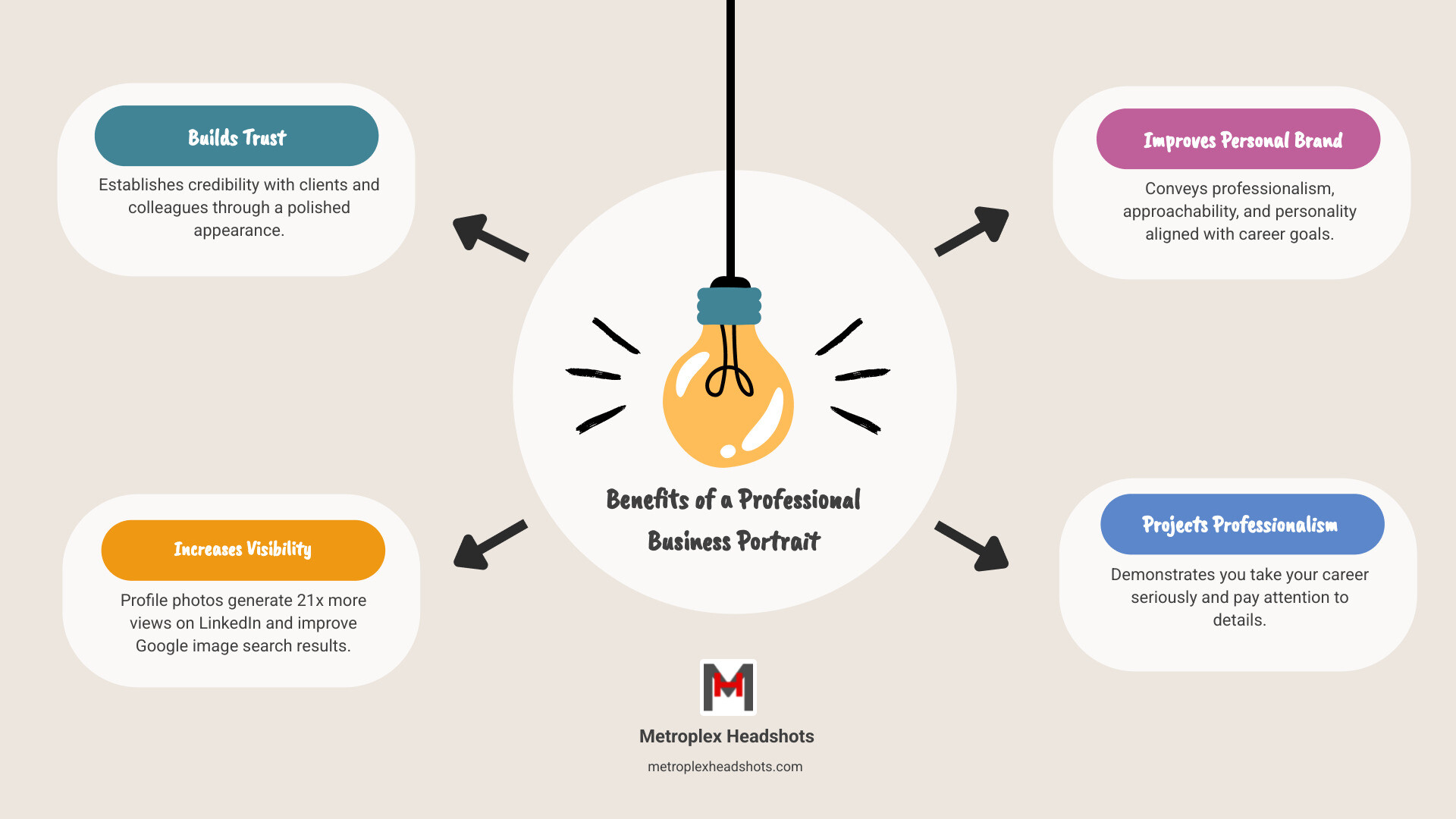
The stakes are higher than you might think. Research shows that LinkedIn members with profile photos receive up to 21 times more profile views than those without. When your digital presence often precedes your handshake, a subpar photo doesn’t just fail to help—it actively undermines your credibility. As one professional photographer puts it, “a bad photo sends the message ‘amateur,'” regardless of your actual expertise.
The good news? Creating an effective business portrait photo is less mysterious than you might think. It’s a combination of preparation, technical know-how, and understanding what works. Whether you’re updating an outdated photo, preparing for a career transition, or finally replacing that cropped wedding photo on LinkedIn, this guide will walk you through everything you need to know.
I’m Traci Schowmeyer, owner of Metroplex Headshots, and I’ve been creating professional business portrait photos since 1999, working with everyone from new hires to C-Suite executives at Fortune 100 companies. My “facial coaching” approach helps even the most camera-shy professionals feel relaxed and look their authentic best.
The Foundation: What Makes a Business Portrait Professional?

Defining the Business Portrait and Its Importance
A business portrait photo is a photograph designed to represent you in a professional capacity. Its purpose is to convey professionalism, expertise, and approachability—a visual elevator pitch. A polished, professional image suggests you take your career seriously and pay attention to detail, while a bad photo sends the message “amateur,” regardless of your qualifications. It’s an integral part of your personal brand, ensuring your visual identity aligns with your professional aspirations.
Headshot vs. Business Portrait: Understanding the Difference
While often used interchangeably, there’s a subtle distinction between a headshot and a broader business portrait photo.
| Criteria | Headshot | Business Portrait |
|---|---|---|
| Crop | Typically tight, from the chest or shoulders up, focusing on the face. | Can be wider, showing more of the torso, hands, or even a subtle environmental context. |
| Background | Often a solid, neutral color (gray, white, black) or a softly blurred studio backdrop. | Can feature a professional environment (e.g., office, cityscape) that adds context to your role or brand. |
| Purpose | Primarily for identification and immediate recognition, emphasizing facial expression. | Aims to tell more of a story about your professional persona, role, or brand. |
| Common Use Cases | LinkedIn profiles, “About Us” pages, speaker bios. | Company websites, annual reports, press kits, marketing materials, personal branding websites. |
A headshot is a type of business portrait photo, but not all business portraits are headshots. Our goal at Metroplex Headshots is to provide versatile images that serve both purposes.
The Evolution of the Business Portrait Photo
Business portrait styles have evolved significantly. Historically, they were formal and stiff, reflecting a rigid corporate culture. Today, while professionalism is still key, there’s a greater emphasis on approachability and authenticity. The rise of startups and tech companies has influenced a shift towards more business casual looks that capture individuality. Many executives now opt for blazers without ties to convey a modern, accessible image. This doesn’t mean formality is gone; it means the options are broader. The best business portrait photo today balances professionalism with your unique personality, adapting to your industry and role.
Preparing for Your Session: Wardrobe, Grooming, and Mindset
Preparation is key to a successful business portrait photo session. Arriving confident and prepared allows your photographer to focus on capturing your best self.
What to Wear: Clothing Choices for a Polished Look
Your clothing should complement your face, not distract from it. Here are our top tips:
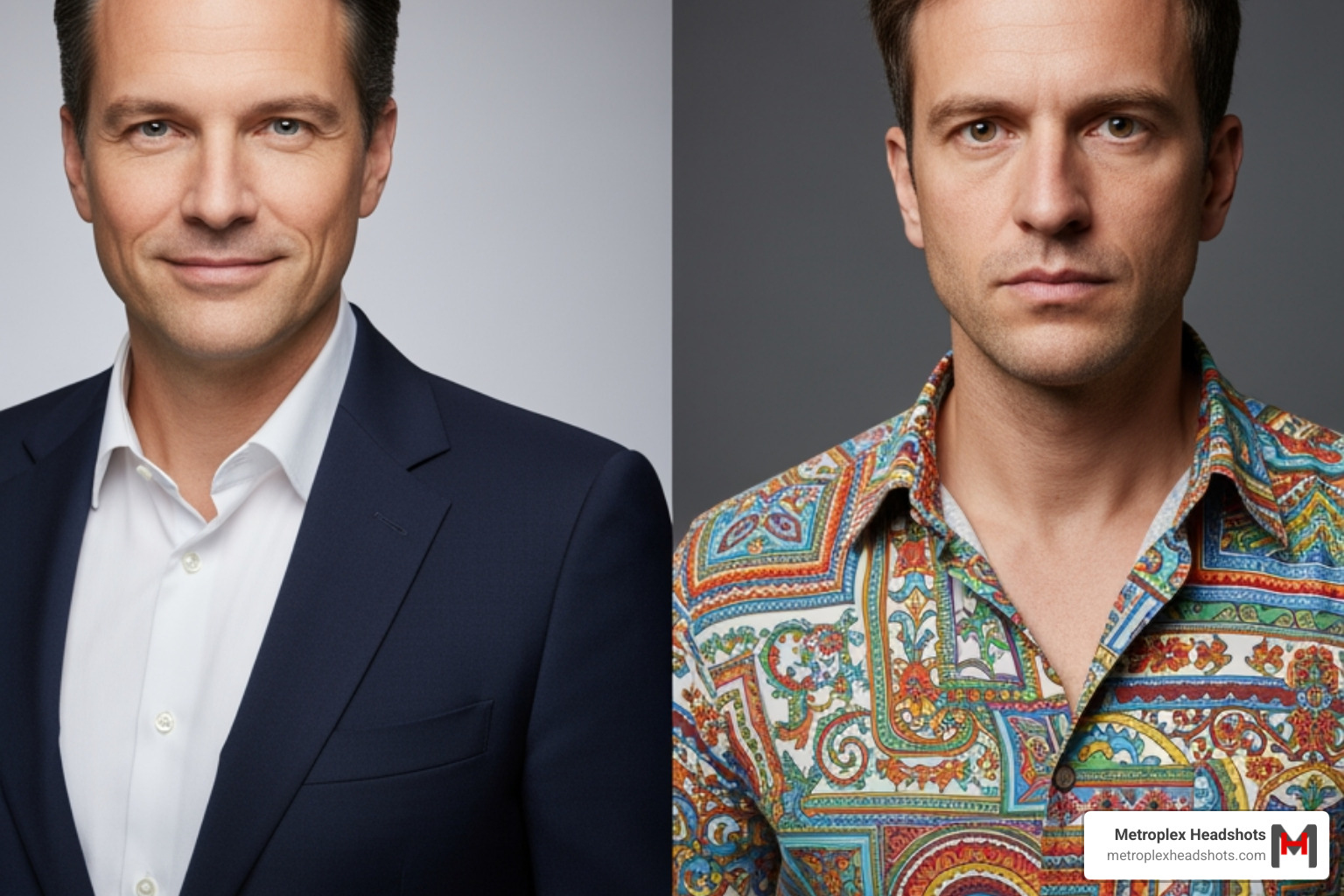
- Choose Solid Colors: Solid colors are best. Avoid fine prints or busy patterns that can create a distracting “moiré” effect. Jewel tones, earth tones, and classic blues are universally flattering.
- Ensure a Good Fit: Clothes should be well-fitted—not too tight or loose. Ensure your outfit is clean, pressed, and wrinkle-free. Collar stays will keep shirts looking sharp.
- Layer for Depth: Fitted layers and subtle textures photograph well, adding depth without being distracting.
- Opt for Timeless Style: Classic pieces ensure your business portrait photo remains relevant for years. Avoid fleeting trends.
- Keep Accessories Simple: Subtle accessories are best. Avoid large logos or reflective jewelry.
- Be Cautious with White: Pure white can sometimes lose detail in photos. Consider off-white or cream, or layer a white shirt under a blazer.
For more helpful tips on what to wear, you can read this article from Entrepreneur: Helpful tips on what to wear. Your attire helps project credibility and charisma.
Grooming for the Camera: Hair, Makeup, and Details
Thoughtful grooming ensures you look polished for your business portrait photo.
- Hair: Get a haircut a week before your session, not the day of. Arrive with your hair styled as you would for an important workday, avoiding flyaways.
- Makeup: A matte finish is ideal to prevent shine from studio lights. Aim for a natural, polished look. Bring oil-absorbing sheets to manage any facial shine.
- Facial Hair: If you have a beard or mustache, ensure it’s neatly trimmed. For a clean-shaven look, use a new blade to avoid irritation.
- Eyeglasses: If you wear glasses, make sure they are spotlessly clean. We can work with you to minimize any glare from the lenses.
How to Feel Confident and Look Approachable
Feeling comfortable is paramount to a great portrait. A great portrait is coached, not just captured.
- Practice Your Expression: Practice a natural, approachable smile in a mirror before your session.
- Mind Your Posture: We’ll guide you, but remember to sit or stand tall with relaxed shoulders.
- Relax and Breathe: Take a few deep breaths. We create a calm environment to help you feel at ease.
- Trust Your Photographer: We specialize in making clients comfortable using “facial coaching” and light banter to elicit natural expressions.
- Be Yourself: Let your authentic personality shine through. We aim to capture both your professionalism and your unique character.
The Anatomy of a Great Business Portrait Photo
Crafting an outstanding business portrait photo is a blend of key elements, technical precision, and artistic direction.
Mastering the Light: The Most Critical Element
Lighting is the most crucial element in any portrait. It shapes your face, creates mood, and eliminates distracting shadows.
- Natural Light: When available, soft natural light from a large window can be incredibly flattering. We avoid direct, harsh sunlight.
- Studio Lighting: In our studio, we use professional setups to create the perfect look:
- Key Light: The main light, placed to sculpt your features flatteringly.
- Fill Light: A softer, secondary light that lifts deep shadows.
- Rim Light: A light from behind that separates you from the background and adds depth.
- Light Modifiers: We use softboxes and umbrellas to diffuse light, making it softer and more pleasing than direct flash.
- Controlling Light: Our expertise ensures we control all light sources to avoid harsh shadows or unnatural color casts on your skin.
Posing for Professionalism and Personality
“A great portrait is coached, not captured.” Our job is to guide you into poses that are both professional and comfortable, allowing your personality to shine.
- Body Angle: Pivoting your body slightly away from the camera creates a more dynamic and slender look.
- Chin Position: A slight forward and down tilt of the chin helps define the jawline and project confidence.
- Posture: Standing or sitting “tall through the crown” with relaxed shoulders instantly conveys professionalism.
- Hand Placement: For wider shots, we’ll give your hands a natural place to rest to avoid awkwardness.
- Authentic Smiles: We engage you in light conversation to elicit genuine smiles and expressions, capturing those fleeting, authentic moments.
- Expert Coaching: We provide clear, calm direction throughout the process, leading to confident and natural-looking images.
Choosing the Right Backdrop for Your Business Portrait Photo
The backdrop in your business portrait photo helps convey your brand and professionalism.
- Studio Backdrops: For a classic, versatile look, we use neutral backdrops (gray, white, black) to ensure you are the focus.
- Environmental Backdrops: An office or outdoor setting can add context and personality. We ensure the background is clean, uncluttered, and complements you.
- Blurred Backgrounds: We use specific camera settings to create a soft, blurred background (bokeh), which makes you pop from the surroundings.
- Brand Alignment: The backdrop should always align with your personal brand and the professional image you wish to project.
DIY vs. Professional: Making the Right Choice
When it comes to your business portrait photo, you might be wondering if you can just “do it yourself.” While a DIY approach might seem appealing initially, understanding the pros and cons can help you make an informed decision about investing in a professional.
The Pros and Cons of a DIY Approach
We understand the temptation to grab your smartphone and snap a quick picture. Here’s what to consider:
Pros:
- Cost-Effective: It’s certainly cheaper than hiring a professional.
- Convenience: You can take photos whenever and wherever you like.
- Immediate Results: You get to see the photos instantly.
Cons:
- Quality Limitations: Even with modern smartphones, achieving professional-grade lighting, sharpness, and background blur can be challenging. A bad photo can send the message ‘amateur’.
- Common Mistakes:
- Bad Lighting: Harsh overhead lights, mixed light sources, or direct sunlight can create unflattering shadows and color casts.
- Awkward Angles & Selfies: Selfies rarely look professional for a business context. Incorrect camera angles can distort features (e.g., shooting from too low can make you look less approachable).
- Distracting Backgrounds: Cluttered rooms, messy offices, or inappropriate outdoor settings detract from your image.
- Lack of Posing Guidance: Without an expert, you might look stiff, unsure, or unnatural.
- Outdated Images: It’s easy to keep using the same DIY photo for years, even as your look or role changes.
- Limited Control: Post-processing apps can help, but they can’t fix fundamentally poor lighting or composition without making the image look unnatural or “over-edited.”
Why Hiring a Professional Photographer is an Investment
Choosing a professional for your business portrait photo is an investment in your personal brand and career. Here’s why:
- Professional Equipment: We use high-end cameras, lenses, and studio lighting equipment designed to capture sharp, high-resolution images with flattering light.
- Lighting Expertise: Mastering light is an art. We know how to use key, fill, and rim lights to sculpt your face, minimize imperfections, and create a warm, inviting glow.
- Posing Direction: Most people feel awkward in front of a camera. We are experts in “facial coaching” and posing, guiding you through subtle adjustments to your posture, chin, and expression to ensure you look confident, approachable, and natural.
- High-End Retouching: Professional retouching cleans up blemishes, stray hairs, and minor imperfections while maintaining a natural, authentic look. We avoid over-editing that can make you look artificial.
- Consistency for Teams: If your entire team needs business portrait photos, a professional can ensure a consistent look, lighting, and style across all images, which is vital for a cohesive company website or directory.
- Efficiency and Time Savings: We handle all the technical details, allowing you to focus on your expression. Our process is streamlined, often with same-day selection and quick delivery of your final images.
For professionals in the Dallas-Fort Worth area, we offer custom services designed to meet your specific needs. You can learn more about our offerings and View our headshot packages. If you’re looking for a skilled professional, you can also Find a headshot photographer near you.
Leveraging Your Portrait: Maximizing Your Online Presence and Career
Once you have a fantastic business portrait photo, the next step is to use it strategically to maximize your online presence and career opportunities. Think of it as a powerful asset for your personal brand.
Optimizing Your LinkedIn Profile and Other Social Media
Your LinkedIn profile is often the first place recruiters and potential clients look. Your business portrait photo is central to that first impression.
- LinkedIn Profile Picture: This is non-negotiable. Members with profile photos receive up to 21 times more profile views. A professional, approachable image makes you more findable and trustworthy. It also makes you more visible through Google image searches.
- Consistency Across Platforms: Use the same, or a very similar, professional business portrait photo across all your professional social media profiles (LinkedIn, professional Facebook pages, industry-specific networks). This builds brand recognition and reinforces your professional identity.
- Recruiter Perception: Recruiters use headshots as a tool to attract potential employees. A strong image conveys seriousness and professionalism, signaling that you are a reliable and competent candidate.
- LinkedIn’s Guidelines: Always adhere to LinkedIn’s official photo guidelines to ensure your image is displayed optimally.
Using Your Portrait on Websites, Press Kits, and More
Beyond social media, your business portrait photo has numerous applications:
- Company Websites: Essential for “About Us” pages, team directories, and executive profiles.
- Author Bios & Speaker Profiles: If you write articles, contribute to publications, or speak at events, a professional image is a must.
- Press Releases: For media inquiries, a high-quality portrait ensures you’re represented professionally.
- Email Signatures: A small, tasteful portrait in your email signature adds a personal touch.
- Business Cards: Reinforce your brand with a consistent visual identity.
These applications help you gain increased visibility, with photos providing increased visibility through Google image searches, and ultimately helping your career advancement and job searching efforts.
Technical File Specifications for Digital Use
Understanding the technical aspects of your business portrait photo files ensures they look great everywhere they’re used.
- Resolution:
- Web Use: For online platforms (websites, LinkedIn), images should typically be optimized for screen resolution (72-96 dpi). Higher resolutions aren’t necessary and will only slow down page load times.
- Print Use: For print materials (press kits, brochures), you’ll need much higher resolution images (300 dpi or more) to ensure sharpness and clarity.
- File Formats:
- JPEG: The most common format for web and general digital use, offering good compression with reasonable quality.
- PNG: Ideal for images with transparent backgrounds or when you need lossless quality, often used for logos or overlays.
- File Size Optimization: For web, keep file sizes to 2 megabytes or less to ensure fast loading times. We’ll provide you with web-optimized versions of your images.
- Cropping and Aspect Ratios: Different platforms require different crops (e.g., LinkedIn profile pictures are often circular or square). We’ll provide files cropped and sized appropriately for common uses, or guide you on how to do so. We can export web-ready crops for LinkedIn, print-ready TIFFs for press, and color-corrected sets adhering to brand ICC profiles.
Frequently Asked Questions about Business Portraits
We often get asked similar questions from our clients about their business portrait photos. Here are some of the most common ones:
How often should I update my business portrait?
We recommend updating your business portrait photo every 2-3 years. However, certain life events or career changes might warrant an update sooner:
- Significant Change in Appearance: If you’ve changed your hairstyle dramatically, started wearing glasses, or undergone any other noticeable physical changes, it’s time for a new photo. You want your portrait to be recognizable.
- Changing Roles or Industries: If you’ve moved to a new company, been promoted, or transitioned into a different industry, your old portrait might not align with your new professional image.
- Outdated Style: As styles evolve, so do business portrait trends. An outdated photo can subtly signal that you’re not current with industry norms.
What is the biggest mistake people make with their business portrait?
The single biggest mistake people make is using an unprofessional or outdated photo. This includes:
- Selfies: While great for personal use, selfies are generally inappropriate for professional business contexts.
- Cropped Group Photos: Trying to cut yourself out of a group photo often results in awkward angles, poor lighting, and visible shoulders of others.
- Outdated Images: Using a photo from a decade ago (or more!) that no longer accurately represents you.
- Poor Lighting: Images with harsh shadows, mixed lighting, or poor exposure look amateurish.
- Distracting Backgrounds: Busy backgrounds pull attention away from you.
A bad photo sends the message ‘amateur,’ regardless of your expertise. Your business portrait photo should always reflect the professional you are today.
Can a business portrait really help me get a job?
Absolutely! A professional business portrait photo can significantly help in career advancement and job searching:
- Professional First Impression: It creates a strong, positive first impression on recruiters and hiring managers. They see that you’re serious about your career.
- Stands Out to Recruiters: In a sea of applications, a polished portrait can make your profile more memorable and encourage recruiters to spend more time reviewing your qualifications.
- Conveys Seriousness and Credibility: A high-quality image signals professionalism, attention to detail, and confidence—qualities highly valued by employers.
- Improves Credibility on LinkedIn: As mentioned, profiles with photos get significantly more views. This increased visibility means more opportunities for recruiters to find you. Photos are a tool used for recruitment to lure potential employees that are looking beyond a paycheck.
Your business portrait photo is an essential tool in your job search arsenal, effectively communicating your personal brand before you even have a chance to speak.
Conclusion
We’ve journeyed through the comprehensive world of the business portrait photo, from its foundational importance to the nuances of preparation, execution, and strategic leveraging. We’ve seen that your portrait is far more than just a picture; it’s a critical career tool, a digital handshake, and a powerful statement about your personal brand.
The key to a successful business portrait photo lies in thoughtful preparation, understanding the technical elements of lighting and posing, and embracing an authentic, confident mindset. Whether it’s for LinkedIn, your company website, or a press kit, a professional image builds trust, increases visibility, and projects the professionalism you deserve.
For professionals in the Dallas–Fort Worth area, Metroplex Headshots specializes in creating confident, natural-looking images that make a lasting impression. We pride ourselves on making our clients comfortable in front of the camera, delivering results quickly, often with same-day selection. We focus exclusively on headshots, ensuring you get the specialized expertise you need.
Lift your professional presence today. Book your session today and let us help you put your best face forward.

