


A posed business portrait is a deliberately orchestrated image where lighting, composition, and expression are all controlled to project a specific professional identity. A candid business portrait, by contrast, captures genuine, unscripted moments that reveal personality and warmth. The difference posed candid business portrait creates in your personal brand is significant. Posed portraits signal authority and consistency. Candid portraits signal approachability and authenticity. Metroplex Headshots works with professionals every day who need both, and the choice between them is rarely either/or.
What is the difference between posed and candid business portraits?
A posed business portrait gives you complete control over every visual element in the frame. The photographer directs your angle, adjusts the lighting, and guides your expression until the image reflects exactly the professional identity you want to project. Posed sessions enable subjects to control angles and expressions, which is why they remain the standard in legal, finance, and executive environments. That level of control is not vanity. It is brand alignment.
A candid business portrait works differently. The camera captures you in motion, mid-conversation, or reacting naturally to your environment. The result looks unscripted because it largely is. These images carry emotional authenticity that posed photos rarely replicate. A candid shot of a consultant leaning in during a client meeting communicates trust in a way that a formal headshot simply cannot.
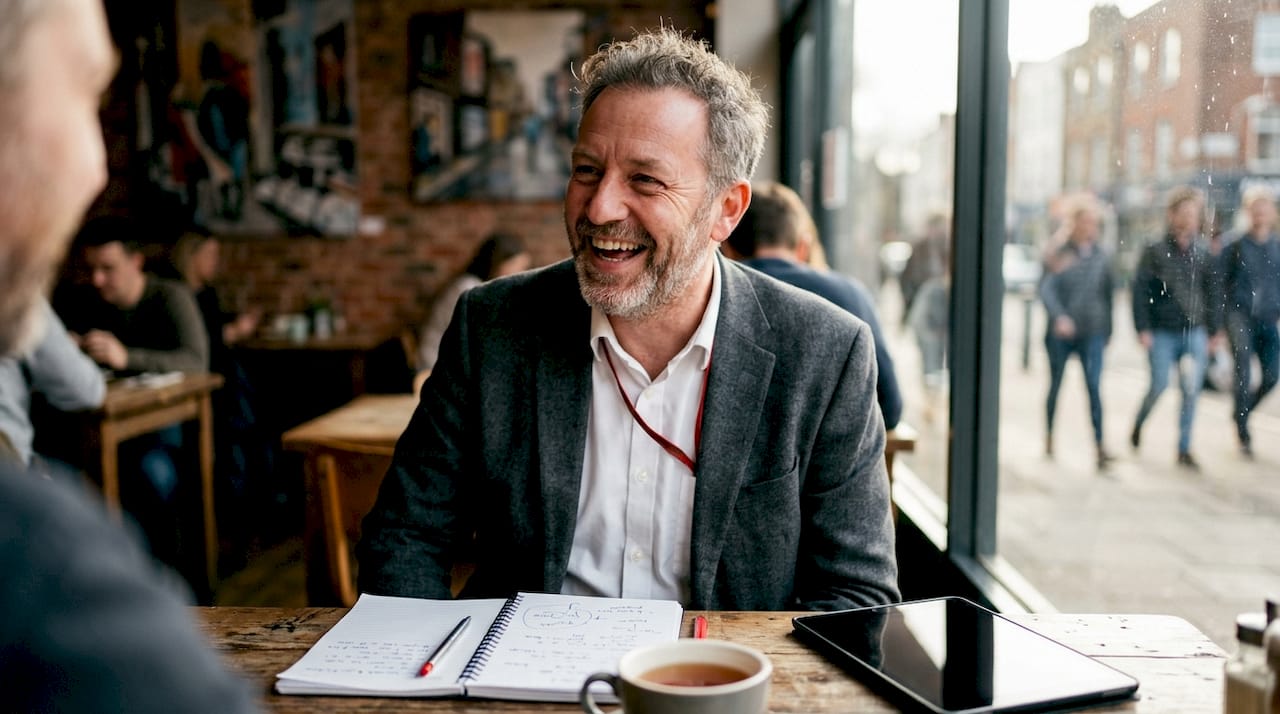
The industry term for the broader category covering both styles is business portrait photography. Both styles fall under that umbrella, and both serve distinct purposes in a professional’s visual library. Knowing when to use each one is the real skill.
What are posed business portraits and when should you use them?
Posed portraits are the foundation of any professional brand photo library. They deliver consistency, which is critical when your image appears across a LinkedIn profile, a company website, a press kit, and a conference speaker bio simultaneously. Visual drift, where your image looks different across platforms, erodes trust. A well-executed posed portrait eliminates that problem.
The technical advantages of posed photography are real. Golden hour and studio lighting setups require strict subject positioning. You cannot wander freely and still benefit from directional light. A posed session locks in that relationship between subject and light, producing images that hold up at any size, from a business card to a billboard.
Posed portraits work best in these professional contexts:
- LinkedIn profile photos where a clean, direct image signals credibility
- Executive bios on corporate websites requiring a consistent, polished look
- Legal, finance, and medical profiles where formality signals trustworthiness
- Speaker headshots for conference programs and media kits
- Team pages where visual consistency across staff matters for brand cohesion
Wardrobe and preparation matter more in posed sessions than most professionals expect. Your clothing, background color, and even the direction you angle your shoulders all affect how viewers read your executive presence. A photographer who directs these details is not being controlling. They are protecting your brand investment.
Pro Tip: Lean your body weight slightly forward toward the camera during a posed portrait. This subtle shift creates an engaged, confident posture that reads as approachable rather than stiff, even in a formal setting.
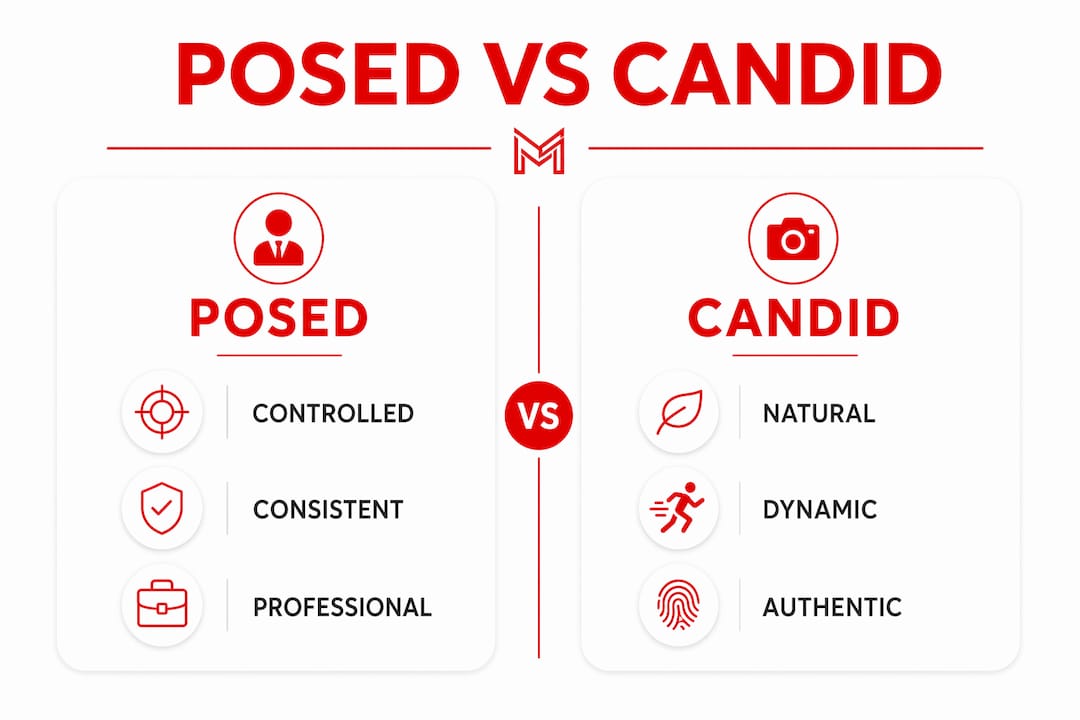
What defines candid business photography and its professional advantages?
Candid business photography captures you as you actually operate in your professional world. The images feel natural because the subject is not frozen in a formal pose. Directed candid techniques skillfully bridge professionalism with spontaneity, creating natural but controlled images. The photographer gives you a prompt, such as walking across a room or reviewing a document, and shoots while you move. The result looks unposed but is far from accidental.
This style is particularly powerful for relationship-driven businesses. Coaches, consultants, real estate professionals, and creative directors all benefit from images that show them engaged, energetic, and human. A candid shot of you laughing with a colleague or focused at your desk tells a story that a formal headshot cannot. That story builds the kind of trust that converts a website visitor into a client.
Candid portraits deliver specific advantages that posed photos cannot replicate:
- Emotional authenticity that makes your brand feel approachable and real
- Storytelling images for social media, blog posts, and email newsletters
- Behind-the-scenes content that humanizes your brand and builds audience connection
- Variety across platforms without the visual monotony of a single formal headshot
- Personality signals that attract clients who align with your working style
Preparation is not optional for candid sessions. Most professional candid business photos involve directed actions rather than purely unprepared moments. A prep call to plan wardrobe, location, and session flow is standard practice. Walking into a candid shoot without preparation produces unfocused images that serve no marketing purpose.
Pro Tip: Wear your most comfortable professional outfit to a candid session. When you feel at ease in your clothing, your body language relaxes, and that ease shows up in every frame.
How posed and candid portraits affect your personal brand
The real impact of each style shows up in how viewers respond to your images. Posed portraits build credibility. Candid portraits build connection. Your personal brand needs both signals working together. A profile that shows only formal headshots can feel cold. A profile built entirely on candid shots can feel unpolished. The strongest personal brands leverage a balanced mix tailored to their industry and brand personality.
The table below maps each style to its primary branding function:
| Portrait style | Primary signal | Best platform | Viewer response |
|---|---|---|---|
| Posed portrait | Authority and credibility | LinkedIn, executive bio, press kit | Trust and professionalism |
| Candid portrait | Authenticity and warmth | Social media, website about page, email | Connection and approachability |
| Mixed library | Versatility and depth | All platforms | Credibility plus relatability |
Session planning should reflect your brand objectives before you book a photographer. A corporate attorney needs a different ratio of posed to candid than a business coach does. Professional brand photography builds a visual library representing brand identity genuinely, beyond standard headshots or stock photos. That library should include team shots, environmental images, and lifestyle content alongside formal portraits.
The quantity of images also matters. Professional branding photography sessions typically deliver 50–150 retouched images to support comprehensive brand imagery needs across platforms. That volume gives you enough variety to maintain a consistent presence on social media for months without repeating the same image.
How to combine both portrait styles in your brand strategy
A mixed portrait strategy gives your brand the range it needs to perform across every platform. The goal is not to choose one style over the other. The goal is to use each style where it does its best work. Experts recommend starting with posed shots to guarantee usable images, then transitioning to candid to capture personality. That session structure protects your investment while maximizing creative output.
A practical approach to building a mixed portrait library:
- Start with posed portraits. Lock in your formal headshot, executive profile image, and any team photos that require visual consistency. These are your brand anchors.
- Transition to directed candid work. Once the formal shots are complete, shift into movement-based prompts. Walk, interact with props, or engage with a colleague. The photographer captures the results.
- Plan your locations intentionally. Your office, a coffee shop, or an outdoor setting each communicates something different about your brand. Choose environments that reflect your actual work life.
- Coordinate wardrobe for both phases. Bring two or three outfit options. A formal look for posed shots and a slightly more relaxed option for candid work gives your library visual range without looking inconsistent.
- Map images to platforms before the session. Know that your LinkedIn header needs a posed portrait, your Instagram feed needs candid variety, and your website about page benefits from a mix of both. That clarity guides every shot the photographer takes.
A 50/50 ratio between posed and candid images provides variety for social media, portfolio updates, and press materials, giving you both reliability and authenticity. Industries like consulting, coaching, and creative services often benefit from leaning slightly toward candid content. Industries like law, finance, and medicine typically benefit from a posed-heavy library. Your brand personality and client expectations should drive that decision.
For a deeper look at how to prepare for your session, the professional headshot session guide at Metroplex Headshots covers wardrobe, environment selection, and session flow in detail.
Key takeaways
A mixed portrait library combining posed and candid business photography delivers stronger personal branding than either style alone.
| Point | Details |
|---|---|
| Posed portraits build authority | Use them for LinkedIn, executive bios, and any platform where credibility is the primary signal. |
| Candid portraits build connection | They work best on social media, about pages, and anywhere personality and warmth drive engagement. |
| Session structure matters | Start with posed shots to secure usable images, then move to directed candid work for personality content. |
| Preparation drives candid quality | Plan wardrobe, location, and prompts in advance so candid shots serve your marketing goals. |
| A 50/50 mix covers most brands | Equal parts posed and candid gives you credibility and relatability across every platform. |
What I’ve learned from watching clients choose between these two styles
I’m Traci Schowmeyer, and after years of working with professionals on their brand photography, the most common mistake I see is treating this as a binary choice. Professionals either book a formal headshot session and call it done, or they lean so hard into candid content that their brand starts to look like a lifestyle blog rather than a business.
The candid-only approach is the one that surprises people most. Clients come in convinced that authenticity is everything, and it is, but authenticity without polish reads as unprepared to many professional audiences. A financial advisor whose entire visual presence is candid coffee shop shots may feel relatable, but they may also lose the trust signal that their industry demands. The business portrait photography guide I point clients to makes this case clearly.
The trend I watch most closely is the shift toward directed candid work as the middle ground. Photographers who know how to give natural-feeling prompts, like asking you to walk toward them while thinking about a client win, produce images that look spontaneous but are technically sound. That skill is what separates a brand photographer from someone who just takes pictures. When you find a photographer who can do both well, book them and bring enough wardrobe for a full session. You will use every image.
— Traci Schowmeyer
Professional portrait sessions at Metroplex Headshots
Metroplex Headshots offers portrait sessions designed to build the kind of visual library your brand actually needs, not just a single headshot. Sessions are structured to capture both posed and candid images in one sitting, giving you polished formal portraits alongside authentic personality-driven content.
Every session is planned around your brand objectives, your industry, and the platforms where your images will work hardest. Whether you need a formal executive portrait for a press kit or candid lifestyle images for your social media presence, Metroplex Headshots delivers retouched images built for real-world brand use. If you are ready to build a portrait library that covers every platform and every audience, explore the full range of portrait session options and find the right fit for your brand.
FAQ
What is the main difference between a posed and candid business portrait?
A posed business portrait uses controlled lighting, directed expression, and fixed composition to project a specific professional identity. A candid business portrait captures natural, unscripted moments that convey personality and warmth.
Which portrait style is better for LinkedIn?
A posed portrait is the standard choice for LinkedIn because it signals credibility and professionalism to recruiters, clients, and colleagues who view your profile.
Can candid business photos still look professional?
Yes. Directed candid techniques use prompts like walking or interacting with your environment to produce natural-looking images within controlled lighting and composition, keeping results polished and purposeful.
How many images should a professional brand photography session produce?
Professional branding photography sessions typically deliver 50–150 retouched images, giving you enough variety to maintain a consistent presence across social media, your website, and press materials.
What ratio of posed to candid images works best for most professionals?
A 50/50 ratio of posed to candid images works well for most professionals, providing both the credibility of formal portraits and the relatability of authentic candid content across multiple platforms.

