


Executive headshot expression types are the deliberate facial cues that project professional traits like authority, trustworthiness, and approachability in business portraits. The three primary categories recognized in 2026 are Composed Neutral, Controlled Warm Smile, and Engaged Confidence. Each serves a distinct branding purpose, and a slight natural smile suits 80% of business contexts effectively. That statistic tells you one thing clearly: most professionals benefit from warmth, but the right expression still depends on your role, your industry, and the message your brand needs to send. This guide breaks down each expression type so you can walk into your next session knowing exactly what you need.
1. What is the composed neutral expression and when should you use it?
The composed neutral expression is the most authoritative of all professional headshot expressions. It features a relaxed jaw, closed lips, neutral eyes, and either no smile or a very slight upward curve at the corners of the mouth. The goal is to project gravitas without looking cold or unapproachable.
Neutral expressions suit legal, finance, military, government, and senior executive leadership roles where authority matters more than warmth. A federal judge, a managing partner at a law firm, or a CFO all benefit from this expression. It tells the viewer: this person is serious, qualified, and in control.
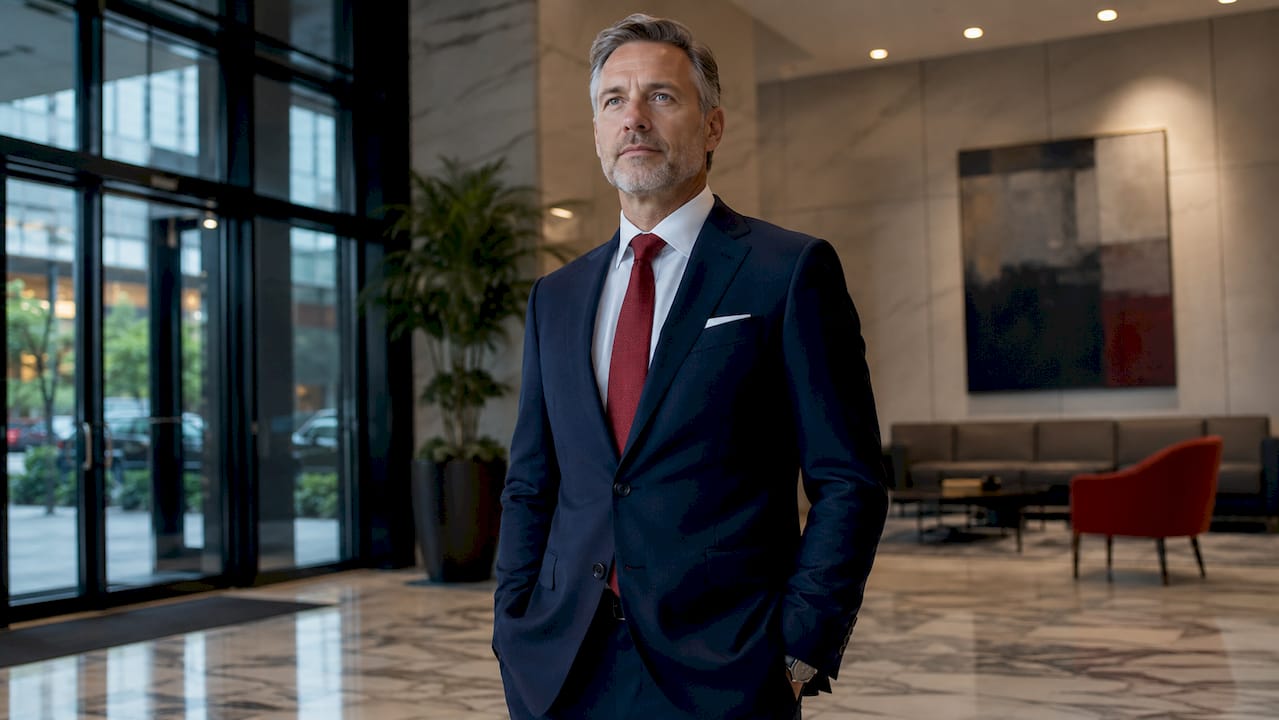
The challenge with composed neutral is the fine line between commanding and stern. A jaw that is too tight or eyes that are slightly downturned can read as unfriendly. That is why practice before your session matters as much as the session itself.
Pros and cons of the composed neutral expression:
- Pro: Projects authority and professional gravitas instantly
- Pro: Works well for formal corporate websites, annual reports, and board bios
- Pro: Ages well across career stages without looking dated
- Con: Can appear cold or unapproachable if not executed carefully
- Con: Less effective for customer-facing or sales-oriented roles
- Con: Requires precise muscle control to avoid looking tense
Pro Tip: Practice your composed neutral in front of a mirror for five minutes before your session. Focus on softening the area around your eyes while keeping your jaw relaxed. The difference between stern and authoritative lives entirely in that eye softness.
2. What defines the controlled warm smile and which professionals benefit most?
The controlled warm smile is the most widely used expression in professional headshots. It features lips together or slightly parted, with genuine engagement in the eyes. This expression builds trust and approachability while maintaining a professional standard that works across most business contexts.
Healthcare providers, real estate agents, sales professionals, coaches, and anyone in a customer-facing role benefit most from this expression. When a prospective client sees your headshot before your first meeting, a controlled warm smile signals that you are both competent and easy to work with. That combination is the secret sauce of professional branding.
The word “controlled” is doing real work in this expression type. A full, wide smile can look casual or even performative in a formal portrait. The controlled version keeps the energy warm but measured, which reads as confident rather than eager.
Industries and benefits at a glance:
- Real estate: Signals approachability and builds buyer or seller confidence
- Healthcare: Communicates care and puts patients at ease before a visit
- Sales and business development: Increases perceived likability and trust
- Coaching and consulting: Reinforces the sense that you are a supportive partner
- Corporate communications: Balances friendliness with executive presence
Pro Tip: Ask your photographer to tell you a quick, genuine story or joke right before the shot. Authentic smiles that reach the eyes engage the orbicularis oculi muscle, creating a subtle warmth that a posed smile simply cannot replicate.
3. How does engaged confidence differ and why is it powerful for founders and speakers?
Engaged confidence is the most dynamic of the executive headshot expression types. It features a slightly asymmetric expression, a subtle smile or smirk, and what photographers call the “squinch,” a slight narrowing of the lower eyelids that signals focus and intensity. This expression conveys charisma and leadership presence in ways that neither neutral nor warm smile expressions can match.
Founders, keynote speakers, C-suite executives, and media personalities use this expression most effectively. If your personal brand is built on thought leadership, public speaking, or disruptive ideas, engaged confidence tells your audience that you are someone worth listening to. It communicates that you are present, engaged, and leading from the front.
The squinch technique, popularized in portrait photography circles, works because slightly narrowed eyes read as confident and focused rather than uncertain. Wide, fully open eyes in a headshot can actually read as surprised or anxious. The engaged confidence expression corrects for that by adding intentional intensity.
How engaged confidence compares to other expression types:
- vs. Composed Neutral: More dynamic and personable; less formal; better for personal brands than institutional roles
- vs. Controlled Warm Smile: More assertive and commanding; less approachable but more memorable
- Best for: LinkedIn thought leadership profiles, speaker bios, book jacket photos, and media features
- Avoid when: Your role requires institutional trust above personal charisma, such as in banking or government
Lighting and posture amplify this expression significantly. A slight forward lean combined with Rembrandt lighting, a classic portrait technique that places a small triangle of light under one eye, adds depth and dimension that reinforces the engaged confidence look. You can read more about capturing this expression effectively in the executive portrait photography guide from Metroplex Headshots.
Pro Tip: To achieve the squinch naturally, imagine you are looking at something slightly far away and interesting. Do not squint hard. Just let your lower lids rise slightly. Practice this in a mirror until it feels natural, then bring it to your session.
4. Comparison of executive headshot expression types: pros, cons, and best use cases
Choosing between expression types becomes easier when you see them side by side. The table below compares the three primary categories across the dimensions that matter most for professional branding.
| Expression Type | Perceived Traits | Best Industry Fit | Emotional Impact | Key Risk |
|---|---|---|---|---|
| Composed Neutral | Authority, seriousness, gravitas | Law, finance, government, military | Formal, commanding | Can appear cold if poorly executed |
| Controlled Warm Smile | Trustworthy, approachable, professional | Healthcare, real estate, sales, coaching | Warm, credible | Can look forced if not genuine |
| Engaged Confidence | Charismatic, dynamic, authentic | Founders, speakers, C-suite, media | Energetic, memorable | Can appear arrogant if overdone |
Professionals in hybrid roles, such as a managing director who also speaks at industry conferences, often benefit from shooting multiple expression types in a single session. Your LinkedIn profile photo might call for a controlled warm smile, while your speaker bio page benefits from engaged confidence. Shooting multiple expressions during one session gives you a library of images tailored to different platforms and audiences.
Lighting, attire, and background all work in concert with your expression. A dark, structured background reinforces a composed neutral expression. A lighter, warmer background complements a controlled warm smile. Your photographer should align all of these elements before the shutter clicks. For a deeper look at how executive portrait styles differ across roles, Metroplex Headshots covers the nuances in detail.
Pro Tip: If you are unsure which expression fits your brand, book a session that captures all three types. Show the results to a trusted colleague or mentor and ask which image makes them most likely to trust you with their business. Their answer will tell you everything.
5. How can professionals practice and choose the right executive headshot expressions?
Authentic expression beats forced performance every single time. Forced expressions that do not match your professional persona negatively impact how viewers perceive your credibility and trustworthiness. Preparation before your session is the most reliable way to show up with genuine, natural expressions.
Start by spending five to ten minutes in front of a mirror or camera each day in the week before your session. Run through each of the three expression types. Notice which one feels most natural and which one requires the most conscious effort. That awareness will help you communicate clearly with your photographer about what you are going for.
Your photographer is your coach in the session. Tell them your role, your industry, and the platforms where your headshot will appear. A skilled photographer will guide your expression in real time, adjusting your posture, your eye direction, and your energy to pull out the right look. For practical preparation advice, the headshot session prep guide from Metroplex Headshots covers everything from attire to expression practice.
Do’s and don’ts for your headshot session:
- Do communicate your brand goals to your photographer before the session starts
- Do practice your expressions at home so they feel natural on camera
- Do review images at thumbnail size to simulate how they appear on LinkedIn or a website
- Don’t force a smile that does not reach your eyes
- Don’t choose an expression based on what looks good to you alone; get outside feedback
- Don’t ignore posture; a slumped posture undermines even the best facial expression
Pro Tip: Review your photos at thumbnail size before making your final selection. Most people view headshots at small sizes on LinkedIn or Google search results. An expression that looks powerful at full resolution must also read clearly at 80 pixels wide.
Key takeaways
The right executive headshot expression type is determined by your industry, your role, and the specific emotional message your personal brand needs to deliver.
| Point | Details |
|---|---|
| Three core expression types | Composed Neutral, Controlled Warm Smile, and Engaged Confidence each serve distinct professional branding purposes. |
| Industry alignment matters | Neutral suits law and finance; warm smile fits sales and healthcare; engaged confidence works for founders and speakers. |
| Authenticity over performance | Forced expressions reduce perceived credibility; genuine expressions that match your persona build viewer trust. |
| Shoot multiple expressions | Capturing all three types in one session gives you images tailored for LinkedIn, speaker bios, and corporate websites. |
| Thumbnail test your selection | Reviewing photos at small sizes simulates real-world viewing and reveals which expression reads most clearly. |
Why expression type is the most underrated decision in a headshot session
I’m Traci Schowmeyer, and after years of working with executives, founders, and professionals across industries, the one thing that surprises people most is how much a single expression shift changes the entire story a headshot tells. I have seen the same person look like a trusted advisor in one frame and an unapproachable authority figure in the next, with nothing changed except the tension around their eyes.
Most professionals spend the most time thinking about what to wear. Expression is almost always an afterthought. That is a mistake. Your attire signals your industry. Your expression signals your character. Viewers form impressions in milliseconds, and those impressions are driven almost entirely by your face.
The other thing I have learned is that no single expression fits every professional. I have worked with CEOs who needed the warmth of a controlled smile to offset the intimidation of their title. I have worked with coaches who needed the authority of a composed neutral to be taken seriously. Context always wins over convention.
My honest advice: do not walk into a session with a fixed idea of which expression you want. Walk in with clarity about who your audience is and what you need them to feel when they see your photo. Let that guide the expression. A skilled photographer will help you get there. The result will be a headshot that works as hard as you do.
— Traci Schowmeyer
Metroplex Headshots: expert coaching for your executive portrait
Getting your expression right requires more than a good camera. It requires a photographer who understands brand alignment, executive presence, and the subtle coaching that brings out your most authentic professional look.
Metroplex Headshots works with C-suite executives, founders, and professionals across industries to capture headshots that reflect exactly who you are and what you bring to the table. Every session includes personalized expression coaching aligned with your role and branding goals. Whether you need a composed neutral for a board bio or an engaged confidence look for your speaker profile, the team guides you through every step. See how professional headshots differ from portraits and find the right approach for your next session.
FAQ
What are the three main executive headshot expression types?
The three primary executive headshot expression types are Composed Neutral, Controlled Warm Smile, and Engaged Confidence. Each projects a different set of professional traits and suits different industries and roles.
Which expression works best for LinkedIn profiles?
A controlled warm smile works best for most LinkedIn profiles because it balances approachability with professionalism. Founders and speakers often benefit from an engaged confidence expression to reinforce thought leadership.
How do I avoid looking forced in my headshot?
Practice your expression in a mirror before your session and communicate your brand goals to your photographer. Authentic expressions that engage the eyes are perceived as genuine and trustworthy, while posed smiles that do not reach the eyes reduce credibility.
Should I use the same headshot expression on every platform?
Shooting multiple expressions in one session is the most effective approach. Your LinkedIn photo, speaker bio, and corporate website may each call for a different expression type to match the audience and context of each platform.
What is the squinch technique in headshot photography?
The squinch is a slight narrowing of the lower eyelids that projects focus and confidence in portrait photography. It is a signature element of the engaged confidence expression and reads as intensity rather than uncertainty on camera.

