


Why Your Wardrobe Choice Matters More Than You Think
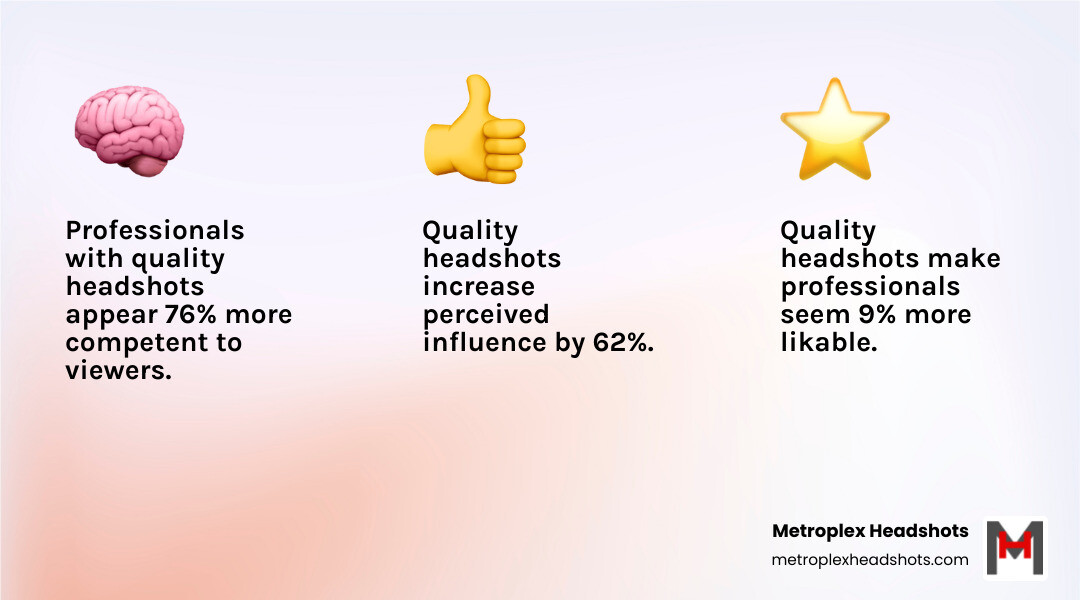
What to wear for a good headshot can make the difference between appearing 76% more competent and getting lost in the LinkedIn scroll. Here’s what works:
Quick Answer: Best Headshot Attire
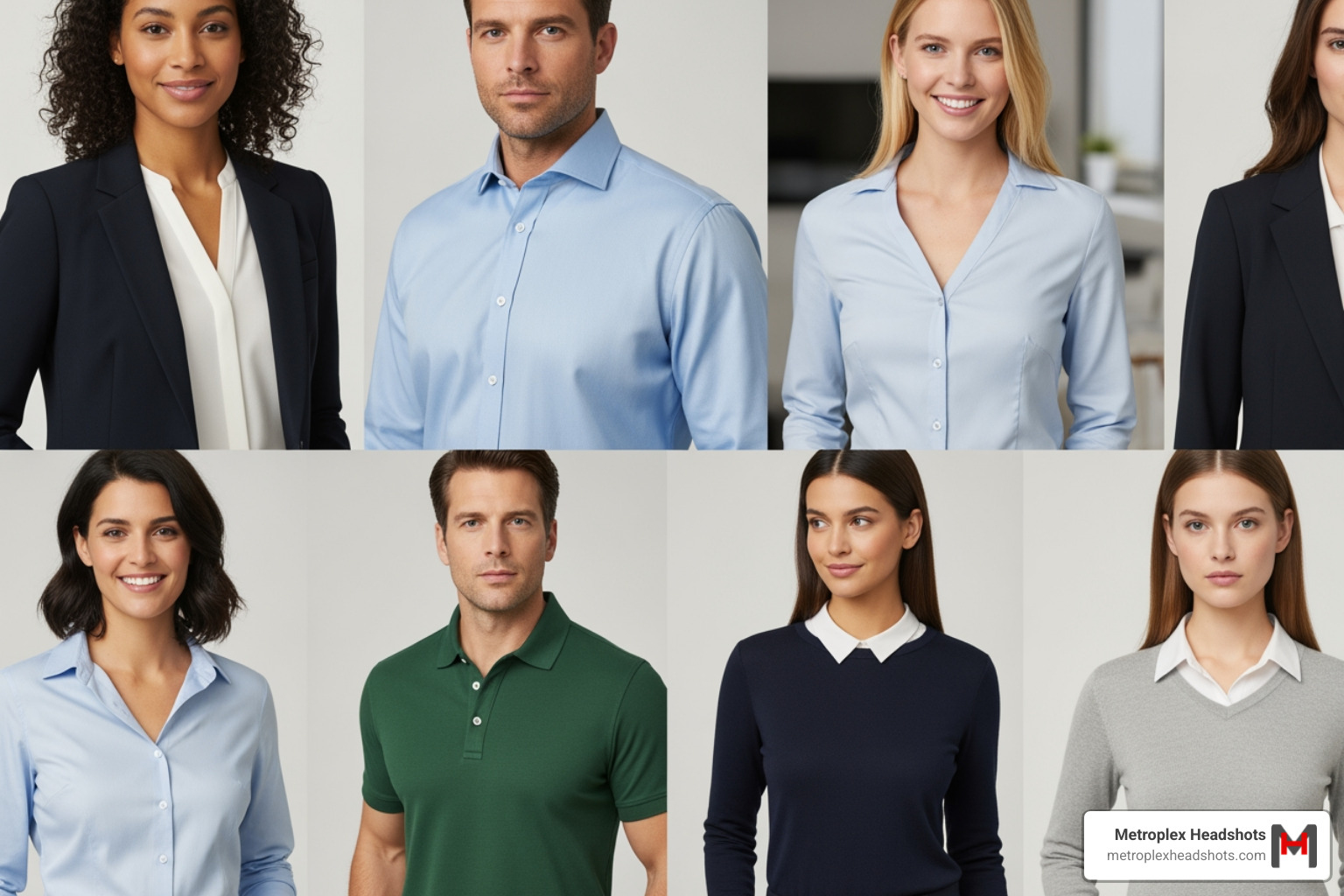
- Colors: Navy blue, jewel tones (emerald, sapphire, burgundy), charcoal gray, or mid-tone earth tones
- Fit: Tailored clothing with proper shoulder seams and modest necklines (V-neck, crew, or collared)
- Fabrics: Matte textures that don’t reflect light (avoid shiny silk or satin)
- Patterns: Solid colors only—busy patterns create distracting camera effects
- Accessories: Simple jewelry, clean non-reflective glasses, minimal distractions
- Avoid: Neon colors, stark white without layers, logos, wrinkled clothing, bare shoulders
That cropped wedding photo on your LinkedIn profile? It’s working against you right now.
Research shows that professionals with quality headshots appear 76% more competent, 9% more likable, and 62% more influential to potential clients and employers. Even more striking: 20% of all time on LinkedIn is spent looking at profile pictures. Your clothing choice in those critical few seconds shapes whether someone trusts you enough to click “connect” or keep scrolling.
The stakes are higher than most people realize. Hiring managers rated blue as the most “interview-worthy” color by 23%, while studies confirm that blazers and trousers make applicants appear more forceful and influential. Your outfit isn’t just fabric—it’s a psychological signal that communicates authority, approachability, and professionalism before you say a single word.
The challenge? Most professionals bring the wrong clothes to their headshot session. They show up in busy patterns that create weird digital effects, neon colors that overpower their face, or ill-fitting shirts that photograph poorly under studio lighting.
As Traci Schowmeyer, I’ve photographed everyone from new hires to Fortune 100 C-Suite executives since 1999, and I’ve seen how the right guidance on what to wear for a good headshot transforms both the photo quality and my clients’ confidence. In this guide, I’ll share exactly what works (and what doesn’t) so you can walk into your session prepared and walk out with a headshot that actually opens doors.
The Psychology of Professional Attire
There is profound truth to the adage “clothes make the man” (and woman). According to researchers, the way we dress conveys information about our identity both in and outside of the workplace, and has a significant impact on what others believe about us. That includes beliefs about how much influence and power we have, ho…. When you step in front of our lens in Southlake or Dallas, you aren’t just choosing a shirt; you are choosing how the world perceives your capability.
Research suggests that simply wearing more formal clothing can contribute to a feeling of power and control, which can impac… your posture and presence in photos. This internal shift is visible on camera. When you feel authoritative, your shoulders square up, your chin lifts slightly, and your gaze becomes more focused.
Color psychology plays an equally vital role. How certain wardrobe hues can influence what others believe about us is a science. Navy blue elicits a sense of dominance and authority, while earth tones can make you appear more grounded and approachable. By understanding these authority cues, you can intentionally build trust with your audience. For those looking to dive deeper into how these elements combine, you can find more info about elevating your professional image through strategic visual choices.
Choosing the Right Colors and Patterns for a Good Headshot
The camera sees color differently than the human eye. In the bright, controlled environment of a professional studio in Plano or Frisco, colors can become more vibrant or, conversely, wash you out.
| Feature | Best Choice | Why? |
|---|---|---|
| Patterns | Solid Colors | Avoids moire effect and keeps focus on your face. |
| Primary Colors | Navy, Charcoal, Emerald | Conveys authority and looks timeless. |
| Avoid | Neon, Bright Red, Stark White | Bleeds color onto skin or creates “blown out” highlights. |
| Contrast | High Contrast with Background | Makes you “pop” and prevents looking like a floating head. |
We always recommend avoiding neons. Your headshot isn’t a music festival, and neon colors reflect back onto your skin, giving your neck and chin a strange, radioactive glow that is difficult to correct. Instead, we suggest looking into more info about modern headshot inspiration to see how jewel tones and neutrals create a high-end look.
Best Colors for a Good Headshot
Blue is the undisputed king of professional headshots. Research on blue being the most interview-worthy color shows that 23% of hiring managers prefer it. But don’t stop at blue. Mid-tones like plum, forest green, and burgundy—often called jewel tones—photograph beautifully on almost every skin tone.
When selecting your palette, consider your skin tone and eye color. If you have blue eyes, a blue shirt or tie can make them “pop.” If you have a very fair complexion, avoid pastels or stark white, as they can make you look washed out. Conversely, if you have a darker skin tone, stay away from muddy earth tones that might blend too closely with your skin; instead, go for vibrant contrast.
How Patterns Affect a Good Headshot
Patterns are the natural enemy of the digital camera. Regardless of your portrait style and setting, simple colors and subtle patterns usually look best on everyone. Bold or busy patterns tend to distract from your face and can lead to moire, an unpleasant visual side effect of repeating patterns.
Moire occurs when the camera’s sensor tries to interpret a fine pattern (like pinstripes or small checkers) and fails, creating wavy, vibrating lines that look like a digital glitch. To avoid this technical distortion, stick to solid blocks of color. If you must have texture, opt for something like a heavy knit or a subtle herringbone that doesn’t create those tight, repetitive lines.
Industry-Specific Wardrobe Strategies
Your headshot should act as a “digital handshake” that feels appropriate for your specific field. According to a study that examined the connection between clothing style and hiring recommendations, blazers and trousers contributed to applicants being perceived as more forceful and influential than those wearing other types of clothing.
- Corporate, Law, and Finance: Stick to the classics. A dark suit (navy or charcoal) with a crisp shirt and a solid or subtly patterned tie is the gold standard. For women, a structured blazer over a blouse or a professional sheath dress works perfectly. For more nuances, see more info about corporate vs. creative headshots.
- Tech and Startups: The “smart casual” look reigns supreme here. Think of a well-fitted blazer over a high-quality T-shirt or a button-down without a tie. It says “I’m professional, but I’m also here to innovate.”
- Healthcare: While scrubs are standard, many doctors opt for a professional blouse or shirt under their white coat. Note: Avoid wearing a white blazer alone, as it can make you look like you’re in a lab coat even if you aren’t in healthcare!
- Real Estate and Sales: Approachability is key. Use warmer colors and slightly more relaxed fits to look like someone a client can trust with their biggest investment.
Dressing for Your Personal Brand
Authenticity is the secret sauce of what to wear for a good headshot. If you never wear a suit to work, don’t wear one for your headshot. Your audience expects to meet the person they see in the photo.
Coordinate with your brand colors subtly. If your company logo is orange, don’t wear an orange suit—instead, perhaps choose a tie or a blouse with a hint of that hue. You can find more info about making a statement with your headshot while staying true to your personal brand’s seniority and style.
Technical Fit and Fabric Considerations
The camera adds ten pounds—not because of magic, but because of poor clothing fit. Baggy clothes make you look larger and less “put together” on camera. Tailored silhouettes are essential.
Ensure your shoulder seams hit exactly where your shoulders end. If the seam is drooping down your arm, the jacket is too big. Women in particular are perceived to be less competent if their clothing is considered provocative or revealing, so blouses and tops with higher necklines are best.
Fabric choice is equally important. We recommend matte fabrics like wool, cotton, or high-quality blends. Avoid shiny silks, satins, or anything reflective, as these catch the studio lights and create “hot spots” that distract from your face. When navigating professional photo sessions, layering—like adding a blazer over a blouse—adds structure and creates a more polished, professional frame for your face.
Final Touches: Accessories, Grooming, and Prep
Preparation starts days before you arrive at our studio in Southlake or Fort Worth. Everyone has one favorite piece of clothing that they’ll wear again and again — but over time, even the nicest blouses and shirts will begin to show signs of wear. This is especially true of brightly-colored clothing or knitted fabrics, which could fade or show signs of pilling of each time it’s washe…. Check your clothes for pilling, loose threads, or stains under bright light.
Accessories and Eyewear
Keep jewelry minimalist. You want people to look at your eyes, not your earrings. If you wear glasses daily, wear them in your headshot! However, ensure they have a non-reflective coating. If they don’t, we might ask you to tilt them slightly or remove the lenses to avoid glare.
Grooming and Makeup
- Makeup: Aim for a natural look. Studio lights are powerful, so a little more foundation than usual can help even out skin tone, but avoid heavy contouring.
- Hair: Avoid major changes (like a brand-new haircut or color) right before the shoot. Give a new cut a week to “settle.” Use a light hairspray to tame flyaways, which are highly visible against studio backgrounds.
- Preparation: Iron everything. Even the best Photoshop can’t perfectly fix a wrinkled shirt. Use a lint roller right before you step on set. For a full checklist, see more info about preparing for a seamless photoshoot.
Frequently Asked Questions about Headshot Attire
How many outfits should I bring to a session?
We recommend bringing at least 3-5 options. This allows us to test different colors against the background and gives you a variety of looks for different platforms (e.g., a formal look for the company website and a casual look for social media).
Should I wear glasses if I only use them for reading?
If you don’t wear them in professional meetings or when greeting clients, leave them off. The goal is recognizability. If you do wear them, make sure they are spotless—the camera sees every smudge!
Can I wear a white shirt without a jacket?
It’s risky. Pure white can “blow out” under studio lights, losing all detail and making you look like a bright blob. If you want to wear white, layer it under a blazer, cardigan, or sweater to provide contrast and structure.
Conclusion
Understanding what to wear for a good headshot is the first step toward a successful session. By choosing the right colors, ensuring a tailored fit, and avoiding technical pitfalls like moire patterns, you set yourself up for an image that radiates confidence and competence.
At Metroplex Headshots, we specialize exclusively in professional headshots for executives across the Dallas-Fort Worth area—from Southlake and Westlake to Plano and McKinney. Our goal is to make you feel completely comfortable, ensuring your personality shines through the lens. We know your time is valuable, which is why we offer same-day selection to get your new, professional image into the world as quickly as possible.
Ready to upgrade your digital handshake? Your professional edge starts with a comprehensive guide to business portrait photography. Contact us today to book your session at one of our many DFW locations and let’s create a headshot that works as hard as you do.

