


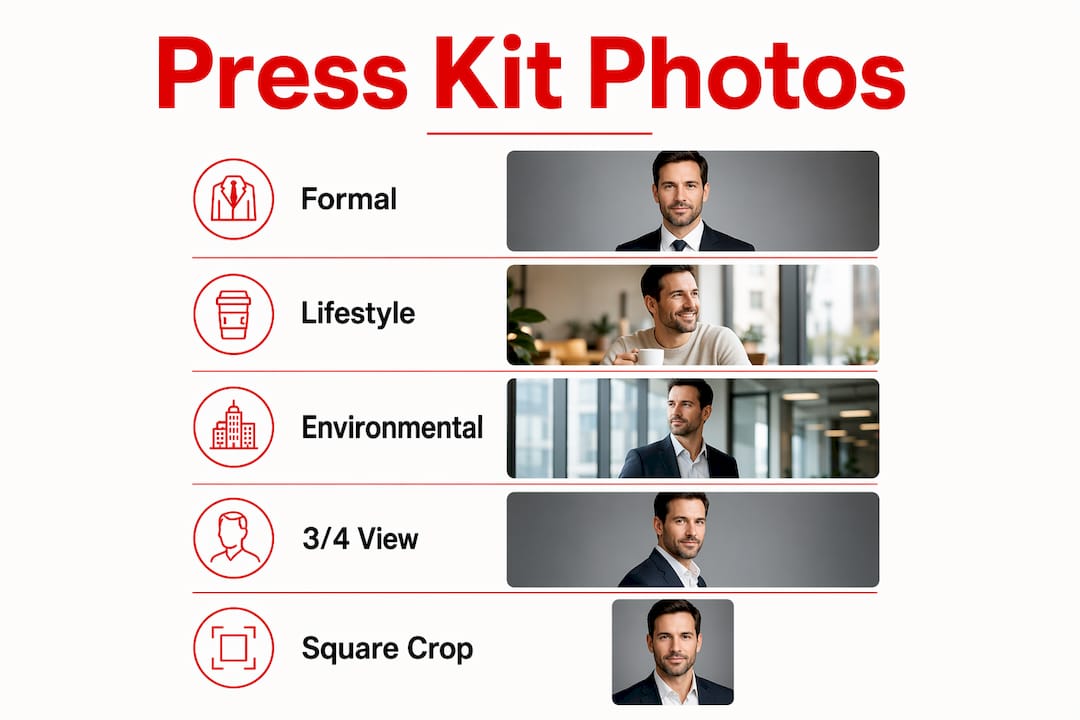
Your press kit needs a few key images to satisfy most editorial requests: a formal business headshot in vertical orientation, a relaxed lifestyle portrait in horizontal orientation, and one utility portrait (3/4 or full-body). Adding a speaker or action shot if you present publicly can be beneficial. This set covers bylines, web headers, feature articles, and social placements without overwhelming a journalist’s inbox.
The minimal deliverable journalists actually use: one vertical formal headshot (JPEG, 2400×3000px, sRGB), one horizontal lifestyle portrait (JPEG, 3000×2000px, sRGB), one 3/4-length utility shot, and one-sentence captions on each. Name files clearly:
firstname-lastname-headshot-formal.jpg. Send as a single ZIP with a one-page manifest.
Quick delivery checklist:
- Formal headshot (vertical): bylines, print articles, speaker bios
- Lifestyle portrait (horizontal): web headers, article thumbnails, podcast pages
- 3/4 or full-body (vertical): conference programs, speaker pages
- Action/speaker shot (horizontal, optional): feature stories, social media
- File types: JPEG at high quality; TIFF on request for print
- Minimum resolution: 1500 pixels on the short side for every image
- Captions: one sentence per image with your name, title, and photographer credit
Table of Contents
- What photos should you include in a press kit?
- What technical specs do your press kit images need?
- How should you dress and pose for editorial headshots?
- How much retouching is appropriate for press kit photos?
- How do you brief a photographer for a press kit session?
- What usage rights and delivery format do journalists expect?
- Where does each image belong in your press materials?
- Your press kit image checklist and filename examples
- Why trust this guide?
- Key Takeaways
- What most executives get wrong about press kit photos
- Metroplex Headshots press kit sessions for executives
- Useful templates and resources
What photos should you include in a press kit?
A well-built press kit includes 3–5 high-resolution images covering at least a formal headshot and a lifestyle or full-body shot. That range gives editors options without forcing them to scroll through a gallery of 20 near-identical frames.
The core set:
- Formal business headshot (vertical): clean background, professional attire, direct eye contact. This is the workhorse image that appears in print bylines, LinkedIn, and speaker directories.
- Relaxed lifestyle portrait (horizontal): slightly less formal, often environmental (office, event space, outdoors). Editors reach for this one for web headers and feature thumbnails.
- 3/4 or full-body shot: shows posture and full wardrobe, useful for conference programs and speaker pages where a tight crop would lose context.
- Speaker or action image (optional): you at a podium, in a workshop, or mid-conversation. Feature writers use these to tell a story rather than just identify a face.
- Alternate expression or angle: a second headshot with a slightly different pose or wardrobe gives editors a choice and prevents visual drift across multiple placements.
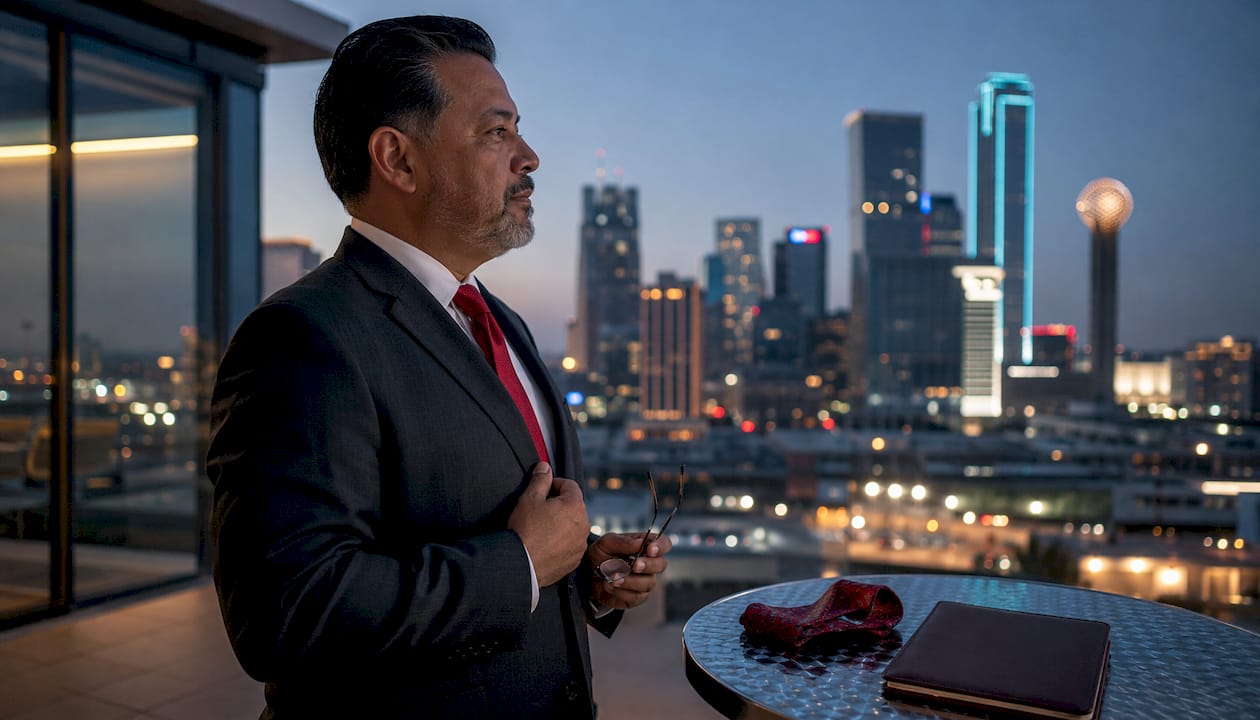
For lifestyle headshots specifically, the setting matters as much as the expression. A C-suite executive photographed in a well-lit boardroom reads differently than the same person in a coffee-shop corner, and both have legitimate editorial uses depending on the story angle.
What technical specs do your press kit images need?
Editors work fast. An image that arrives in the wrong format or at the wrong resolution gets skipped, not fixed. Deliver files that work without rework.
| Spec | Web delivery | Print delivery |
|---|---|---|
| Short-side minimum | 1500 px | 1500 px minimum |
| Recommended size | 2400×3000 px (vertical) | 2400×3000 px minimum |
| File format | JPEG at high quality | TIFF or high-quality JPEG |
| Color profile | sRGB | Adobe RGB (CMYK on request) |
| File size | Under 5 MB per file | 10–25 MB acceptable |
| Aspect ratios | 4:5 vertical, 3:2 horizontal, 1:1 square | Match crop to layout |
Background guidance: avoid busy backgrounds and opt for clean, neutral tones or a shallow depth-of-field environmental setting. A cluttered background competes with your face in thumbnail sizes and often gets cropped out anyway, wasting the context it was meant to provide.
Naming and metadata matter more than most executives realize. Embed your name, title, and photographer credit in the EXIF data, and use clear, descriptive filenames like jane-smith-headshot-formal-2025.jpg. Journalists will often use whichever file is easiest to identify.
Pro Tip: Deliver a square crop (1:1) alongside your vertical and horizontal versions. Social media managers and conference organizers request this constantly, and having it ready prevents a rushed, off-center crop from representing you.
How should you dress and pose for editorial headshots?
Wardrobe is the fastest way to signal brand alignment or undercut it. The goal is clothing that reads clearly at thumbnail size and holds up in print.
- C-suite and corporate: structured jacket or blazer in solid, mid-tone colors (navy, charcoal, burgundy). Avoid white shirts alone under a jacket — they blow out in highlights.
- Founders and creative leads: one step less formal works well. A well-fitted button-down or a structured knit reads as approachable without losing authority.
- Speakers and authors: consider your stage look. If you present in a particular style, that wardrobe often photographs best because it already fits your public persona.
- Avoid: busy patterns, visible brand logos, reflective jewelry, and anything that dates quickly (trendy cuts or seasonal colors).
Posing for editorial use is less about striking a look and more about natural, credible expression. A slight forward lean, relaxed shoulders, and a half-smile read as confident and approachable in print. Stiff, squared-up poses tend to flatten in reproduction. Collaborative, subtle adjustments during the shoot — a small chin tilt, a jacket button undone — often produce the most usable frames.
Plan for at least two to three on-shoot variations: seated and standing, jacket on and jacket off, and one environmental frame if your location allows. That range gives you options without extending the session significantly. A full headshot session prep guide can help you walk in ready.
Pro Tip: Test your looks on camera before the shoot day. Take a few phone shots in each outfit under similar lighting and zoom in on your face. Patterns that look subtle in person often vibrate on screen.
How much retouching is appropriate for press kit photos?
The core rule is simple: subtle retouching only. Editors and journalists expect images that look like you today, not a version of you from five years ago or a version that no longer matches your in-person appearance.
Acceptable edits:
- Color correction and exposure adjustment
- Minor blemish removal (temporary skin issues, not permanent features)
- Even skin tone without removing texture
- Crop and straighten
Edits that reduce credibility:
- Heavy airbrushing that removes skin texture entirely
- Aggressive AI smoothing filters
- Altering hairline, jawline, or significant facial features
- Whitening teeth beyond a natural range
Authenticity builds trust with journalists and audiences. An image that looks heavily processed signals that the subject is managing perception rather than presenting themselves honestly, which is exactly the wrong message for editorial use. Deliver an unretouched original alongside your edited master so outlets can choose the version that fits their standards.
How do you brief a photographer for a press kit session?
Sample brief you can copy
Goals: Media-ready headshots for press kit, speaker pages, and LinkedIn.
Image list: 1 formal vertical headshot, 1 lifestyle horizontal portrait, 1 3/4-length shot, 1 alternate expression.
Brand notes:
Deliverables: Edited JPEG masters (sRGB, 2400px+ short side), unretouched originals, TIFF on request.
Usage rights: Perpetual editorial use; commercial use requires separate license.
Sample shot list
- Tight headshot, clean background, direct eye contact, jacket on
- Same setup, slight angle variation, relaxed expression
- 3/4-length, standing, hands visible
- Environmental portrait, horizontal, lifestyle setting
- Alternate wardrobe option (jacket off or second outfit)
Production timeline and typical costs
| Phase | Typical duration | Notes |
|---|---|---|
| Pre-shoot prep call | varies depending on session | Discuss goals, wardrobe, location |
| Shoot session | varies depending on session | Allows 2 wardrobe changes |
| Cull and select | 1–2 days | Photographer narrows to best frames |
| Retouching | 2–5 days | Depends on volume and complexity |
| Final delivery | 1–2 days after retouch | ZIP + download link |
Cost ranges vary widely based on market, travel, studio time, and usage licensing. Understanding the full portrait investment before booking prevents surprises. For selecting the right photographer, headshot photographer criteria are worth reviewing before you commit.
Schedule morning sessions when possible. Most executives photograph better before a full day of meetings, and natural light is often more consistent earlier in the day.
What usage rights and delivery format do journalists expect?
Model releases protect both you and any identifiable third parties in your images. For solo executive headshots, you are the subject and the rights holder, so a release from you to your photographer (and back to you for editorial use) is the standard arrangement. If your images include colleagues, assistants, or event attendees, collect signed releases before distributing.
Include a simple usage-rights statement with every image package:
- Permitted use: perpetual editorial use with credit line
- Credit line format: “Photo: [Photographer Name] / [Your Name or Company]”
- Commercial use: contact [your email] for licensing
Journalists prefer curated, clearly labeled downloadable images over large untagged galleries. Deliver a single ZIP file for email and maintain a web press page with individual download buttons for inbound requests.
Assets manifest template (paste into your email or press page):
| Filename | Description | Orientation | Resolution | Credit |
|---|---|---|---|---|
| firstname-lastname-headshot-formal.jpg | Formal business headshot | Vertical | 2400×3000 | Photo: Photographer Name |
| firstname-lastname-lifestyle-horizontal.jpg | Relaxed lifestyle portrait | Horizontal | 3000×2000 | Photo: Photographer Name |
| firstname-lastname-threequarter.jpg | 3/4-length portrait | Vertical | 2400×3000 | Photo: Photographer Name |
Where does each image belong in your press materials?
Matching the right image to the right placement prevents editors from having to crop or substitute, which means your preferred image actually gets used.
- Formal vertical headshot: print bylines, author bios, LinkedIn profile, speaker directory listings, Wikipedia-style reference pages
- Horizontal lifestyle portrait: web article headers, podcast show notes, newsletter banners, YouTube thumbnails
- 3/4 or full-body: conference programs, event websites, book jacket author pages
- Action or speaker shot: feature articles, social media posts about an event or talk, press releases announcing a keynote
For cropping variants: LinkedIn works best at 400×400px (1:1); Twitter/X profile at 400×400px and header at 1500×500px; Instagram at 1080×1080px for feed. Conference websites typically request 800×1000px vertical. Keep a pre-cropped set of each ready so you are not doing this under deadline pressure.
Embed photographer credits and short captions with every file. A journalist who can paste your caption directly into their CMS will use your image over one that requires them to write the credit from scratch.
For email attachments, keep individual files under 5 MB. If your print-ready TIFFs are larger, host them on a press page or Google Drive and link rather than attach.
Your press kit image checklist and filename examples
Copy-ready checklist:
- [ ] Formal vertical headshot (JPEG, at least 1500 pixels on the short side, sRGB)
- [ ] Horizontal lifestyle portrait (JPEG, at least 1500 pixels on the short side, sRGB)
- [ ] 3/4-length or full-body portrait (JPEG, vertical)
- [ ] Speaker or action shot (optional, horizontal)
- [ ] Square crop of primary headshot (1080×1080px)
- [ ] Unretouched originals (separate folder)
- [ ] TIFF versions (on request, Adobe RGB)
- [ ] Signed model release (if third parties appear)
- [ ] Usage-rights statement (text file or PDF)
- [ ] Assets manifest (CSV or PDF)
- [ ] Photographer credit line for each image
- [ ] One-sentence caption per image
| Filename example | Image type | Notes |
|---|---|---|
| jane-smith-headshot-formal-2025.jpg | Formal vertical headshot | Primary press image |
| jane-smith-lifestyle-horizontal-2025.jpg | Lifestyle horizontal | Web and article use |
| jane-smith-threequarter-2025.jpg | 3/4-length portrait | Speaker pages |
| jane-smith-speaker-action-2025.jpg | Action/speaker shot | Feature stories |
| jane-smith-headshot-square-2025.jpg | Square crop | Social media |
ZIP naming: Jane-Smith-PressKit-Photos-2025.zip. Email subject line: “Jane Smith — Press Kit Images [Hi-Res Download].”
Why trust this guide?
This guide is written by Traci Schowmeyer, a business headshot specialist and the photographer behind Metroplex Headshots, based in the Dallas-Fort Worth area. Traci works with executives, speakers, and authors to produce media-ready professional imagery that holds up across print, web, and broadcast placements.
Metroplex Headshots brand signals:
- Specialization in executive and corporate headshots for press, LinkedIn, and speaker profiles
- Sessions designed around brand alignment and editorial usability
- Delivery format built for immediate media distribution
- Proven approach to authentic photography that builds credibility with journalists and audiences
[Testimonials and case studies — to be inserted by site team]
Key Takeaways
A complete press kit image set requires a formal vertical headshot, a horizontal lifestyle portrait, and at least one utility shot delivered as labeled JPEGs at 1500 pixels minimum on the short side.
| Point | Details |
|---|---|
| Minimum image count | Include several images: formal vertical, lifestyle horizontal, 3/4-length, and an optional action shot. |
| Technical floor | Every image needs at least 1500 pixels on the short side; sRGB for web, Adobe RGB for print. |
| Retouching boundary | Remove temporary blemishes only; preserve natural texture and deliver an unretouched original alongside the edited master. |
| Delivery format | Send a single ZIP with clear filenames, a one-page manifest, captions, and a usage-rights statement. |
| Metroplex Headshots | Traci Schowmeyer’s press-kit sessions cover all orientations, retouching, and file delivery in a format journalists can use immediately. |
What most executives get wrong about press kit photos
The conventional wisdom says “just get a good headshot.” That framing misses the real problem. A single tight headshot, however polished, cannot serve a print byline, a web header, and a conference program simultaneously. Editors crop what they have, and a vertical portrait forced into a horizontal slot produces exactly the kind of awkward, off-center image that makes a subject look unprepared.
What actually matters is thinking like an editor before you walk into the studio. A journalist working on a feature needs a horizontal image with breathing room on either side of your face. A podcast host needs a square. A conference organizer needs a vertical with space above your head for text overlay. None of those needs is served by one tightly cropped headshot, no matter how sharp it is.
The other underestimated factor is recency. Photos taken more than three or four years ago create a credibility gap the moment a journalist meets you in person or sees a recent social post. That gap is small but noticeable, and it plants doubt at exactly the wrong moment.
The photographers who produce the most usable press-kit images are the ones who ask about placement before they pick up a camera. That conversation changes everything about how a session is structured.
Metroplex Headshots press kit sessions for executives
Executives, speakers, and authors who need media-ready images without the back-and-forth of multiple revision rounds will find that Metroplex Headshots is built for exactly this. A press-kit session includes formal and lifestyle orientations, multiple crops, retouched JPEG masters, unretouched originals, and delivery in a journalist-ready format.
Sessions are structured around your brand alignment goals, not a generic pose checklist. Traci Schowmeyer works with you before the shoot to map the placements you need, then directs the session to cover every orientation and expression variation your press kit requires. Turnaround is typically one week from shoot to final delivery. Specify your usage-rights requirements at booking so the license language is included with your files from day one.
See what a full national headshot session covers, or review the session prep guide to walk in ready. Book directly at Metroplex Headshots.
Useful templates and resources
- Metroplex Headshots session prep guide: wardrobe checklist, shoot-day timeline, and what to bring. Edit the wardrobe section for your industry before your session.
- Photography portfolio curation guide: practical framework for selecting and organizing your final image set. Useful for narrowing a large delivery to the five images your press kit actually needs.
- HubSpot media kit examples: real-world press page structures showing how brands host and organize downloadable assets, including photo galleries and PDF kits.
- WINT Communications PR-ready checklist: covers photo recency, resolution, and background standards. Use it as a final audit before sending your kit to media contacts.
- Model release forms: standard templates are available through ASMP (American Society of Media Photographers) and should be edited to include your name, the photographer’s name, and the specific usage rights granted. Do not use a generic template without confirming it covers editorial and commercial use separately.
- Metroplex Headshots contact page: the fastest route to booking help, session questions, or a custom quote for multi-location or team projects.

