


Gaze, posture, and lighting are the three fastest visual cues viewers read as confidence in a professional portrait. Before your next session, do these three things: wear a well-fitted blazer or structured jacket, rehearse holding direct eye contact with the lens for five full seconds, and ask your photographer for a straight-on headshot with your shoulders rolled back. These adjustments alone shift how your image reads before anyone processes your name, title, or background.
The research behind this is striking. Willis & Todorov found that people form reliable trait judgments, including competence and trustworthiness, after just 100 milliseconds of exposure to a face. Your portrait does not get a second chance at that first impression. Metroplex Headshots builds every session around this reality, using deliberate posing, lighting, and wardrobe direction to ensure each frame communicates exactly what you intend.
Table of Contents
- Why your portrait shapes professional credibility faster than you think
- The visual signals that communicate confidence in every frame
- How to pose for a portrait that projects authority
- Wardrobe, grooming, and styling choices that build credibility
- How to brief your photographer for a confident portrait
- Common mistakes that quietly undermine your portrait’s confidence
- What a professional portrait session costs and how long it takes
- Before-and-after examples showing how small changes shift perception
- Your 10-point checklist for a confident portrait session
- Key Takeaways
- The photographer’s view on what confidence actually looks like on camera
- Metroplex Headshots helps you put confidence on camera
- Useful sources and further reading
Why your portrait shapes professional credibility faster than you think
Willis & Todorov found that people form reliable trait judgments from faces after just 100 milliseconds, and this operates as the reality behind every profile photo, website headshot, and LinkedIn image you publish. Viewers are not consciously evaluating you. Their brains are running an automatic pattern-match against cues for trustworthiness, status, and competence, and the verdict lands before rational thought kicks in.
Body language amplifies this effect significantly. Rangefinder documents that small changes in posture, gaze direction, and shoulder tension alter how viewers read power, openness, and engagement in a portrait. A slouched shoulder reads as uncertainty. A slightly averted gaze reads as evasiveness. Neither is the impression you want a prospective client or hiring committee to carry away.
Statistic to know: Research confirms that trait judgments from faces are reliable after exposures as brief as 100 ms, meaning photographic cues are processed almost instantly, well before a viewer reads your bio or credentials.
The stakes vary by industry, but the mechanism is universal. An executive portrait signals authority through fronting and stillness. A therapist’s portrait signals warmth through a slight head tilt and a genuine, relaxed smile. A real estate professional’s portrait signals approachability through open posture and a bright, uncluttered background. The professional portrait investment benefits extend far beyond aesthetics. They directly affect how clients and colleagues decide whether to trust you.
Cultural context matters, too. In more formal industries, such as law and finance, a composed, neutral expression reads as competent and serious. In creative fields or client-facing care roles, warmth and approachability carry more weight. Knowing your industry’s visual norms is part of confident portrait photography, not an afterthought.
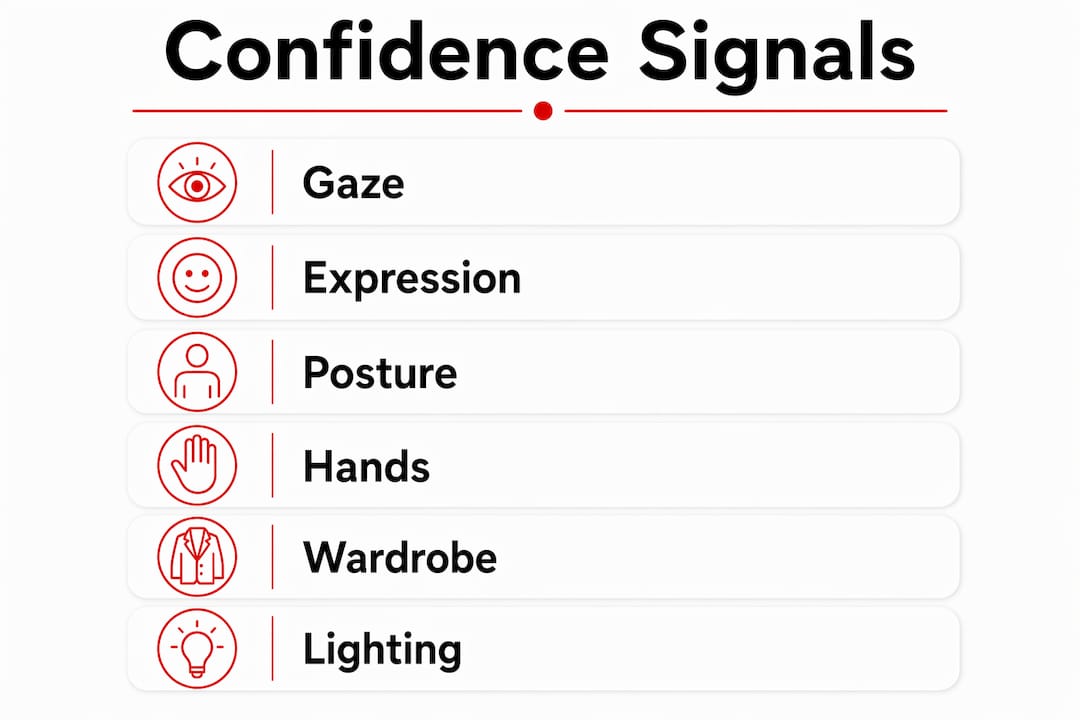
The visual signals that communicate confidence in every frame
Each element of a portrait carries a specific message. Understanding what each one communicates gives you the ability to direct your session with precision.
Gaze and eye contact
Direct eye contact with the lens is the single most powerful confidence cue in a still image. It creates the impression of engagement and self-assurance. Micro-adjustments matter here: a slight lift of the lower eyelid, sometimes called “squinching,” adds intensity and engagement without looking aggressive. A fully wide-eyed stare reads as anxiety. Soft, focused, and direct is the target.
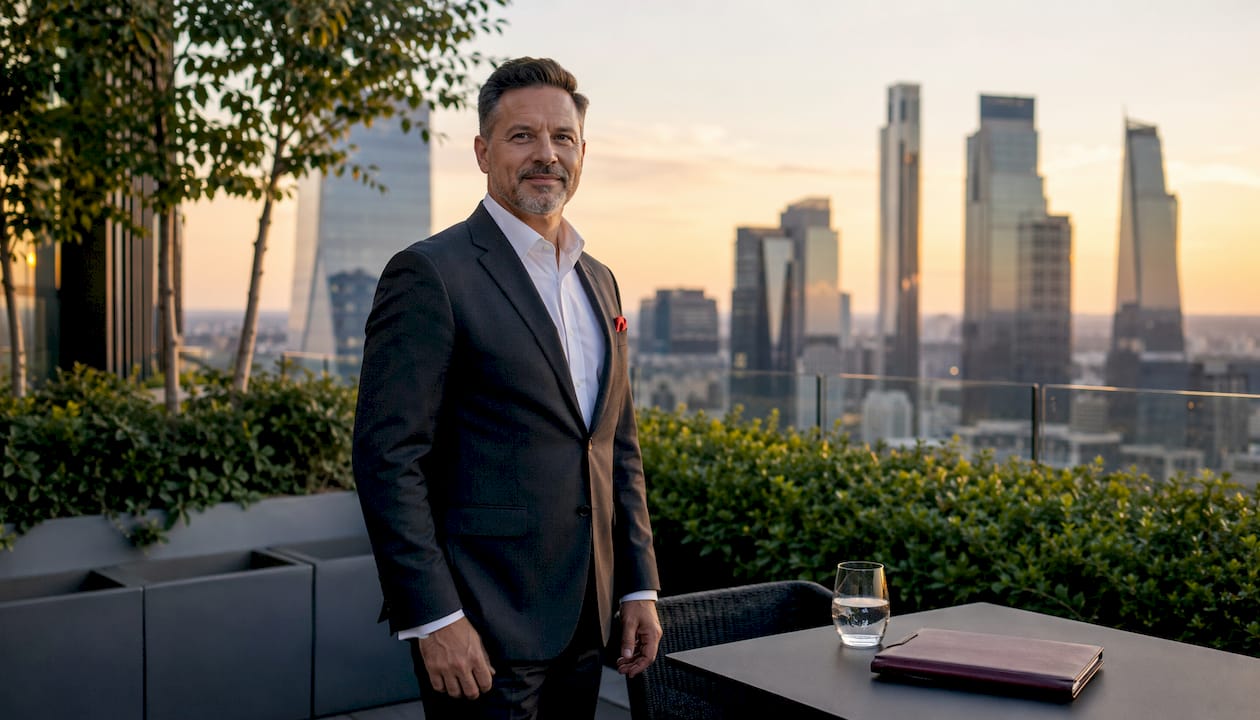
Facial expression and energy
A genuine, relaxed expression beats a forced smile every time. The difference shows in the eyes. When the smile is real, the orbicularis oculi muscle around the eye contracts slightly, creating a natural crinkle. A posed smile that does not reach the eyes reads as performative, which undercuts the credibility you are trying to project.
Posture and head angle
Open torso posture signals power. A straight-on orientation communicates authority, while a slight torso pivot softens that authority into approachability. For most professional portraits, a small pivot of 10–15 degrees combined with a fronted shoulder is the sweet spot. Head angle matters too: a very slight chin tuck elongates the neck and reads as composed rather than stiff.
Hands and body tension
Hands that are relaxed and partially visible signal openness. Clenched hands, crossed arms, or hands jammed into pockets all read as defensive. PhotographySpark notes that relaxed shoulders and aligned posture shift viewer perception from tense to composed and authoritative. If your hands are in frame, keep them loose.
Wardrobe and grooming
Fit is the first rule. A jacket that pulls at the shoulders or a shirt that gaps at the collar undermines the authority the pose is trying to build. Grooming should be camera-ready, which means slightly more polished than your everyday standard, because the camera flattens and softens detail.
Lighting and composition
Rembrandt lighting, a classic three-point setup with a key light at roughly 45 degrees, adds dimension and gravitas. Flat, even lighting reads as corporate-generic. The background should be clean and uncluttered. A dark, neutral background increases perceived formality and authority. A lighter background reads as more approachable and open.
Color psychology
Blues and blue-grays in attire consistently read as trustworthy and calm. Dark neutrals, charcoal, navy, and black, increase perceived authority. Warm accent colors, burgundy, deep teal, or rich green, add approachability without sacrificing professionalism. Avoid busy patterns, which draw the eye away from your face and fragment the viewer’s attention.
Pro Tip: When shooting for high authority, use more fronting frames. When approachability is the goal, introduce a slight torso pivot and soften the jawline with a minimal head tilt toward the camera. Keep the change subtle so the result looks natural, not posed.
How to pose for a portrait that projects authority
Posing is not about dramatic gestures. It is about shifting small alignment cues, specifically shoulders, torso, and head, to change what the image communicates.
Four standard poses that signal confidence
Straight-on headshot: Face the camera squarely, shoulders level and back, chin slightly forward and down. Gaze directly into the lens. This is the highest-authority pose and works for executives, lawyers, and senior professionals.
Slight torso pivot with fronted shoulder: Rotate your body 10–15 degrees away from the camera, then turn your head back to face it directly. Keep the near shoulder slightly forward. This creates depth and reads as confident but approachable.
Seated with open posture: Sit forward on the chair rather than leaning back. Keep your spine upright, hands resting loosely on your thighs or the armrest. Leaning slightly forward signals engagement.
Three-quarter length power stance: Stand with feet shoulder-width apart, weight slightly on the back foot. Arms relaxed at your sides or one hand in a jacket pocket with the thumb out. This reads as grounded and in control.
Verbal cues that actually work
Vague direction like “look confident” produces stiff, performative results. Mirroring a client’s ideal posture and demonstrating the pose yourself is far more effective. Specific verbal cues that work:
- “Roll your shoulders back, then let them drop an inch.”
- “Bring your chin slightly forward, then tilt it down just a touch.”
- “Think of something you’re genuinely proud of, and hold that feeling.”
- “Soften your jaw, take a breath, and let it out slowly before I count to three.”
Pro Tip: Take a full breath in, hold for two seconds, and exhale completely just before the shutter fires. This releases micro-tension in the jaw, neck, and shoulders that the camera picks up even when you cannot feel it.
Wardrobe, grooming, and styling choices that build credibility
What you wear in a portrait is not decoration. It is data. Viewers read your attire as a signal of how seriously you take your professional image, and by extension, how seriously you will take their business.
Core wardrobe rules
- Fit above everything: Tailored or well-fitted clothing reads as intentional and polished. Baggy or ill-fitting garments read as careless.
- Solid colors or subtle textures: Avoid bold stripes, large prints, and busy patterns. They compete with your face for the viewer’s attention.
- Necklines and layering: V-necks and open collars draw the eye upward toward the face. Structured collars and blazers add authority. A well-fitted blazer over a simple top is the most reliable choice across industries.
- Minimal accessories: One or two pieces maximum. A watch, simple earrings, or a classic necklace. Avoid anything that catches light unpredictably or moves in distracting ways.
Color strategy by industry
Blues and blue-grays work across almost every professional context because they read as trustworthy and calm. Dark neutrals, charcoal, navy, and black, increase formality and authority, making them ideal for legal, financial, and executive portraits. Warm accent colors add approachability, which suits therapists, healthcare professionals, and client-facing roles. Avoid neon, white (which blows out against light backgrounds), and very light pastels that can wash out on camera.
Grooming checklist
- Hair clean, styled, and controlled. Flyaways and stray hairs are distracting in close-up frames.
- Facial hair trimmed and shaped the day before, not the morning of, to avoid razor irritation.
- Makeup for camera: slightly more coverage than everyday wear, matte finish to reduce shine, defined brows.
- Garments lint-rolled, wrinkle-free, and steamed if needed.
- Nails clean and neutral if hands will be in frame.
Pro Tip: Bring two or three outfit options to your session, including at least one neutral backup jacket. Real-time image review during the session lets you see which option reads best on camera before committing to a full set of shots in one look.
How to brief your photographer for a confident portrait
A clear brief is the difference between a session that produces one usable image and one that produces a full set of on-brand portraits. Your photographer cannot read your mind, but they can execute a well-written brief with precision.
Sample brief template
- Objective: State the primary use case. LinkedIn profile, company website, speaking bio, press kit.
- Audience: Who will see this image? Prospective clients, hiring managers, conference organizers.
- Wardrobe: List the outfits you are bringing and any color preferences.
- Background: Preferred tone, dark neutral for authority, light/white for approachability, environmental for context.
- Mood references: Pull two or three example portraits that capture the energy you want.
- Required crops: Full headshot (head and shoulders), three-quarter, half-body, and any square crops for social media.
- Retouching limits: Natural skin smoothing, stray hair removal, teeth brightening. Note any features you want left untouched.
- Deliverables and licensing: Number of final retouched images, file formats, and intended usage.
Shot list with priority labels
- Must-have: Straight-on headshot, slight torso pivot headshot, three-quarter length standing.
- Nice-to-have: Seated with open posture, candid approachable shot (mid-laugh or looking slightly off-camera), half-body environmental shot.
Technical preferences to request
- Lighting style: Rembrandt or loop lighting for depth and authority; broad lighting for a softer, more approachable result.
- Lens: 85mm or longer for flattering compression; avoid wide-angle lenses for headshots.
- Framing: Straight-on or slightly angled, never extreme angles that distort proportion.
Retouching should enhance, not replace. Over-retouching removes the micro-expressions and subtle skin texture that make a portrait feel real. DIGIFOTO Pro notes that overdirecting and over-processing both produce the same result: an image that feels staged rather than confident.
Pro Tip: Ask for a real-time image review during the session. Seeing a frame on a laptop or tethered monitor mid-shoot lets you and your photographer course-correct posture, expression, and wardrobe before you have committed to 50 shots in the wrong direction.
Common mistakes that quietly undermine your portrait’s confidence
Most confidence problems in portraits are not dramatic failures. They are small, fixable errors that compound.
- Looking away or downward: Even a slight downward gaze reads as submissive or disengaged. Keep your gaze at or slightly above lens level.
- Slouched or raised shoulders: Shoulders pulled up toward the ears signal anxiety. Shoulders rolled forward signal defeat. Neither is correctable in post-production.
- Tight or unnatural smile: A smile that does not reach the eyes reads as performative. Use a breathing technique or a genuine memory to produce a real expression.
- Busy or distracting backgrounds: A cluttered background fragments attention and reduces perceived authority. This is an in-camera fix, not a retouching fix.
- Over-retouching: Removing too much texture and expression makes a portrait look artificial. Viewers sense inauthenticity even when they cannot name it.
- Mismatched wardrobe: Wearing casual attire for an executive portrait, or overly formal attire for a creative role, creates a visual mismatch that undermines brand alignment.
- Stiff, performative posing: This is the result of vague direction. SLR Lounge references the research on open posture and its effect on both internal physiology and external perception, which is why warmup poses before the session genuinely help.
Pro Tip: Posture and expression cannot be fixed in retouching. If the shoulders are up and the smile is forced in the raw file, they will still be up and forced in the final image. These are on-set corrections only.
What a professional portrait session costs and how long it takes
Understanding the investment helps you plan and set realistic expectations for what you will receive.
| Session Type | Typical U.S. Price Range | Deliverables | Average Turnaround |
|---|---|---|---|
| Single headshot session | $150 | 1–3 retouched images | 3–7 business days |
| Executive portrait session | — | 5–15 retouched images | 5–10 business days |
| Corporate team shoot | — | 10–50+ images, multiple subjects | 7 business days |
| On-location / mobile studio | Add $100 | Varies by session type | Same as above |
Factors that shift price include the photographer’s experience level, studio overhead, number of retouched final images, licensing scope, and whether the session is on-location or in-studio. Expedited delivery typically adds a fee.
A typical session timeline runs like this:
- Booking to session: 1–2 weeks for scheduling and consultation.
- Session day: 30–90 minutes depending on session type and number of looks.
- Proofing and selection: 24–72 hours after the shoot.
- Retouching and delivery: 3–10 business days after selection.
For refresh cadence, public-facing executives benefit from updated portraits annually, particularly after a role change, significant appearance change, or rebrand. Most other professionals do well on an 18–24 month cycle. A portrait that is more than three years old often creates a visual drift between how you look today and how you appear online, which erodes trust before a conversation even starts.
Before-and-after examples showing how small changes shift perception
The most instructive case studies are not dramatic makeovers. They are small, deliberate adjustments that produce outsized perception shifts.
Case 1: The executive with raised shoulders. A senior finance professional came in with a strong background and a clear brief, but every early frame showed shoulders pulled up toward the ears, a classic anxiety response to the camera. The fix was simple: a two-minute breathing exercise, a verbal cue to “roll your shoulders back and let them drop,” and a slight forward lean. The resulting frames read as composed, authoritative, and approachable. Same person, same wardrobe, same background. The only change was shoulder position and breath.
Case 2: The therapist who looked too formal. A licensed therapist booked a session for her private practice website. Her initial wardrobe choice was a structured blazer over a dark blouse, which read as corporate rather than warm. Switching to a softer cardigan in a muted teal, combined with a slight head tilt and a genuine smile, shifted the portrait from “boardroom” to “trustworthy care professional.” The background was also lightened to a warm neutral, reinforcing the approachability signal.
Case 3: The real estate agent with an averted gaze. A real estate professional’s existing headshot showed a slight downward gaze and a half-smile that read as uncertain. The correction involved direct gaze coaching, a slight chin-forward adjustment, and a wardrobe swap to a navy blazer. The updated portrait projected confidence and competence, which is exactly what a prospective home buyer needs to see before picking up the phone.
Metroplex Headshots approaches every session with a consultation-first model, reviewing your use cases, audience, and brand before the first frame is captured. Real-time image review during the session means you leave knowing the images work, not hoping they do.
Pro Tip: The portrait career advancement payoff compounds over time. A strong portrait used consistently across LinkedIn, your website, and speaking bios builds recognition and trust with every impression it makes.
Your 10-point checklist for a confident portrait session
Use this list the day before and the morning of your session. Copy it into your appointment notes or send it to your photographer as a quick brief.
- Confirm your wardrobe: Lay out two or three options the night before. Check for wrinkles, lint, and fit.
- Groom for camera: Hair styled, facial hair trimmed, makeup matte and slightly more defined than everyday.
- Hydrate and rest: Puffy eyes and dull skin show on camera. Eight hours of sleep and adequate water make a visible difference.
- Review your brief: Confirm the shot list, background preferences, and retouching notes with your photographer before the session starts.
- Warm up your posture: Before you step in front of the camera, roll your shoulders back five times and stand tall for 60 seconds.
- Practice your gaze: Hold eye contact with your own reflection for five seconds. This reduces the instinct to look away when the lens is pointed at you.
- Breathe before each shot: Inhale, hold two seconds, exhale fully. Fire the shutter at the end of the exhale.
- Request real-time review: Ask to see a frame on a monitor mid-session so you can adjust posture, expression, or wardrobe before committing to a full set.
- Bring your brief in writing: A one-page document with your objective, audience, shot list, and retouching preferences keeps the session focused.
- Plan your post-session crop requests: Know in advance whether you need a square crop for LinkedIn, a horizontal crop for a website banner, or a vertical crop for a speaking bio.
Key Takeaways
Deliberate adjustments to gaze, posture, lighting, and wardrobe produce the most reliable shifts in how a professional portrait signals confidence and credibility.
| Point | Details |
|---|---|
| First impressions are instant | Viewers form trait judgments in as little as 100 ms, so every visual cue must be intentional from the first frame. |
| Posture is the fastest fix | Rolling shoulders back and opening the torso shifts perceived authority more than any other single adjustment. |
| Wardrobe signals brand alignment | Fit, color, and profession-appropriate styling communicate credibility before the viewer reads your name. |
| Brief your photographer in writing | A one-page brief covering objective, shot list, and retouching limits produces a focused session and stronger final images. |
| Metroplex Headshots | Offers consultation, in-studio and on-location sessions, real-time image review, and professional retouching for professionals across Dallas–Fort Worth. |
The photographer’s view on what confidence actually looks like on camera
Most professionals walk into a portrait session believing confidence is something they either have or do not have that day. That framing is the first thing worth correcting.
Confidence in a portrait is not a feeling. It is a set of physical cues that can be coached, adjusted, and captured regardless of how nervous or self-conscious you feel in the moment. The research on body language in photo shoots supports what experienced portrait photographers observe every session: when posture, expression, and energy align, the brain trusts the subject more because the viewer expends less cognitive effort parsing mixed signals. A portrait where everything is consistent reads as confident. A portrait where the smile says “approachable” but the shoulders say “tense” creates a subtle dissonance that viewers feel without being able to name.
The ritual that produces the best results, session after session, is simple. Before the first frame, take 60 seconds to stand tall, breathe deeply, and think of a moment when you were genuinely proud of your work. That internal shift shows up in the eyes and the set of the jaw in ways that no amount of verbal direction can replicate. Then the photographer’s job is to capture it, not manufacture it.
The professionals who leave with the strongest portraits are not the ones who arrived the most polished. They are the ones who arrived the most prepared, with a clear brief, the right wardrobe, and a willingness to follow specific direction. That combination is the real secret sauce of professional branding.
Metroplex Headshots helps you put confidence on camera
Your portrait is your digital handshake, and it is working for you or against you every time someone searches your name. Metroplex Headshots specializes in professional headshots for executives, corporate teams, lawyers, healthcare professionals, therapists, real estate agents, and actors across the Dallas–Fort Worth Metroplex. Every session includes a pre-shoot consultation to align on your goals, in-studio or on-location setup, real-time image review so you see results before you leave, and professional retouching that keeps your portrait looking authentic.
The difference between a portrait that projects confidence and one that undermines it often comes down to a single session with the right direction. Whether you need a headshot session guide to prepare or you are ready to understand the full business portrait investment, Metroplex Headshots has the resources to get you there. Book your consultation today and walk away with portraits that do the work your credentials deserve.
Useful sources and further reading
The research and practitioner resources cited throughout this article are worth exploring directly if you want to go deeper on the psychology and technique behind confident portrait photography.
- Willis & Todorov, 2006 — “First Impressions”: The foundational study on 100-millisecond trait judgments from faces. Essential reading for anyone who wants to understand why photographic cues carry such disproportionate weight.
- PubMed — Trait judgments from brief face exposures: Experimental evidence that reliable competence and trustworthiness judgments form after 100–500 ms of face exposure.
- Rangefinder — The Art of Posing: Body Language Basics: Practical photographer guidance on posture, gaze, and mirroring techniques for producing natural, confident expressions.
- SLR Lounge — Photographer’s Essential Guide to Body Language: Covers power pose research and its direct applications for portrait photographers.
- DIGIFOTO Pro — Body language in photography guides your image: Guidance on fronting vs. pivot, overdirection risks, and the balance between directing and observing.
- PhotographySpark — The science of body language in photo shoots: Practical primer on how shoulder alignment and posture adjustments shift viewer perception from tense to authoritative.
- Metroplex Headshots — Session Prep Guide: Practical wardrobe and preparation checklist for your portrait session.
- Metroplex Headshots — Business Portrait Investment Explained: A detailed breakdown of what to expect from a professional portrait investment and how to evaluate your options.

