


Professional portrait leadership presence is the deliberate use of visual and behavioral signals in photography to project trust, clarity, and gravitas in professional settings. This concept goes well beyond wardrobe and grooming. Research from Stratos shows that appearance accounts for only 5% of executive presence perception, while gravitas drives 67% and communication signals drive 28%. That means your portrait must do far more than make you look polished. It must visually communicate composure, credibility, and the kind of calm authority that tells a viewer you can be trusted with consequential decisions. Metroplex Headshots works with business leaders every day who understand this distinction and want their image to reflect it.
What visual cues define professional portrait leadership presence?
Executive presence is distinct from charisma. Executive presence is about being trusted with high-stakes decisions, not simply being liked or appearing approachable. That distinction changes everything about how a portrait should be composed and executed.
Research from Vrije Universiteit Amsterdam confirms that observers infer competence, dominance, trustworthiness, and warmth from leader faces, often without any behavioral context at all. A single portrait can shift how a viewer rates your leadership readiness. That is not a small thing when the image lives on your LinkedIn profile, your company website, or a conference speaker page.
The four traits viewers read from a portrait break down like this:
- Competence: Signals through steady eye contact, a composed expression, and clean framing that does not distract from the face
- Dominance: Communicated through grounded posture, a direct gaze, and controlled facial muscle tension
- Trustworthiness: Built through open expression, relaxed jaw, and lighting that does not create harsh shadows across the face
- Warmth: Conveyed through a genuine, relaxed smile or a soft, engaged expression rather than a forced or rigid one
These are not subjective preferences. Subtle facial cues strongly impact how leadership traits are inferred, meaning portrait choices carry real professional weight.
Pro Tip: Before your session, study portraits of leaders you respect in your industry. Identify what specific visual elements, posture, gaze, expression, create the impression of authority. Bring those references to your photographer as a starting point for your own session.
How does warmth and authenticity affect executive presence in portraits?
The warmth-competence balance is the most misunderstood element of leadership portrait photography, particularly for women. Science of People research shows that warmth signals must be person-level to avoid the likability-versus-competence penalty. A portrait that reads as role-performative warmth, think a broad customer-service smile, signals friendliness but not authority. A portrait that reads as person-level warmth signals genuine engagement and emotional intelligence.
The difference shows up in micro-expressions. A genuine smile engages the muscles around the eyes, not just the mouth. A forced smile creates tension in the cheeks and a flat gaze. Viewers read this difference instantly, even if they cannot articulate why one portrait feels more trustworthy than another.
Common pitfalls to avoid in your portrait session include:
- Forced smiling: Creates visible tension that reads as anxiety, not warmth
- Overly aggressive expressions: A hard stare or tight jaw signals defensiveness, not authority
- Neutral-to-blank expressions: Without any warmth signal, portraits read as cold or unapproachable
- Performative polish: Over-retouched images that remove natural texture make expressions look artificial
For women in leadership roles, authentic warmth balanced with credibility reduces bias penalties and increases perceived leadership readiness. The goal is not to choose between being warm and being credible. The goal is to express both at the same time through genuine expression.
Pro Tip: During your session, think of a specific person you genuinely care about. Picture them clearly. That mental shift activates real warmth in your expression without losing composure. This relationship memory technique is used by executive coaches to generate believable warmth that does not undermine gravitas.
What composition, styling, and environment enhance leadership portraits?
Wardrobe signals role-appropriate professionalism without over-polishing. The right choice depends on your industry and the audience viewing your portrait. A tech executive in a structured blazer reads differently than a financial advisor in a full suit, and both can project strong leadership presence when the styling aligns with the context.
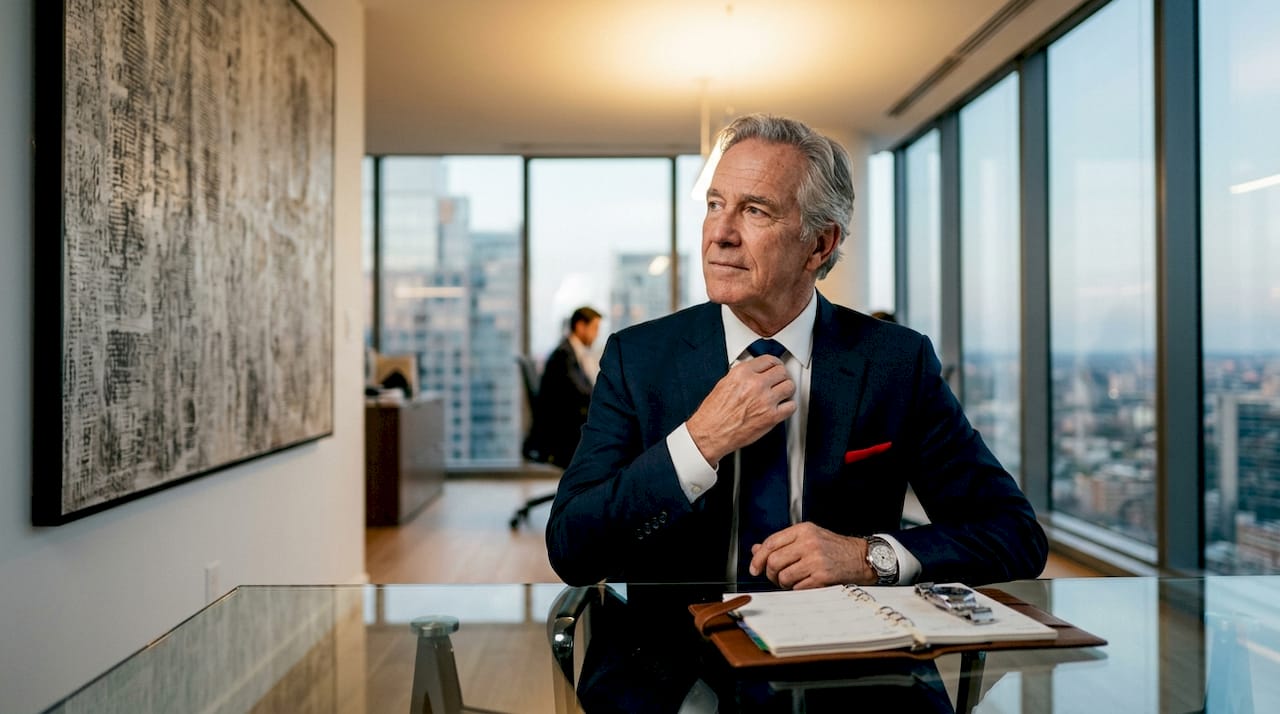
The table below compares common portrait styles against their leadership presence effects:
| Portrait style | Leadership presence effect |
|---|---|
| Formal suit, neutral background | Projects authority and institutional credibility |
| Business casual, environmental context | Signals approachability with competence |
| Casual attire, lifestyle setting | Reads as personal brand, lower formal authority |
| Overly retouched, studio-perfect | Can feel artificial, reduces perceived authenticity |
| Natural light, relaxed expression | Balances warmth and credibility effectively |
Lighting is not a cosmetic choice. It shapes how facial structure reads on screen. Flat, even lighting reduces shadow and creates an open, approachable look. Directional lighting adds depth and can project stronger authority. The right choice depends on the gravitas level your role requires.
Posture alignment, facial muscle tension, and expression timing deliver the highest return in projecting leadership presence, well above wardrobe or grooming alone. A leader who sits grounded, with relaxed shoulders and a steady gaze, reads as composed and decisive. That posture communicates before the viewer processes any other detail.
Pro Tip: Brief your photographer on your role, your audience, and the specific impression you want to create. Share examples of portraits you admire. A skilled photographer working from executive portrait photography principles will adjust lighting, framing, and direction to match your leadership brand, not just produce a technically correct image.
How do you prepare for a portrait session to maximize leadership presence?
Preparation is the secret sauce of professional branding. Leaders who walk into a session without a clear intention for their image almost always produce portraits that feel generic. The session itself takes an hour. The preparation determines whether that hour produces a portrait that works for years.
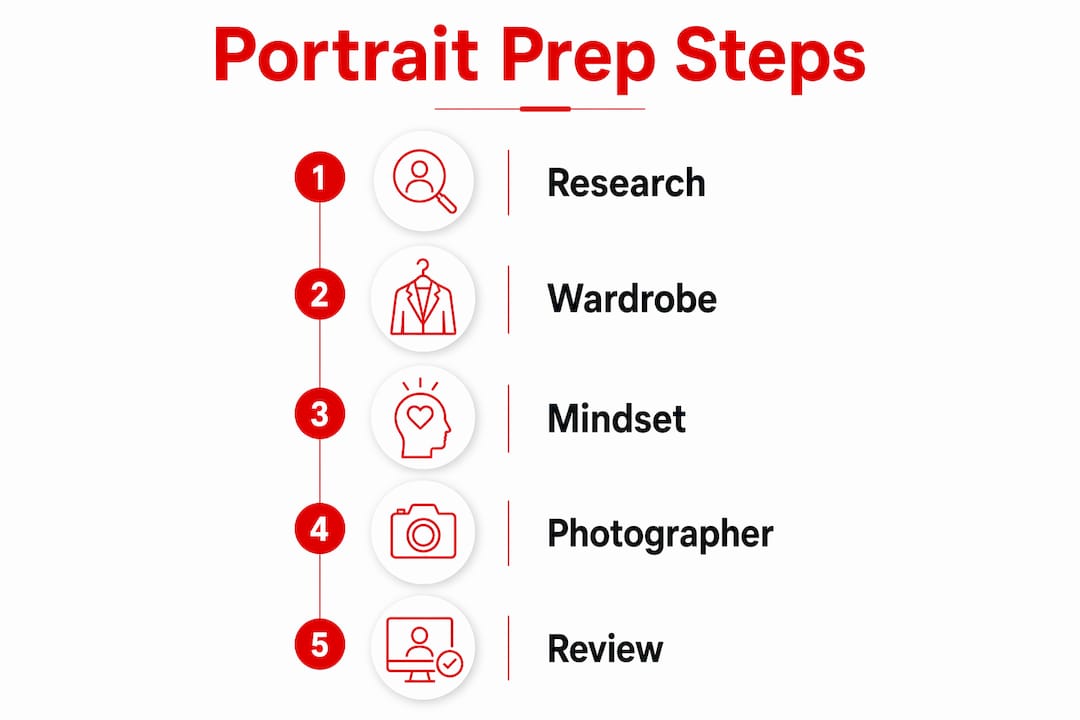
Follow these steps to prepare effectively:
- Define your leadership brand. Write down three words that describe how you want viewers to perceive you. Credible, approachable, decisive are examples. Share these with your photographer before the session starts.
- Choose wardrobe with intention. Select two or three outfit options that align with your industry and the audience for your portrait. Avoid busy patterns, logos, and colors that clash with your brand palette.
- Practice your expression. Spend five minutes in front of a mirror working through the expression you want to project. Focus on relaxing your jaw, softening your eyes, and holding a composed, engaged look.
- Use emotional recall. Before the camera rolls, use the relationship memory technique. Think of someone you trust and respect. Let that feeling settle into your expression naturally.
- Communicate your preferences clearly. Tell your photographer which angles feel most natural, what you want to avoid, and which sample portraits resonate with you. This is a collaboration, not a passive experience.
- Review images during the session. Ask to see a few shots early so you can adjust posture, expression, or styling before committing to a full set.
Promotion decisions hinge on perception shaped by signals of clarity, composure, and strategic perspective. Your portrait is one of the few places where you control all three signals simultaneously. Treat the session as a communication exercise, not a photo opportunity.
One mistake leaders consistently make is confusing intensity with authority. Overly aggressive executive presence behaviors backfire at senior levels. The same principle applies to portraits. A hard, rigid expression does not read as powerful. It reads as defensive. Composed authority, with a relaxed but engaged expression, is what viewers associate with genuine leadership. For more guidance on posing, the photo poses guide for professionals at Metroplex Headshots covers this in practical detail.
Key takeaways
A professional portrait that projects leadership presence requires deliberate alignment of gravitas signals, authentic warmth, and role-appropriate styling, not just a polished appearance.
| Point | Details |
|---|---|
| Gravitas drives perception | Gravitas accounts for 67% of executive presence; your portrait must signal composure and credibility, not just good looks. |
| Authenticity over performance | Person-level warmth in expression reduces bias penalties and increases perceived leadership readiness. |
| Posture and expression matter most | Grounded posture, relaxed facial tension, and steady eye contact deliver the strongest leadership presence signals. |
| Preparation shapes the outcome | Defining your leadership brand and briefing your photographer before the session produces far better results than improvising. |
| Avoid aggressive expressions | Composed authority reads stronger than intensity; rigid or adversarial looks undermine trust at senior levels. |
What I’ve learned about leadership portraits after years behind the lens
I’m Traci Schowmeyer, and the most common misconception I see from business leaders is that a great portrait is primarily about looking attractive or polished. It is not. The leaders whose portraits consistently generate strong responses are the ones who walked into the session knowing exactly what they wanted to communicate and why.
The second misconception is that authenticity and professionalism are in tension. They are not. The most authoritative portraits I have produced are also the most genuine. When a leader stops performing for the camera and starts communicating through it, the image shifts entirely. The eyes engage. The expression settles. The posture grounds itself naturally.
What I find genuinely undervalued is the role of the portrait in a leader’s career arc. Your image at 35 should not be the same image you use at 50. Your role changes. Your authority deepens. Your portrait should reflect that evolution. I encourage every leader I work with to revisit their portrait whenever they take on a significant new role, not just when the old one looks dated.
The leaders who treat their portrait as a living part of their professional brand, updating it with intention and care, are the ones whose visual presence stays consistent with their actual presence in the room. That alignment is the real goal. If you want to optimize your LinkedIn profile to match the authority your portrait projects, the two work together as a unified executive presence strategy.
— Traci Schowmeyer
How Metroplex Headshots approaches leadership portrait photography
Metroplex Headshots specializes in executive and leadership portraits that go beyond technical quality to capture the specific presence each leader brings to their role.
Every session at Metroplex Headshots is built around brand alignment. Before the camera is picked up, the focus is on understanding your role, your audience, and the impression your portrait needs to create. The result is an image that functions as a true extension of your professional brand. If you are weighing your options, the headshots vs. portraits comparison page explains the key differences and helps you choose the right format for your leadership goals. For leaders ready to invest in an image that commands presence, Metroplex Headshots offers national headshot services for executives across the country.
FAQ
What is professional portrait leadership presence?
Professional portrait leadership presence is the deliberate use of visual signals in photography to project gravitas, composure, and trustworthiness. It reflects the same executive presence qualities that influence leadership perception in person.
How much does appearance affect executive presence?
Appearance accounts for only 5% of executive presence perception, while gravitas drives 67% and communication signals drive 28%. This means expression, posture, and authenticity matter far more than wardrobe or grooming alone.
How do I project warmth without losing authority in my portrait?
Use the relationship memory technique during your session. Thinking of someone you genuinely care about activates real warmth in your expression without creating the tension that comes from forcing a smile.
How often should a business leader update their professional portrait?
Update your portrait whenever you take on a significant new role or when your current image no longer reflects your actual level of authority and experience. Visual drift between your portrait and your real presence creates a credibility gap.
What is the biggest mistake leaders make in portrait sessions?
The most common mistake is confusing intensity with authority. Overly aggressive expressions backfire at senior levels. Composed, engaged authority reads far stronger than a hard or rigid look.

