


Professional team headshots are defined as coordinated, high-quality portraits of company employees used across marketing, sales, and HR channels to build brand credibility. The reasons why companies invest in team headshots go well beyond aesthetics. A consistent set of professional portraits acts as a trust layer across every digital touchpoint, from LinkedIn profiles to pitch decks to company websites. Profiles with professional headshots get 14x more LinkedIn views and drive 33% more revenue through brand consistency. That data alone explains why marketing and HR leaders treat headshots as a business investment, not a line-item expense.
Why do professional headshots build brand trust and client confidence?
A professional headshot is the digital handshake your company extends before a prospect reads a single word of copy. Real faces shown consistently across platforms earn more views, clicks, and conversions than logos or stock images. Clients form a first impression within milliseconds of landing on a team page or LinkedIn profile. That impression either builds confidence or creates doubt.
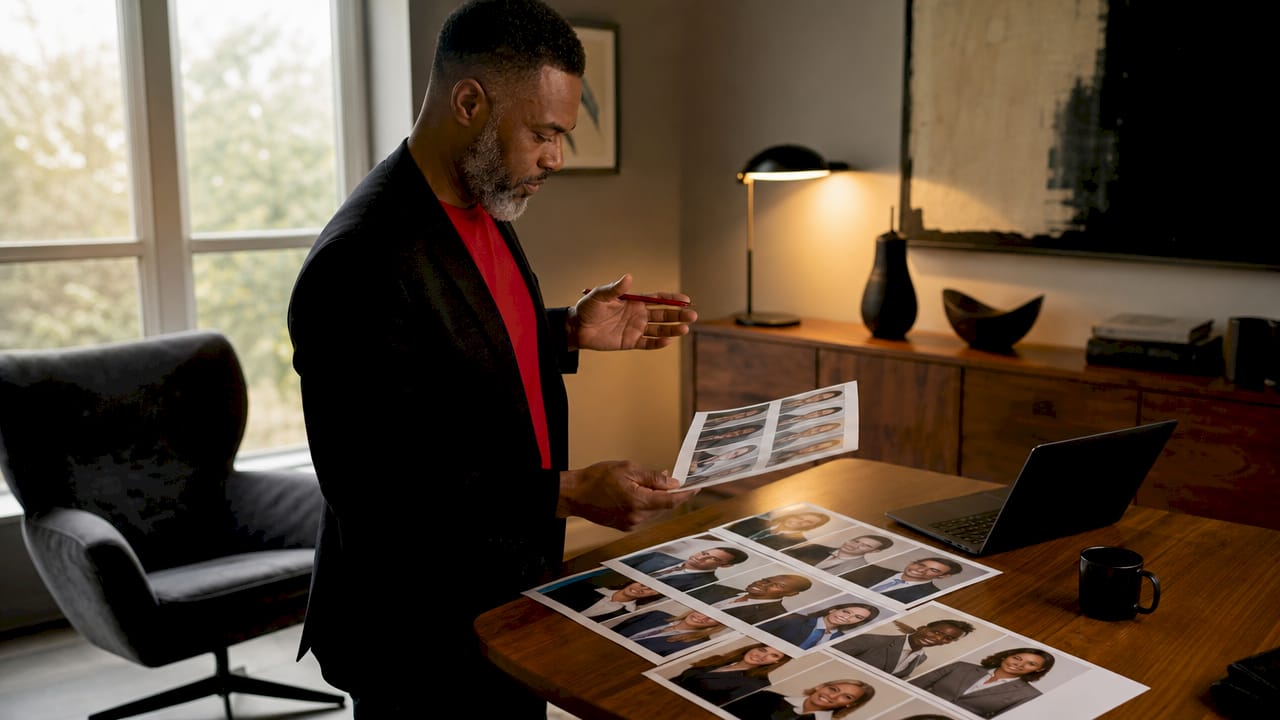
The impact of professional portraits on perceived competence is measurable. Profiles with quality headshots earn 76% higher perceived competence compared to those without. Perceived competence translates directly into client willingness to engage, request proposals, and sign contracts.
Headshots also appear in places most marketing leaders underestimate. Sales email signatures, conference speaker bios, press releases, and paid social ads all carry a face. When that face is lit poorly, cropped inconsistently, or five years out of date, it signals a lack of attention to detail. That signal reaches prospects before your value proposition does.
- LinkedIn profiles: A professional photo drives significantly more profile views and connection requests.
- Company website team pages: Consistent headshots communicate organizational discipline and brand alignment.
- Sales and marketing collateral: Proposals and pitch decks with professional portraits shorten the trust-building phase.
- Press and media coverage: Editors and journalists use the photos you provide. Low-quality images reflect poorly on your brand in third-party publications.
- Email signatures: A professional portrait in a signature reinforces personal credibility at every touchpoint.
Pro Tip: Schedule a full team headshot refresh every 18–24 months. Outdated photos create visual drift across platforms, which erodes the consistent brand image you work hard to build.
How do consistent headshots reflect company values and culture?
A company’s headshot standards communicate its values before anyone reads the mission statement. When every employee photo shares the same lighting, background, and framing, it signals that the organization pays attention to detail and cares about how it presents itself. That consistency is a form of brand discipline that clients and candidates notice immediately.
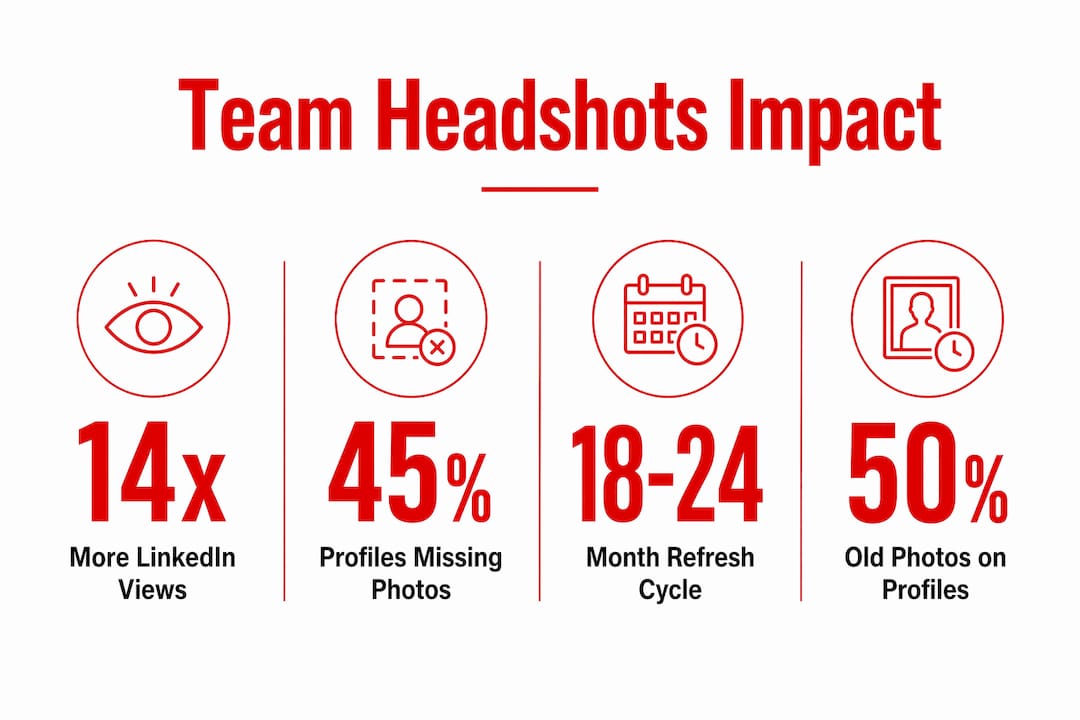
About 45% of LinkedIn profiles have no photo at all, and half of those that do have images older than three years. For companies, this creates a patchwork of outdated and mismatched visuals that undermine credibility. A coordinated, current team photo set turns every employee profile into a trust asset.
Internally, the benefits of team headshots extend to employee morale and engagement. When a company invests in professional portraits for every team member, from the receptionist to the CEO, it sends a clear message: every person here represents the brand. That investment in employee representation pays dividends in retention and advocacy.
Best practices for updating team headshots
- Set a refresh schedule. Update headshots every 18–24 months or after a significant rebrand.
- Standardize the brief. Define background color, lighting style, attire guidelines, and framing before the shoot.
- Include all levels. Photograph every employee, not just executives. Selective coverage creates internal inequity and visual inconsistency.
- Coordinate across platforms. Push updated photos to LinkedIn, the company website, email directories, and internal systems simultaneously.
- Involve leadership visibly. Employee advocacy programs that include senior executives drive higher engagement and stronger brand credibility.
| Headshot approach | Consistent brand image | Employee morale impact |
|---|---|---|
| Coordinated company-wide shoot | High: uniform style and quality | Positive: signals equal investment in all staff |
| Individual self-submitted photos | Low: mismatched styles and quality | Neutral to negative: uneven representation |
| Mix of old and new photos | Very low: visible visual drift | Negative: suggests neglect of brand standards |
How do team headshots influence sales, recruiting, and internal communications?
Sales teams lose deals they never knew they were losing. Visual inconsistency is a fast disqualification signal in vendor procurement. Enterprise buyers review team pages and LinkedIn profiles during diligence. When they find a mix of blurry selfies, cropped group photos, and polished executive portraits, they register a lack of organizational readiness. That perception rarely surfaces as explicit feedback. The deal simply stalls or disappears.
In recruiting, the importance of employee photos is equally direct. Candidates research companies on LinkedIn, Glassdoor, and company websites before applying or accepting offers. Professional headshots reduce recruiting friction by building candidate confidence and communicating employer brand authenticity. A team page filled with current, professional portraits signals a company that invests in its people.
Employee advocacy programs represent another high-value application. 67% of employee advocacy programs use technology platforms to scale consistent participation. When employees share content on LinkedIn or other channels, their profile photo is the first thing audiences see. A professional portrait amplifies the credibility of every post they share on behalf of the company.
- Sales proposals: Including team headshots in pitch decks builds personal connection before the first meeting.
- Recruiting materials: Career pages and job postings with real employee photos outperform those using stock imagery.
- Internal communications: Newsletters, org charts, and intranet profiles with consistent photos strengthen team cohesion.
- Thought leadership content: Blog bylines and speaking bios with professional portraits increase author credibility.
Pro Tip: Blend professional headshots with candid process photos in your marketing. Headshots show who your people are. Candid shots show what they do. Together, they build a fuller, more authentic brand story that resonates with both clients and candidates.
Headshot methods compared: cost, quality, and scale
Companies acquiring headshots for large teams face a real choice between methods. Each option carries different tradeoffs in cost, consistency, and quality. Understanding those tradeoffs helps marketing and HR leaders make decisions that hold up at scale.
Fixing headshot inconsistency ranges from a few hundred dollars per person to several thousand for a managed annual shoot. The ROI, however, is asymmetric. Avoiding even one lost enterprise deal covers the cost of a full company-wide session many times over.
A company-wide headshot project requires upfront planning around scheduling, style guidelines, and platform rollout. The logistics are manageable when you work with a photographer experienced in corporate shoots. The payoff is a unified visual identity that holds across every channel.
| Method | Cost per person | Quality consistency | Scalability |
|---|---|---|---|
| On-site professional shoot | Moderate to high | High: controlled environment | High: all staff in one session |
| Regional studio sessions | Moderate | High: studio-grade equipment | Medium: requires travel coordination |
| AI-generated headshots | Low | Variable: often lacks authenticity | High: no scheduling required |
| Employee self-submitted photos | Very low | Very low: no style control | High: no coordination needed |
AI-generated headshots carry a specific risk worth naming. Enterprise buyers and recruiting candidates increasingly recognize AI portraits. When a company’s team page features AI images, it raises questions about authenticity and transparency. For companies where trust is the product, that tradeoff is rarely worth the cost savings.
Key Takeaways
Professional team headshots are a proven brand asset that directly affect client trust, sales outcomes, recruiting results, and employee engagement across every channel.
| Point | Details |
|---|---|
| Headshots drive measurable ROI | Profiles with professional photos earn 14x more LinkedIn views and support 33% more revenue through brand consistency. |
| Visual consistency signals brand discipline | Mismatched or outdated photos create visual drift that erodes credibility with clients and candidates. |
| Sales and recruiting both depend on trust | Inconsistent headshots trigger silent disqualification in vendor diligence and reduce candidate confidence. |
| Update headshots every 18–24 months | Regular refreshes prevent visual drift and keep brand alignment intact across platforms. |
| All employees deserve professional portraits | Company-wide coverage signals equal investment in staff and strengthens internal advocacy programs. |
What I’ve learned after years behind the camera
I’m Traci Schowmeyer, and the most common mistake I see marketing and HR leaders make is treating headshots as a one-time checkbox. They schedule a shoot, distribute the photos, and consider it done. Two years later, half the team has turned over, the remaining photos are outdated, and the company website looks like it was assembled from three different eras.
The companies that get the most value from their headshot investment treat it as a recurring program, not a project. They build refresh cycles into their annual marketing calendar. They standardize the brief so every new hire gets photographed within their first 90 days. They push updated photos to every platform simultaneously so nothing falls out of sync.
The other thing I see consistently is that leadership involvement matters more than most people expect. When the CEO and the executive team show up to the shoot with the same energy and preparation as everyone else, it sets the tone for the entire organization. Executive presence in a headshot is not just about looking polished. It is about communicating that the people leading this company take their brand seriously.
The secret sauce of professional branding is not a single great photo. It is a coordinated, current visual identity that shows up consistently everywhere your company appears. Headshots are the foundation of that identity. Get them right, keep them current, and they will work for you every single day without any additional effort.
— Traci Schowmeyer
How Metroplex Headshots supports your team photography goals
Metroplex Headshots works with marketing and HR leaders who need professional, consistent portraits across their entire organization. Whether you need executive portraits, a full company-wide shoot, or creative sessions that reflect your brand’s personality, the team at Metroplex Headshots delivers results that hold up across every platform and channel.
If you are weighing your options, the headshots vs. portraits comparison on the Metroplex Headshots website breaks down exactly which format fits which business need. For teams distributed across multiple locations, national headshot services make it possible to maintain brand consistency without requiring everyone to travel to a single studio. Contact Metroplex Headshots to discuss a project plan built around your team’s size, timeline, and brand standards.
FAQ
Why do companies invest in professional team headshots?
Companies invest in team headshots because consistent, high-quality portraits build client trust, support sales and recruiting, and strengthen brand credibility across every digital channel. Profiles with professional headshots earn 14x more LinkedIn views and are linked to 33% more revenue through brand consistency.
How often should companies update their business headshots?
Companies should update team headshots every 18–24 months to prevent visual drift and maintain brand alignment. About half of LinkedIn profiles with photos have images older than three years, which actively weakens trust signals for the company.
Do headshots really affect sales outcomes?
Yes. Inconsistent or low-quality team photos increase buyer skepticism during vendor diligence and can cause deal loss without any explicit feedback from the prospect. Enterprise buyers use team pages as a fast signal of organizational readiness.
What is the difference between a headshot and a corporate portrait?
A headshot focuses tightly on the face and shoulders and is designed for digital profiles, LinkedIn, and email signatures. A corporate portrait is a broader image that may include context, setting, or props to communicate role, personality, or brand environment.
How do headshots support employee advocacy programs?
Professional headshots amplify employee advocacy by giving every team member a credible, consistent profile image. With 67% of employee advocacy programs using technology platforms for scaled participation, the quality of each employee’s profile photo directly affects how their shared content is perceived.

