


A professional portrait is defined as a business photograph taken by a skilled photographer to represent you, your team, and your brand with intention. For small business owners, the right portrait is not a vanity purchase. It is the digital handshake that decides whether a prospect stays on your page or clicks away. Professional portrait small business growth is a direct result of how credibly you present yourself before a single word is read. With 7 in 10 people reporting they believe businesses deliberately mislead them, a polished, authentic portrait is one of the fastest ways to separate yourself from the noise.
How professional portraits drive small business growth
Trust is the currency of every sale, and portraits are one of the fastest ways to earn it. The 2025 Edelman Trust Barometer confirms that distrust is the default for most consumers approaching a business they have never used. A professional portrait acts as a visual trust signal. It tells a prospect that you are real, credible, and invested in your own brand before they read your bio or your pricing.
Faces drive engagement in ways that logos and stock images simply cannot. When a prospect lands on your website or Google Business Profile and sees a clear, well-lit portrait of the owner or team, they form an impression within seconds. That impression shapes whether they call, click, or leave. Business portrait photography is not about looking attractive. It is about communicating executive presence and brand alignment at a glance.
The numbers behind Google Business Profiles make this concrete. Businesses with photos see 42% more direction requests and 35% more website clicks than those without. Profiles with 100 or more photos correlate with 520% more phone calls and 2,717% more direction requests than average. That is not a marginal gain. That is the difference between a listing that generates leads and one that sits invisible.
Team and leadership portraits multiply this effect. When prospects can see the faces behind a business, perceived legitimacy rises. A solo consultant with a sharp headshot reads as more established than a competitor hiding behind a logo. A small team with coordinated, current portraits reads as organized and professional. The impact of portraits on business credibility is measurable and immediate.
- A professional portrait signals investment in your brand, which signals investment in your clients.
- Consistent portraits across your website, LinkedIn, and Google Business Profile create brand alignment and reduce visual drift.
- Outdated or mismatched photos across platforms erode trust faster than no photo at all.
- Team portraits shorten the trust-building phase in sales conversations by giving prospects a face to connect with before the first meeting.
Pro Tip: Update your portrait every 18–24 months, or any time your role, team, or brand positioning changes significantly. Visual drift, where your online photo no longer matches the person clients meet, is one of the most common credibility killers for small business owners.
What types of portraits best serve your business?
Not all business portrait photography serves the same purpose. The type of portrait you choose should match the platform, the audience, and the message you want to send. Understanding the difference between portrait types is the secret sauce of professional branding for small businesses.
A traditional headshot is a close-cropped, clean image used for LinkedIn, team pages, and press bios. It communicates individual identity and professionalism. A brand portrait goes further. Brand portraits capture authentic moments, behind-the-scenes work, and lifestyle images that show how your business actually operates. They build sustained engagement because they tell a story rather than just presenting a face.
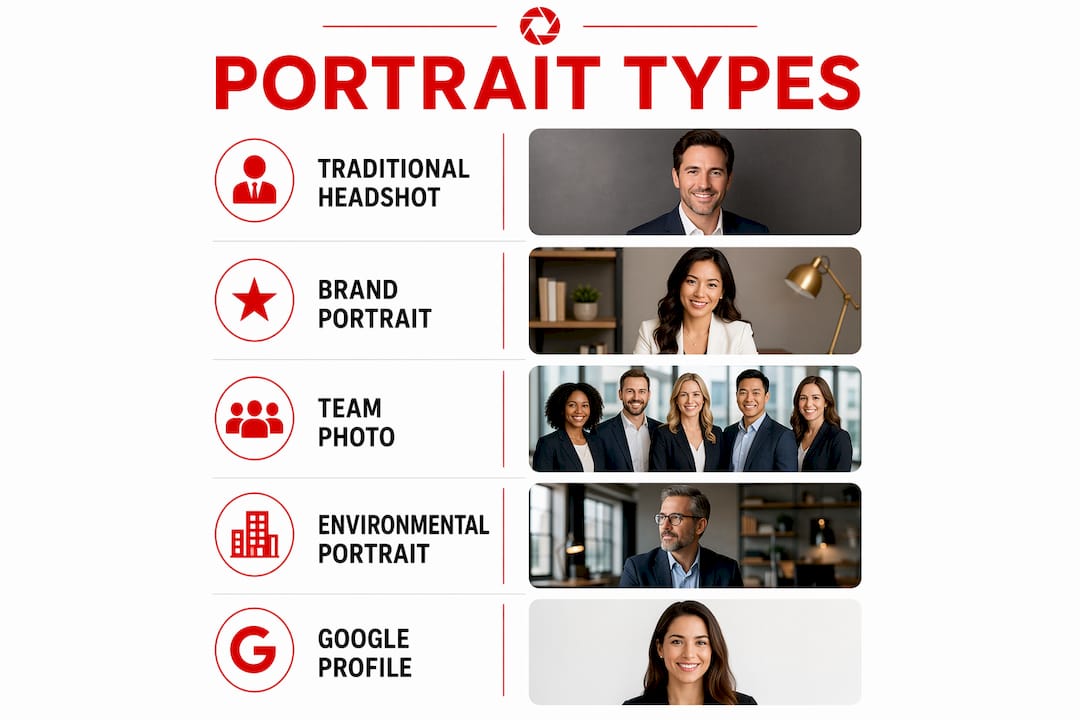
Google recommends at least three photos per category for business profiles, covering exterior, interior, team, products or services, and atmosphere. That recommendation exists because variety signals an active, transparent business. A profile with only one headshot reads as incomplete. A profile with a mix of team portraits, workspace images, and at-work shots reads as a business worth trusting.
| Portrait type | Best use | Primary benefit |
|---|---|---|
| Traditional headshot | LinkedIn, team pages, press bios | Establishes individual identity and professionalism |
| Brand portrait | Website, social media, proposals | Shows personality and builds sustained engagement |
| Team photo | About page, Google Business Profile | Signals organization and collective credibility |
| Lifestyle or at-work shot | Service pages, Instagram, Google Profile | Demonstrates expertise in context |
| Executive portrait | Speaking bios, media kits, pitch decks | Conveys authority and leadership presence |
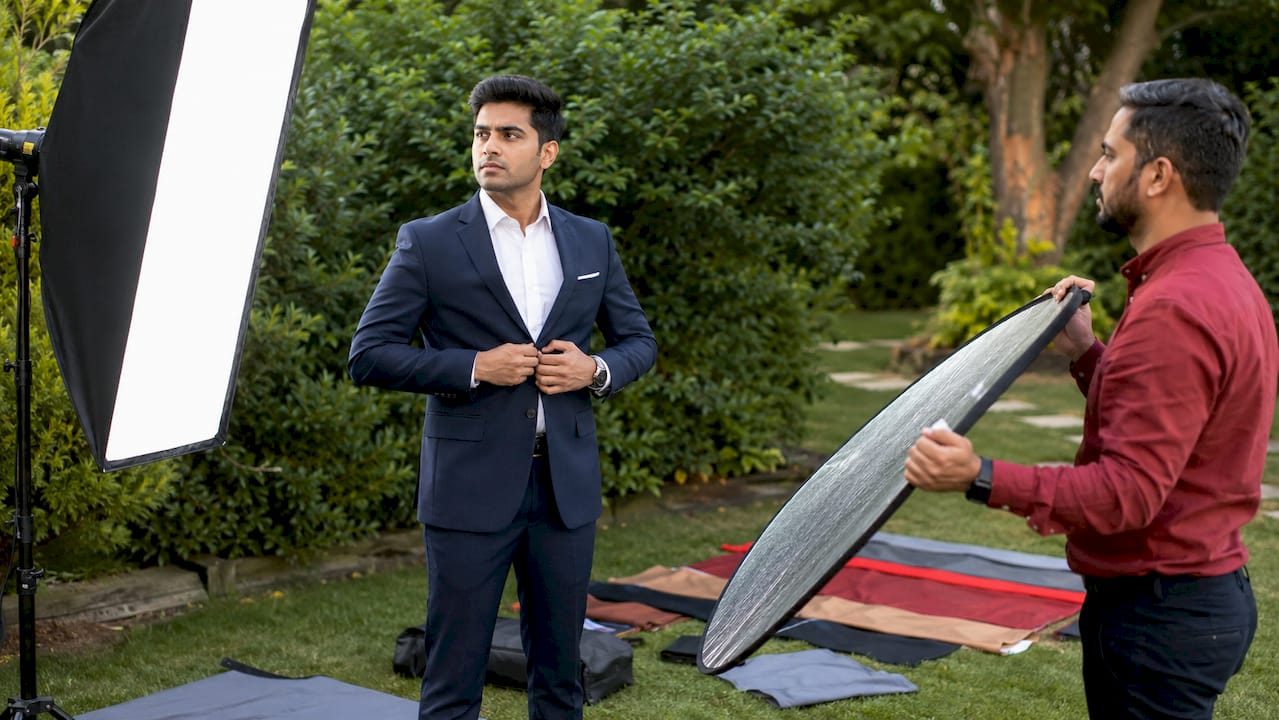
Pro Tip: Real, varied photos showing your business at work consistently outperform generic stock images in driving customer actions. Plan your portrait session to cover at least three of these five categories in one shoot.
How to integrate portraits into your marketing channels
Deploying portraits effectively across your marketing channels is where professional headshots for entrepreneurs translate into real revenue. A great portrait sitting in a folder does nothing. Placed correctly, it becomes a conversion tool.
Update your Google Business Profile first. Add team portraits, workspace images, and at-work shots across every relevant category. Uploading varied photos shifts your profile from a simple listing to a high-conversion social proof asset. Aim for volume and variety to maximize local SEO impact.
Refresh your LinkedIn profile. LinkedIn profiles with photos receive 21 times more profile views and 36 times more messages than those without. A current, professional headshot is the single highest-return update you can make to your LinkedIn presence today.
Place portraits on your service pages. Prospects buying a service are buying a person, not just a deliverable. A portrait of the team member who will handle their account on the relevant service page reduces hesitation and increases conversion. This is one of the most overlooked applications of branding through professional photos.
Use portraits in proposals and pitch decks. A proposal that includes a professional headshot of the account lead reads as more personal and more credible than a text-only document. Company-wide professional headshots increase client engagement and shorten the trust-building phase in sales processes.
Post fresh portraits consistently on social media. Fresh photos on social profiles signal an active and trustworthy business, leading to consistent engagement lifts. A quarterly post featuring a team member or behind-the-scenes portrait keeps your brand visible and human.
Common mistakes that reduce portrait effectiveness
The most expensive portrait mistake is not hiring a bad photographer. It is letting great photos go stale or go unused. Small business owners invest in a session and then post one headshot to LinkedIn and call it done. That approach wastes most of the value a portrait session can deliver.
- Using stock images instead of real portraits. Stock images are immediately recognizable and signal inauthenticity. Real photos of your actual team and workspace build the kind of trust that stock images never can.
- Inconsistent photos across platforms. When your LinkedIn headshot is from 2019, your website photo is from 2022, and your Google Business Profile has no photo at all, prospects notice the visual drift. Brand alignment requires consistency.
- Uploading too few photos to your Google Business Profile. A single photo is not enough. Volume and variety are what drive the direction requests and phone calls that make a Google Business Profile a real lead source.
- Skipping session preparation. Wardrobe, background, and expression choices all communicate brand values. Arriving at a session without a plan produces generic results. Work with your photographer to align your portraits with your brand positioning before the shoot.
- Treating portraits as a one-time project. Your business evolves. Your team changes. Your brand positioning shifts. Portraits should be updated regularly to reflect who you are now, not who you were three years ago.
Pro Tip: Before your next portrait session, review every platform where your face or your team’s faces appear. List every location that needs an updated image. Bring that list to your photographer so you leave the session with assets ready for every channel.
Key takeaways
A professional portrait is the most direct visual investment a small business owner can make to build credibility, drive engagement, and grow revenue across every marketing channel.
| Point | Details |
|---|---|
| Portraits build immediate trust | A professional headshot signals credibility before a prospect reads a single word of your copy. |
| Photo volume drives Google results | Profiles with 100+ photos see dramatically more calls and direction requests than those with few images. |
| Portrait variety maximizes impact | Cover headshots, team photos, and at-work shots to serve every platform and audience touchpoint. |
| Consistency prevents visual drift | Matching portraits across LinkedIn, your website, and Google Business Profile reinforces brand alignment. |
| Portraits are ongoing marketing assets | Update portraits every 18–24 months to reflect your current team, brand, and positioning. |
Why I think most small businesses underestimate this investment
I’m Traci Schowmeyer, and after years of working with small business owners on their portrait sessions, the pattern I see most often surprises people. The owners who resist investing in professional portraits are rarely the ones who can’t afford it. They are the ones who don’t yet see it as a business tool. They see it as a photo.
That framing is the real problem. A portrait is not a photo. It is the first impression you make on every prospect who finds you online before you ever speak to them. When I work with a business owner who has been using a blurry smartphone selfie on their website, the shift after a professional session is not subtle. Inquiries increase. Proposals get accepted faster. Clients show up to first meetings already feeling like they know the person they hired.
The overlooked benefit I keep coming back to is frequency. Most business owners think one great session is enough. The owners who see the biggest long-term gains treat portraits the way they treat content marketing. They update regularly, they vary the style, and they deploy images across every channel. A well-built portrait library gives you months of social content, a stronger Google Business Profile, and a website that converts better, all from a single investment in a few hours of your time.
The businesses that grow fastest are the ones that understand credibility is built before the conversation starts. Your portrait is doing that work every single day, whether you pay attention to it or not.
— Traci Schowmeyer
How Metroplex Headshots helps your business grow
Metroplex Headshots specializes in professional portraits designed to work as hard as you do. Every session is planned around your brand, your industry, and the specific impression you want to make on your clients.
Whether you need a single executive headshot or a full team portrait session, Metroplex Headshots builds a session strategy that covers every platform and touchpoint your business relies on. From your Google Business Profile to your LinkedIn page to your pitch deck, you leave with a complete library of images ready to deploy. Explore the headshots vs. portraits guide to find the right format for your goals, or browse headshot photo examples to see what a strong portrait session can produce for your brand.
FAQ
How do professional portraits help small business growth?
Professional portraits build immediate visual credibility, which increases the likelihood that prospects engage, inquire, and convert. Businesses with strong photo profiles on Google see measurably more calls, clicks, and direction requests.
How often should a small business update its portraits?
Update portraits every 18–24 months, or whenever your team, role, or brand positioning changes. Outdated photos create visual drift that erodes trust with prospects who meet you in person.
What is the difference between a headshot and a brand portrait?
A headshot is a close-cropped image used for LinkedIn and team pages to establish individual identity. A brand portrait captures authentic, at-work moments that tell the story of how your business operates and builds deeper engagement.
How many photos should I upload to my Google Business Profile?
Google recommends at least three photos per category, covering exterior, interior, team, products or services, and atmosphere. Profiles with 100 or more photos correlate with dramatically higher phone calls and direction requests than those with fewer images.
Do professional portraits really affect sales?
Yes. Company-wide headshots increase client engagement and shorten the trust-building phase in sales processes. LinkedIn data shows profiles with photos receive 21 times more views and 36 times more messages than those without.

