Why Learning How to Pose for a Good Headshot Changes Everything
How to pose for a good headshot starts with understanding a few core principles that transform an awkward photo session into a confident, natural-looking portrait.
Essential Headshot Posing Tips:
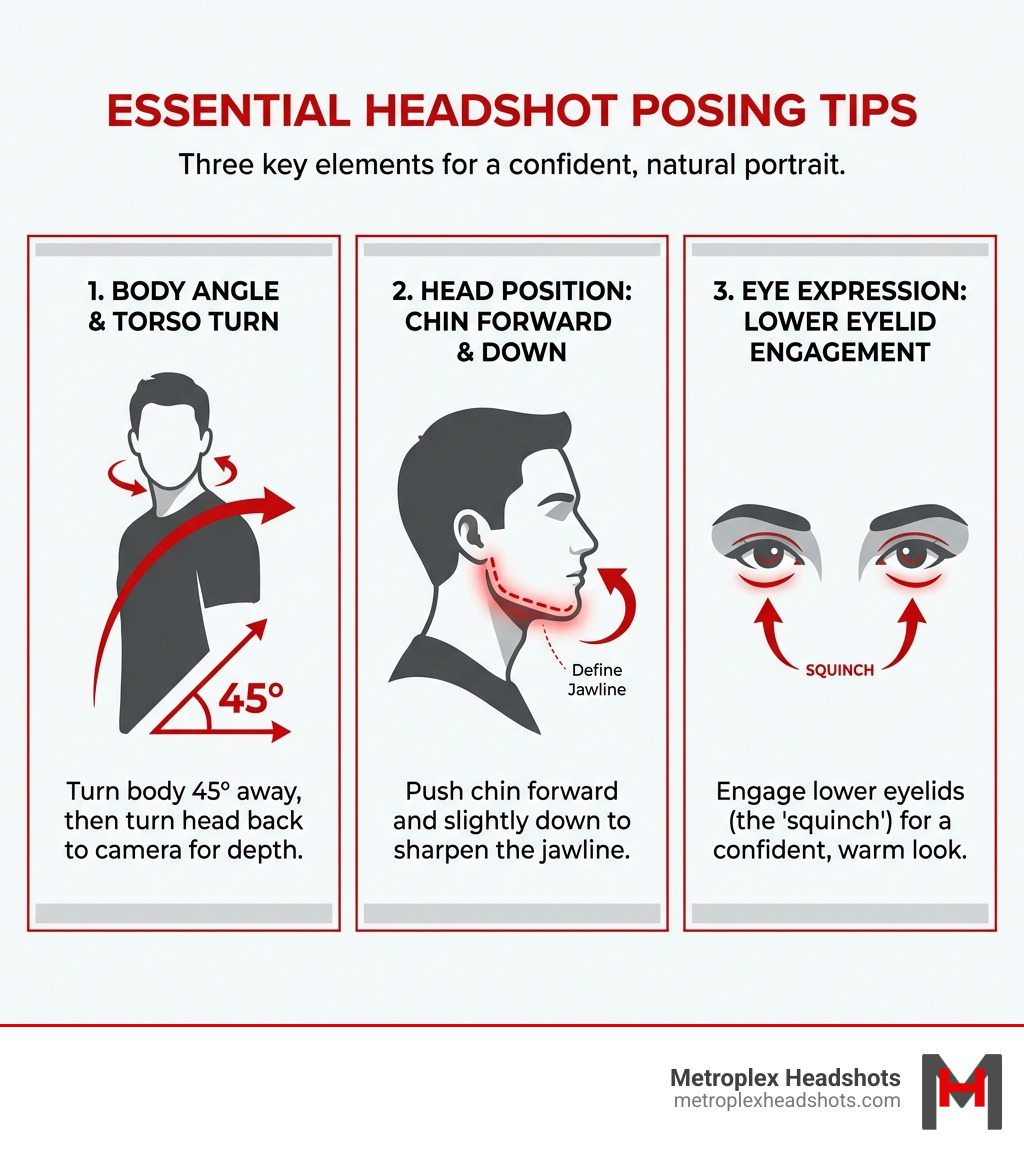
- Angle Your Body – Turn your torso 10-45 degrees away from the camera, then turn your head back toward the lens
- Master the “Turtle” Technique – Push your chin slightly forward and down to define your jawline
- Lean Forward Slightly – Move your forehead toward the camera to create engagement and warmth
- Relax Your Eyes – Bring your lower eyelids up slightly (the “squinch”) for a confident, warm expression
- Drop Your Shoulder – Lower the shoulder closest to the camera for a more natural stance
- Keep It Natural – Make small continuous movements rather than holding a rigid pose
If you’ve ever thought “I’m not photogenic” or felt anxious before a photo session, you’re not alone. Many people feel uncomfortable having their picture taken. The truth is, posing is a learnable skill, not an innate talent. When done right, good posing makes you look less staged and more natural.
Your headshot is your professional handshake in the digital world—often the first impression a recruiter, client, or colleague gets. Research shows body language communicates volumes about your likability and competence, starting with your professional photos.
The good news is that small adjustments make a massive difference. A slight lean, a subtle head tilt, or the right eye expression can transform a stiff photo into one that radiates confidence and approachability. You don’t need to be a model, just an understanding of a few key principles.
I’m Traci Schowmeyer, owner of Metroplex Headshots, and I’ve spent over two decades helping professionals master how to pose for a good headshot through “facial coaching.” My approach helps busy professionals who feel uncomfortable on camera find their most authentic, confident expressions—and you can learn these same techniques.
The Foundation: Mindset and Posture for a Powerful First Impression
Before diving into specific poses, let’s address the foundation of a great headshot: your mindset and posture. How you feel directly affects how you look; if you’re tense or uncomfortable, it will show in your face, no matter how perfect the pose.
Recent research highlights that your body language communicates likability and competence. This isn’t just about perception; your posture affects how you feel internally. Feeling confident and relaxed is half the battle won.
At Metroplex Headshots, we understand most people aren’t professional models. Many of our clients in the Dallas-Fort Worth Metroplex arrive feeling camera-shy, which is perfectly normal. Our role is to make you comfortable, guide you, and help you relax into your best self.
Here are some things you can do to feel (and therefore look) confident and relaxed:
- Take a deep breath: Before and during your session, take a few slow, deep breaths. This simple act can calm your nerves and release tension throughout your body.
- Sit up straight: Good posture isn’t just for etiquette; it genuinely affects how you feel. Sitting or standing tall can make you feel more powerful and composed.
- Shake it out: If you feel stiff, give your arms and legs a quick shake. This can help release physical tension that might otherwise translate into a rigid expression.
- Trust your photographer: We are experts in guiding you through the process. Our goal is to ensure you feel at ease and confident, allowing your natural personality to shine through.
Core Principles of How to Pose for a Good Headshot
The goal of posing for a professional headshot is to create a natural, approachable, and confident image. The best poses feel natural, allowing you to focus on a genuine expression. When done right, posing should make you look less awkward and less “staged,” as the right poses feel and look candid.
Here are the cornerstones of effective headshot posing:
- Good Posture is Paramount: Always start by straightening your back, bringing your shoulders back and down, and subtly pushing out your chest. This creates a strong, confident base for any pose.
- Open and Approachable Stance: Avoid facing the camera straight-on. Instead, an open, relaxed stance signals trustworthiness and approachability.
- Avoid Stiffness: The goal is to look natural, not like a mannequin. We encourage subtle, continuous movements rather than holding rigid poses. This helps capture those “in-between” moments where your true personality emerges.
- Creating Separation: Often, we’ll ask you to lean slightly forward. This technique not only conveys engagement but also helps create a subtle separation from the background, adding depth to your image.
- Focus on Feeling Natural: If a pose feels uncomfortable, it will look uncomfortable. We’ll work with you to find positions that feel authentic to you, ensuring your comfort translates into a relaxed, confident look.
A great headshot is more than a picture; it’s about showcasing your authentic self professionally. By understanding these core principles, you’re on your way to unlocking your best angle and navigating professional photo sessions with confidence.
The Ultimate Guide on How to Pose for a Good Headshot
Mastering how to pose for a good headshot is a collaboration with your photographer. Our role is to guide you with small adjustments and cues to find your most flattering angles and expressions. We often find the most authentic shots happen in the moments between poses, as you’re subtly shifting or reacting.
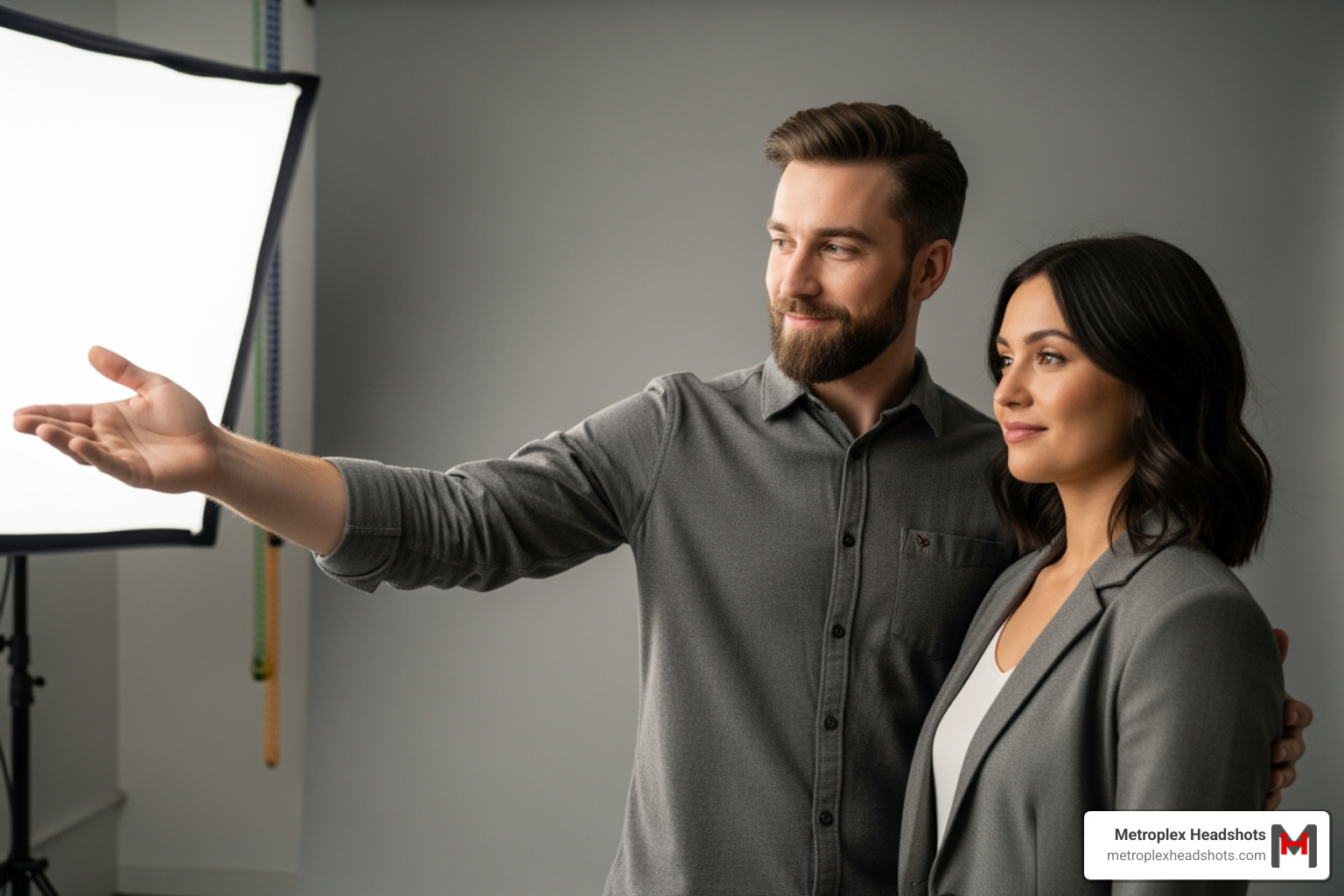
During your session, we encourage you to communicate with us. If you have a “good side” you prefer, let us know. We can also review shots together as we go, allowing for real-time adjustments. This dynamic approach ensures your headshots reflect your best self.
Mastering Body Angles and Stance
Body angle is crucial in creating a dynamic and flattering headshot. A straight-on shot can often feel like a mugshot, lacking depth and energy. Our goal is to add dimension and approachability.
- The 10 to 45-Degree Turn: Instead of facing the camera squarely, we’ll guide you to turn your chest 10 to 45 degrees away from the lens. Then, gently angle your head back toward the camera. This slight twist creates a more engaging and less static image.
- The Subtle Lean Forward: This is one of our favorite techniques! Leaning slightly toward the camera (often from the waist or just your forehead) makes the shot warmer and helps with perspective, making your headshot feel more balanced and approachable. It can also subtly help to minimize the appearance of a double chin.
- Drop the Shoulder: To soften your stance and create a more natural line, we’ll often suggest dropping the shoulder closest to the camera slightly. This small adjustment can make a big difference in how relaxed and open you appear.
- Weight Distribution: If standing, shifting your weight onto your back foot can help create a more relaxed and natural posture.
- Hands on Hips or Crossed Arms: For a more fun or powerful pose, hands on hips can convey a sense of being hard at work. If crossing your arms, we’ll guide you to do it loosely. For women, we might suggest crossing arms loosely and dropping the shoulder closest to the camera, as tight crossed arms can sometimes feel severe. This allows for a strong yet approachable impression.
- The Upright Sit: If seated, maintain an upright posture, leaning slightly forward. For men, sitting symmetrically with legs apart and hands folded can convey professionalism. For women, sitting on stairs with hands joined over knees, ensuring knees are slightly higher than hips, can create a ready yet relaxed look.
- Leaning Sideways: A simple lean against a wall or railing can make the shot feel so much more natural than a rigid-backed image. This technique loosens up your body if you’re feeling stiff and adds a candid, lifestyle feel to your portrait.
These body-centric poses, as discussed in various guides on how to pose people for headshots, are designed to make you appear confident and at ease.
Fine-Tuning Your Head, Chin, and Jawline
Once your body is angled, the next step is to perfect your head and chin position. These small adjustments are paramount for defining your jawline and enhancing your facial features.
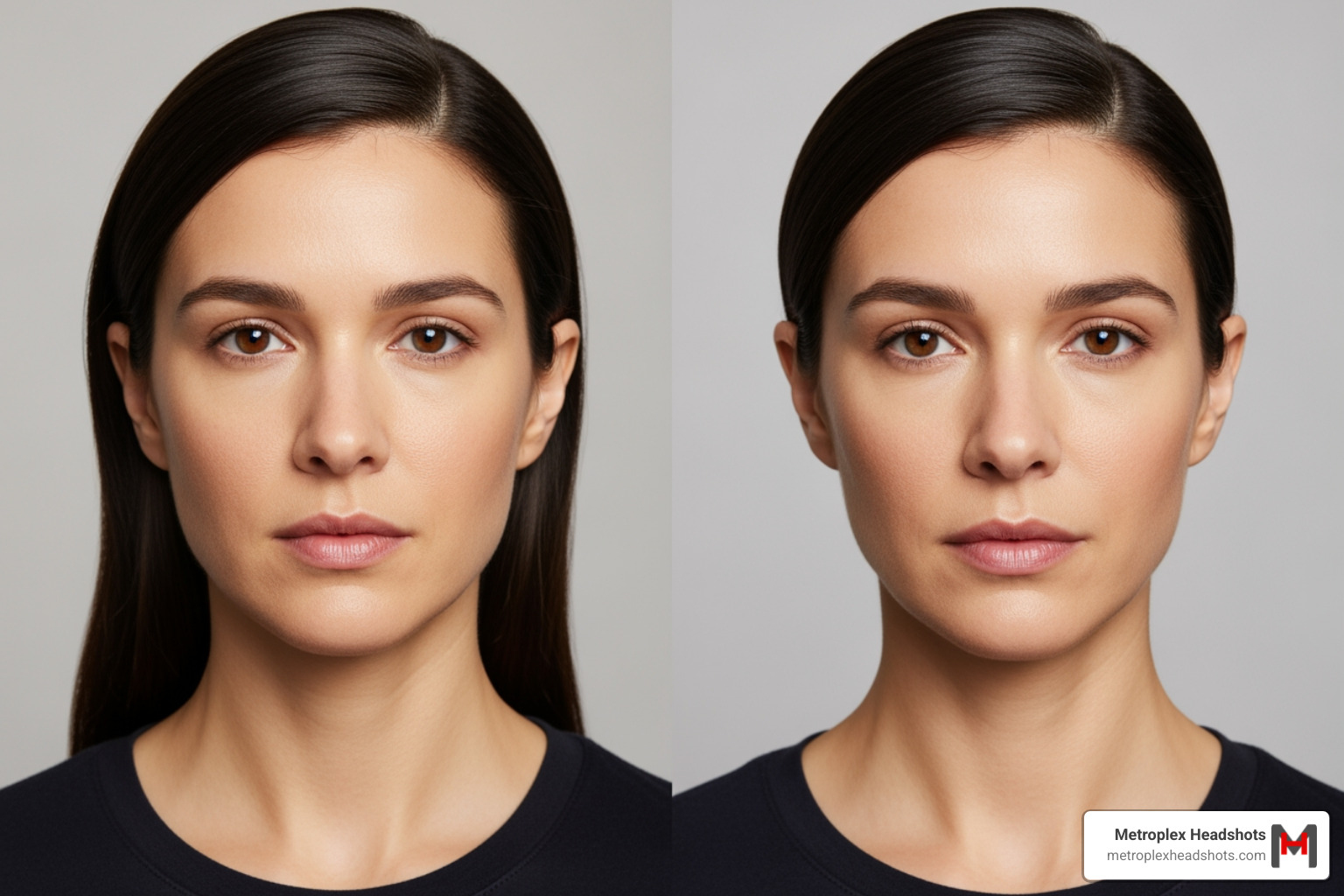
- The “Turtle” Technique (Chin Forward and Down): This is one of the most impactful techniques for a flattering headshot. It involves pushing your chin slightly forward (as if a string is pulling your head forward) and then tilting it slightly down. The key is subtlety; it’s a small movement to strengthen the jawline, not a full neck extension. The final image shouldn’t reveal the pose. This technique effectively defines your jawline, minimizes double chins, and prevents the unflattering “nostril shot.”
- Subtle Head Tilts: A little change in head position can help bring a headshot to life. Instead of holding your head perfectly straight, a slight tilt—either to the side or subtly forward—can add life and interactivity to your expression. It makes the shot feel slightly more engaging and dynamic, featuring extra depth. We’ll guide you to find the tilt that best complements your facial structure.
Bringing Your Expression to Life: Eyes and Smile
The eyes are the focal point in a headshot, drawing the observer into your personality. Tension in your body will show up in your face, so being in a comfortable position and feeling relaxed is crucial to ensure your eyes convey the right emotion.
- Conveying Emotion Through Your Gaze: Your eyes need to be sharp and they need to say something. There should be communication happening here. We’ll encourage you to think about what you want your eyes to convey—be it warmth, determination, intelligence, or approachability. This mental cue can profoundly impact your gaze.
- The “Squinch”: This technique involves slightly narrowing your eyes by raising your lower eyelids. It creates a more confident, engaged, and warmer look, preventing “deer in headlights” eyes. Creating a softer look is all about controlling the lower eyelids. Bringing them up slightly helps warm them up.
- Genuine Smiles: Unless you’re in a dentist’s office commercial, we aim for a beautiful, genuine 75% smile, making it believable and not fake. A forced smile looks, well, forced. To achieve a natural smile, think of something that genuinely makes you happy right before the shot. We might also suggest saying a word that ends in an “uh” sound (like “mocha”) to relax your mouth.
- Relaxing the Mouth: When the photographer clicks the camera, maintain a very slim gap between your upper and lower lip, and breathe very slowly through this gap. This helps relax your mouth and makes it look more natural, avoiding any notorious “duck face” effects.
- Eye Contact with the Camera: For a fresh, alert look, some photographers ask subjects to close their eyes and then open them on the count of three. Alternatively, we might suggest looking away and then directly at the camera just before the shot, as if greeting someone. This creates unself-conscious eye contact, which is the best look for a headshot. Avoiding sustained, rigid eye contact prevents your expression from looking too sharp or vacant.
A professional headshot, whether for LinkedIn, your website, or an acting portfolio, is about showcasing your authentic self. While we specialize in professional headshots versus portraits, the principles of a genuine expression remain the same.
Posing for Your Profession: Tailoring Your Look
Your headshot is a powerful tool in your professional branding arsenal. The intended use of your headshot—whether for LinkedIn, your personal website, an acting portfolio, or corporate communications—significantly influences posing choices. It’s about aligning your visual message with your professional identity.
Your headshot should reflect your professional image and your personal brand. For coaches, consultants, or creatives, wardrobe choices can communicate personality and work style. For businesses in the DFW Metroplex, aiming for cohesive brand colors across team members can create a unified professional image, as we discuss in crafting your professional image: the importance of headshots in the DFW Metroplex.
Poses for Corporate and Technical Roles
For professionals in corporate, finance, legal, or technical fields, the goal is often to convey confidence, authority, and trustworthiness. Poses tend to be more structured but should never feel stiff.
- The Confident Crossed Arms: This pose can convey a powerful or tough impression. However, we ensure it’s balanced with a genuine smile to create a strong yet friendly look. For women, we encourage crossing arms loosely, perhaps with a slight hip tilt and dropping the shoulder closest to the camera, to avoid a severe or cold appearance.
- The Subtle Lean-In: As mentioned earlier, a slight lean forward (either from the waist or just the head) communicates engagement and approachability, making you seem more inviting and interested.
- Hands Lightly Clasped: For a more formal seated or standing pose where hands are visible, lightly clasping them at the waist or resting them gently on a surface can look composed and professional.
- The Standard Pose: Sometimes, a classic is best. This involves straightening your back, turning your chest 10 to 45 degrees from the camera, and leaning slightly toward the camera. It’s a universally accepted and effective pose for a professional image.
These poses are ideal for headshots for every stage of your career, from graduates to CEOs across the Dallas–Fort Worth area.
Poses for Creative, Actors, and Entrepreneurs
For those in creative industries, acting, or entrepreneurship, the headshot often needs to convey personality, approachability, and even a touch of artistic flair. These roles often benefit from a more dynamic or candid feel.
- Leaning Against a Wall or Railing: A simple lean against a wall or railing can make the shot feel so much more natural than a rigid-backed image. It loosens up your body if you are a bit stiff in front of the camera and can add an element of lifestyle photography, perfect for personal branding.
- The Walking Pose: We love walking headshots! They encourage a more natural expression because we can chat with you as you walk, creating a sense of movement that translates into a deeper connection with the viewer. It also helps loosen up any stiffness.
- Action Poses: If your profession involves specific actions or props, incorporating them can powerfully reflect your branding. For example, a chef might hold a whisk, or an architect might sketch. We allow you to perform an action related to your profession, product, or hobby, capturing candid moments full of personality.
- One Hand in Pocket: For a relaxed yet confident stance, placing one hand casually in a pocket can add an effortless charm, often seen in modern entrepreneurial headshots.
- Playing with Props: If appropriate for your brand, using props like glasses (to appear thoughtful), a book, or even a professional tool can add character and context to your headshot.
These more dynamic and personalized poses help you ditch the dull and embrace modern professional headshots that make a statement in the vibrant DFW Metroplex.
Pre-Shoot Prep and Avoiding Common Pitfalls
Preparation is key to a successful headshot session. It’s not just about what happens in front of the camera, but also what happens before you even step into our studio in Dallas, Plano, Frisco, or any of our other Metroplex locations.
Mental and Physical Preparation:
- Get enough sleep: Lack of sleep can cause visible wrinkles and fatigue on camera, even if your skin is otherwise flawless. Be sure to get a full night’s rest before your session.
- Hydrate: Drink plenty of water in the days leading up to your shoot. Hydrated skin looks healthier and more radiant.
- Arrive relaxed and calm: Being rushed or stressed will show in your photos. Plan your travel to our studio in Southlake, Westlake, or Grapevine, allowing plenty of time to arrive without feeling pressured.
- Avoid alcohol: Don’t drink alcohol the night before or during the shoot, as it can cause redness in your eyes and skin flushing.
- Grooming: Arrive clean-shaven (if applicable) and showered. For makeup, we recommend hiring a professional hair and make-up artist who knows how to style for the lens. If you’re doing your own, keep it natural and minimal; the camera improves every feature, so less is often more.
Wardrobe Considerations:
- Solid Colors are Your Friend: Solid, dark, neutral, or cool colors (like grey and blue) are best. They keep the focus on your face and don’t distract.
- Long Sleeves: Wear long sleeves. Attention is drawn to where skin shows, so covering your arms keeps the focus firmly on your face.
- Fitted Attire: Choose clothes that fit well. Overly baggy or tight clothing can be distracting. A custom collared shirt or blouse is often a safe bet.
- Bring Options: Bring multiple wardrobe options, especially collared fitted shirts (button-downs for executives, polos for casual). This allows us to choose what looks best on camera and offers variety.
- Avoid: Loud colors, busy patterns, graphics, logos, and overly reflective materials. These can distract from your face and date your headshot quickly.
Common Mistakes in How to Pose for a Good Headshot
Even with the best intentions, it’s easy to fall into common posing traps that can undermine your headshot’s effectiveness. We’ve seen it all, and we’re here to help you avoid these pitfalls.
Here are some common posing mistakes to avoid:
- Facing the Camera Straight-On: This creates a flat, two-dimensional image that can feel like a passport photo or a mugshot. Remember to angle your body 10-45 degrees away.
- Slouching: Poor posture instantly communicates a lack of confidence and energy. Always keep your shoulders back and down, and your chest slightly out.
- The Forced Smile: A smile held for too long becomes awkward and unnatural. Aim for a genuine 75% smile, and reset your expression between shots.
- Dead or Vacant Eyes: If your eyes lack engagement, your headshot will lack personality. Remember to “squinch” and think happy thoughts to bring life to your gaze.
- Distracting Hands: If your hands are visible, make sure they have a purpose and are relaxed. Fidgeting, tight fists, or awkward placement can draw unwanted attention.
- Over-Posing: Trying too hard to pose can make you look stiff and unnatural. The best poses feel and look candid, so focus on feeling relaxed and letting your personality shine.
- Relying on Selfie Poses: While great for social media, selfie posing techniques often don’t translate well to professional headshots. The “thin lean” pose (hand on hip, turned to the side, knees bent, head tilted) or looking up are generally not recommended for professional images.
Frequently Asked Questions about Headshot Posing
We hear many questions from our clients in the Dallas-Fort Worth Metroplex about how to pose for a good headshot. Here are some of the most common ones:
Should I smile with or without teeth in my headshot?
This often depends on your industry and personal brand. A genuine smile, whether with or without teeth, is always key.
- With Teeth (Open-Mouth Smile): This typically conveys energy, warmth, and approachability. It’s often ideal for creative fields, sales, client-facing roles, or if you want to project a very friendly and engaging persona. Remember the “75% smile” rule to keep it natural and avoid looking overly enthusiastic.
- Without Teeth (Closed-Mouth Smile): A closed-mouth smile can project quiet confidence, seriousness, and trustworthiness. This might be preferred in more conservative industries like law, finance, or academia, or if you want a more reserved yet approachable look.
We’ll guide you to find the smile that feels most genuine to you and best represents your professional image.
What’s the most flattering angle for a headshot?
There isn’t one universal “most flattering angle” for everyone because every face is unique! However, we follow some best practices that tend to work for most people:
- Avoid Straight-On: As we’ve discussed, a straight-on stance often looks flat.
- Body Angle with Head Turn: Turning your body 10 to 45 degrees away from the camera, then bringing your head and gaze back to the lens, creates depth and a more dynamic feel.
- Chin Forward and Down: This subtle technique is crucial for defining the jawline and minimizing double chins.
- Slightly Higher Camera Angle: Often, positioning the camera slightly above eye level can be very flattering, as it helps to shape the face and emphasize the eyes.
- Trial and Error: We believe in finding your best angle. During your session, we’ll experiment with slight chin tilts up or down and different head positions, coaching you through subtle adjustments to find what looks best for you. Don’t worry if you get mixed opinions from others; at the end of the day, these are your headshots, and you get to make the final call on which photos you prefer.
How can I look natural and not so “posed”?
This is the holy grail of headshot photography, and it’s where our expertise truly shines! The secret is to actually be relaxed, not just pretend to be.
- Relaxation Techniques: As mentioned, deep breaths, shaking out tension, and even talking to yourself or playing lively music before the shoot can help you loosen up.
- Focus on Feeling, Not Just Posing: Instead of thinking “I need to hold this pose,” try to focus on how you feel. Think of something that genuinely makes you happy or amused. This internal shift will naturally soften your expression.
- Continuous Small Movements: We encourage you to keep making small adjustments—a slight head tilt, a shift of weight, or even fiddling with a sleeve. We’ll capture these “in-between moments” because they often yield the most natural, unscripted, and authentic shots.
- Trust the Photographer: Our team at Metroplex Headshots specializes in making you comfortable in front of the camera. We’re skilled at reading body language and guiding you into natural-looking poses. We understand that we can’t necessarily see our own facial expressions and body language objectively, so we’ll help you pick the best shot—one where you look good, and your face is communicating what you intend. To learn more about our philosophy, visit our About Us page.
Conclusion
Mastering how to pose for a good headshot is not about rigid rules or looking like someone you’re not. It’s a learnable skill that combines mental preparation, subtle body adjustments, and genuine expression to create an authentic, confident, and approachable image. We’ve seen countless professionals in the Dallas-Fort Worth Metroplex transform their confidence in front of the camera, simply by understanding these core principles.
Your headshot is your visual handshake, and a powerful one can open doors and create lasting first impressions. While these tips provide a fantastic foundation, the value of a professional photographer cannot be overstated. At Metroplex Headshots, we specialize exclusively in headshots, making clients comfortable and delivering confident, natural-looking images quickly, often with same-day selection. We’re here to guide you through every step, ensuring your headshot truly reflects your best self.
Ready to lift your professional image? Explore our headshot packages or contact us today to schedule your session at one of our convenient DFW locations, including Southlake, Dallas, Plano, Frisco, and Fort Worth.