


For your ERAS application, submit a neutral, professional headshot that meets AAMC file specs; the white coat is optional, and a suit jacket is often the safer visual choice. The file must be a JPEG or PNG under 150 KB, sized 2.5 by 3.5 inches, with your head and shoulders centered. Book a photographer who knows these specs, or build a compliant file yourself before you touch the MyERAS upload screen.
TL;DR:
- Your headshot must be a JPEG or PNG under 150 KB, sized 2.5 by 3.5 inches, with your face centered and shoulders visible.
- Wear a solid-colored suit jacket in navy, charcoal, or light blue for professionalism and consistency with interview attire, avoiding busy patterns or neon shades.
- Adopt a relaxed, approachable expression with a slight smile, keeping glasses on if you wear them daily, and avoid heavy editing or mismatched appearances.
- Book your session at least a few weeks before the deadline, requesting an ERAS-optimized export and natural retouching to ensure compliance and quality.
- Most common mistakes include incorrect file specs, distracting backgrounds, over-editing, and appearance mismatches, all of which are fixable before upload.
Table of Contents
- Quick Checklist Before Your Shoot or Upload
- What Are the ERAS Photo Requirements?
- Should You Wear a White Coat or a Suit Jacket?
- How Should You Pose and What Expression Works Best?
- When and How to Schedule Your Session
- Common Headshot Mistakes and How to Fix Them
- Photographer’s In-Session Tips for a Better Result
- Why This Photo Matters More Than Applicants Expect
- Get an ERAS-Ready Headshot Without the Guesswork
- Sources
- FAQ
Quick Checklist Before Your Shoot or Upload
Before you schedule anything or open the MyERAS portal, run through this short list. Most rejected or awkward-looking photos trace back to one of these steps getting skipped.
- Confirm your export will be a JPEG or PNG under 150 KB, sized 2.5" x 3.5"
- Decide between a suit jacket and a white coat, and know why you’re picking one
- Get a haircut or trim at least a few days ahead, not the morning of
- Line up a photographer experienced with residency headshots, or set a DIY backdrop and tripod at home
Skipping the wardrobe decision until shoot day is the most common misstep. Settle it first, and the rest of the prep gets easier.
What Are the ERAS Photo Requirements?
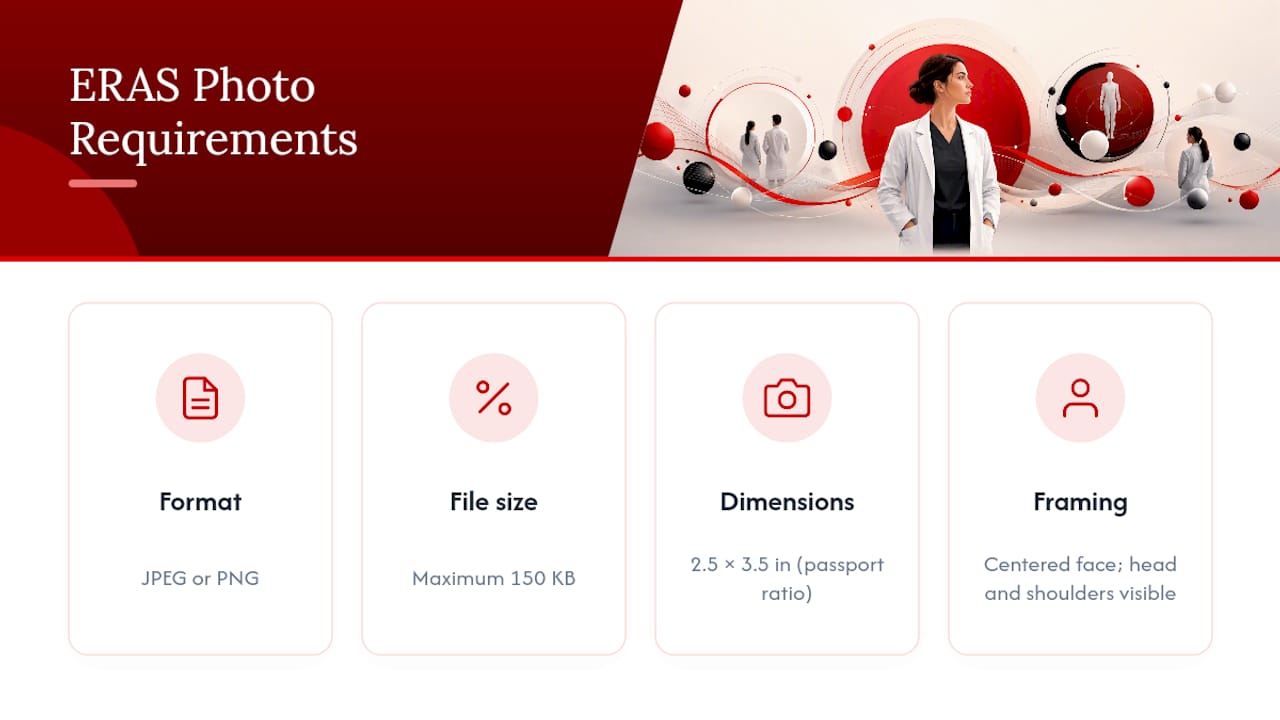
The AAMC’s photo guidance is specific and unforgiving: JPEG or PNG format, a maximum file size of 150 KB, and dimensions of 2.5 by 3.5 inches, the standard passport ratio. Your face needs to be centered, with head and shoulders clearly visible and nothing cropped awkwardly at the edges.
You’ll upload the finished file through MyERAS. International medical graduates submit theirs through MyIntealth, and the ECFMG’s applicant documents guidance walks through that specific workflow, including how confirmation and replacement uploads work if you need to swap a file later. The 2027 MyERAS Applicant User Guide covers the mechanics of the upload screen itself, section by section, if you want to see exactly what the system expects before you’re staring at it under deadline pressure.
When you book a photographer, be explicit: ask for an ERAS-optimized export at 150 KB or under, and also request a full-resolution backup file. You’ll want that second version for LinkedIn, hospital directories, or a future CV, none of which care about ERAS’s tight compression limit.
Should You Wear a White Coat or a Suit Jacket?
Both options work, but they send different signals. The white coat reads well as a keepsake from your white coat ceremony, and it can suit certain specialties where clinical presentation is part of the culture. A suit jacket, though, mirrors what you’ll actually wear to your residency interviews, and that consistency matters more than people assume.
Color and pattern rules are straightforward: stick with navy, charcoal, or light blue. Skip neon shades, loud contrasts, and busy patterns like tight checks or bold stripes. They pull attention away from your face and can strobe oddly under camera compression.
- Choose a solid or subtly textured jacket over anything patterned
- Keep jewelry minimal: a watch or simple studs, nothing that catches light or dangles
- If wearing a tie, pick a solid or simple pattern that won’t clash with the jacket
- Layer a collared shirt or blouse underneath so the neckline looks intentional, not thrown together
Pro Tip: Wear the exact outfit you plan to wear to interviews when you take this photo. If a program director meets you in person and your photo looks like a different person, that mismatch is a small, avoidable credibility hit.
For deeper guidance on colors and layering that hold up under studio lighting, Metroplex Headshots has a full wardrobe guide for professional headshots worth reading before you shop your closet.
How Should You Pose and What Expression Works Best?
Center your head and shoulders in the frame, keep your shoulders slightly angled rather than square to the camera, and lean in a few inches toward the lens. A slight chin dip, not a tilt back, avoids the “yearbook photo” stiffness that plagues so many first attempts.
On expression: a warm, closed or slightly open smile reads as approachable without looking staged. Some specialties, particularly surgical fields, lean toward a more composed, neutral expression, so match your tone to the field you’re applying into if you have a strong preference already.
- Keep glasses on if you wear them daily. Removing them for the photo, then showing up with them at your interview, creates the same mismatch problem as wardrobe
- Skip heavy facial hair changes right before the shoot. If you’re growing a beard out, do it well before, not the week of
- Makeup, if worn, should look like your daily routine. Camera flash exaggerates heavy contouring and can create a false sense of who’s showing up to interview
A 2018 study of dermatology residency applications found that smiling, wearing glasses, and wearing jackets correlated with higher match likelihood in that sample. That’s a correlation within one specialty’s applicant pool, not proof that any single feature changes outcomes. Still, it lines up with the plainer advice: look approachable, look like yourself, and look ready.
When and How to Schedule Your Session
Book your session with enough runway to retake it if something goes wrong, ideally a few weeks before your ERAS submission window opens rather than the night before. If your current headshot is more than about 12 months old, or your appearance has meaningfully changed (new haircut, new glasses, a beard grown or shaved), it’s worth refreshing rather than submitting something outdated.
When you talk to a photographer, ask for four things specifically: an ERAS export under 150 KB, a neutral or solid-color background, a handful of expression variations (smiling and neutral), and retouching that stays natural rather than heavy. You want to look like your best, well-rested self, not airbrushed.
If a professional session isn’t in the budget right now, a campus photo booth or a well-lit DIY setup with a plain wall and a tripod can work in a pinch, though consulting GP recruitment marketing experts can help you present your best professional image. Just be honest about the trade-off: uneven lighting and awkward crops are the most common problems with self-shot attempts, and they’re exactly the kind of thing a trained eye catches before you submit.
Common Headshot Mistakes and How to Fix Them
Most photo problems fall into four categories, and all four are fixable before you ever hit upload.
- Off-spec files. Wrong format, wrong dimensions, or oversized files get flagged or rejected. Re-export as JPEG or PNG, confirm it’s under 150 KB, and double-check the 2.5 by 3.5 inch dimensions before uploading.
- Distracting backgrounds or clothing. Busy wallpaper, cluttered bookshelves, or patterned shirts pull focus. Reshoot against a solid wall or ask your photographer for a clean backdrop swap.
- Over-editing. Heavy filters or aggressive skin smoothing make photos look artificial, and reviewers notice. Ask for light, natural retouching only, the kind common headshot mistake guides consistently flag as a red flag when overdone.
- Mismatched appearance. If your photo doesn’t resemble how you’ll show up at your interview, update it. Consistency between application and in-person impression matters more than a flattering edit.
Photographer’s In-Session Tips for a Better Result
Lighting is where most white coat photos go wrong. Harsh direct flash bounces off-white fabric and blows out detail, so soft, diffused lighting works far better for keeping skin tones natural and the coat from glaring. A two-light softbox setup, or even a north-facing window, beats a straight-on flash every time.
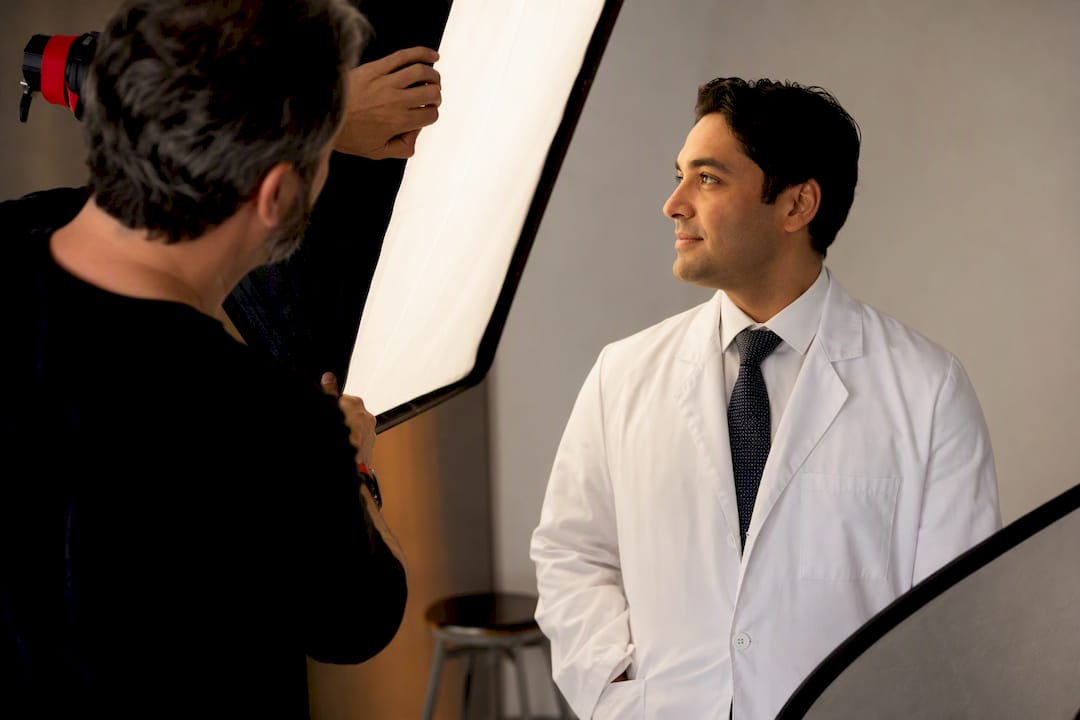
Ask your photographer for real-time review during the session and a few different crops, smiling and neutral, glasses on and off if that applies to you. Sleep well the night before, stay hydrated, and handle any haircut or grooming two to three days ahead so it doesn’t look freshly done. If camera anxiety is real for you, a few practice shots at the start of the session usually loosens things up fast.
Pro Tip: Ask to see two or three images on the camera screen partway through the shoot. Small adjustments, like tilting your chin or relaxing your shoulders, are far easier to fix in the moment than after the file’s already exported.
Why This Photo Matters More Than Applicants Expect
Program reviewers move through hundreds of applications, and your photo functions mainly as a memory aid. It’s the visual anchor that helps someone recall your interview after they’ve seen forty other candidates that week. Research on attractiveness and residency application review suggests the effect is subtle and mixed, not a scoring criterion, but a photo that looks careless or mismatched from your interview presence can still create friction.
I’ve watched applicants agonize over getting the “perfect” shot when what actually matters is consistency and professionalism. Get that right, and the photo does its job quietly in the background, supporting your application rather than distracting from it.
— Traci Schowmeyer
Get an ERAS-Ready Headshot Without the Guesswork
Metroplex Headshots handles the technical side of this so you don’t have to learn file compression the week your application is due. Every session can include an ERAS-optimized export alongside a full-resolution file for LinkedIn or your CV, meaning you leave with both the compliant crop and a version built for everything else your career needs.

Booking is straightforward: choose the In Studio Headshot Session at $300 if you can come to us, or the On Location package if a mobile setup works better for your schedule. When you book, request a neutral background, a couple of expression variations, and confirmation that your final file lands under 150 KB. For readers weighing whether a white coat or interview jacket fits their specialty best, the wardrobe tips guide is worth a read before your session. Ready to get this checked off your application list? Book your session and walk away with a file that’s already ERAS-ready.
Sources
- Photo | Students & Residents (AAMC / ERAS)
- ERAS applicant documents index (ECFMG)
- Study on photograph features and residency selection (PubMed, 2018)
- Paper on attractiveness and residency application review (JMIR Medical Education, 2026)
FAQ
What Colors Should You Avoid for a Headshot?
Skip neon shades, busy patterns, and high-contrast prints. Navy, charcoal, and light blue photograph cleanly and won’t compete with your face for attention.
Is a White Coat Ceremony a Big Deal for Your Headshot?
The ceremony itself carries real meaning as a milestone, but the coat isn’t required in your ERAS photo. A suit jacket matching your interview attire is often the safer, more consistent choice.
What Is the Best Color to Wear for Headshots?
Solid navy or light blue tends to work best across skin tones and backgrounds. Avoid stark white tops directly against a white backdrop, since the lack of contrast flattens the image.
Is a White Background Good for a Headshot?
A neutral, solid-colored background works well for ERAS submissions and keeps the focus on your face. Pure white can wash out a white coat, so a soft gray or light neutral tone often photographs better.
Does Metroplex Headshots Offer ERAS-Compliant Sessions?
Yes. Metroplex Headshots can deliver an ERAS-optimized export alongside a full-resolution file, with in-studio sessions starting at $300.

