A professional headshot is the digital handshake that precedes every executive introduction, shaping how peers, clients, and partners perceive you before a single word is exchanged. The importance of executive headshots has never been greater: first impressions now happen online across LinkedIn, event bios, and press kits, long before any face-to-face meeting occurs. Why headshots support executive networking comes down to one core truth: visual credibility is the foundation of professional trust. Executives who invest in polished, consistent imagery signal competence, approachability, and serious intent from the first click.
Why headshots support executive networking through trust
Professional photography builds trust because the human brain processes visual information before any other input. LinkedIn confirms that a professional headshot is critical for networking, specifically because it builds trust and creates a strong first impression. That finding matters because trust is the currency of executive relationships. Without it, even the most impressive resume or bio loses traction.
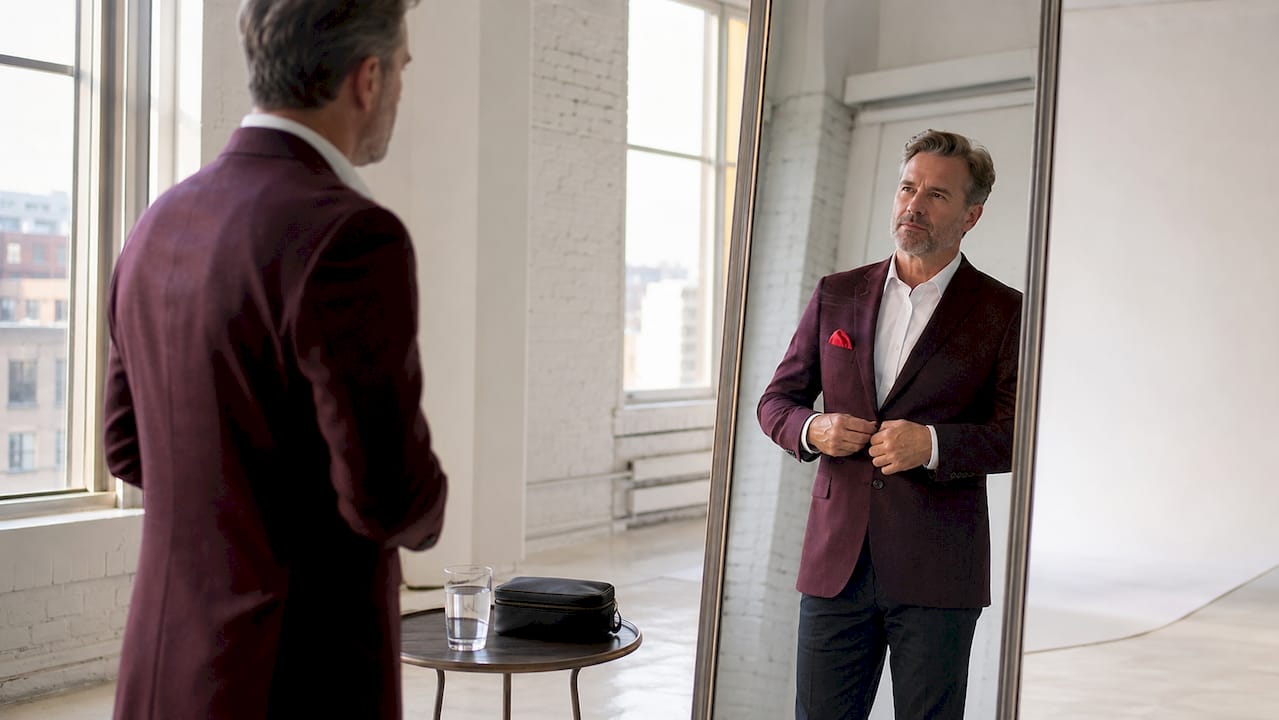
The psychology behind this is straightforward. Headshots that feature direct eye contact and approachable expressions make executives appear more trustworthy and accessible. A slight forward lean, a genuine smile, and a clean background all communicate openness. These are not cosmetic choices. They are strategic signals that tell your network you are someone worth knowing.
Consistency across platforms amplifies this effect. When your headshot matches across LinkedIn, your company website, and your conference bio, you create what brand strategists call brand alignment. Your audience recognizes you instantly, and that recognition builds reliability over time. Inconsistency, by contrast, creates visual drift, a fragmented perception that quietly erodes confidence in your professionalism.
- Eye contact in the photo signals confidence and openness to connection
- A genuine, relaxed expression communicates approachability rather than stiffness
- A clean, uncluttered background keeps focus on you and your executive presence
- Consistent lighting and color tone across all your images reinforces brand alignment
Pro Tip: Book your headshot session at a time of day when you feel most alert and confident. Your energy shows in the final image, and photographers like those at Metroplex Headshots are trained to capture that authentic presence.
Professional headshots vs. casual photos: what the difference costs you
The gap between a professional headshot and a casual photo is not just aesthetic. It is financial and reputational. Low-quality or informal images cause hesitation and negative impressions among business peers and clients. That hesitation translates directly into missed introductions, stalled partnerships, and opportunities that quietly go to someone else.
Here is how the two approaches compare across the dimensions that matter most for executive networking:
| Factor | Professional Headshot | Casual or Outdated Photo |
|---|---|---|
| First Impression | Projects competence and serious intent | Signals low investment in personal brand |
| Trust Signal | Eye contact and expression convey reliability | Informal setting raises credibility questions |
| Platform Fit | Optimized for LinkedIn, press kits, bios | Often cropped poorly or pixelated at scale |
| Brand Alignment | Consistent across all executive touchpoints | Creates visual drift and fragmented perception |
| Networking Outcome | Opens doors and accelerates introductions | Creates friction before conversation begins |
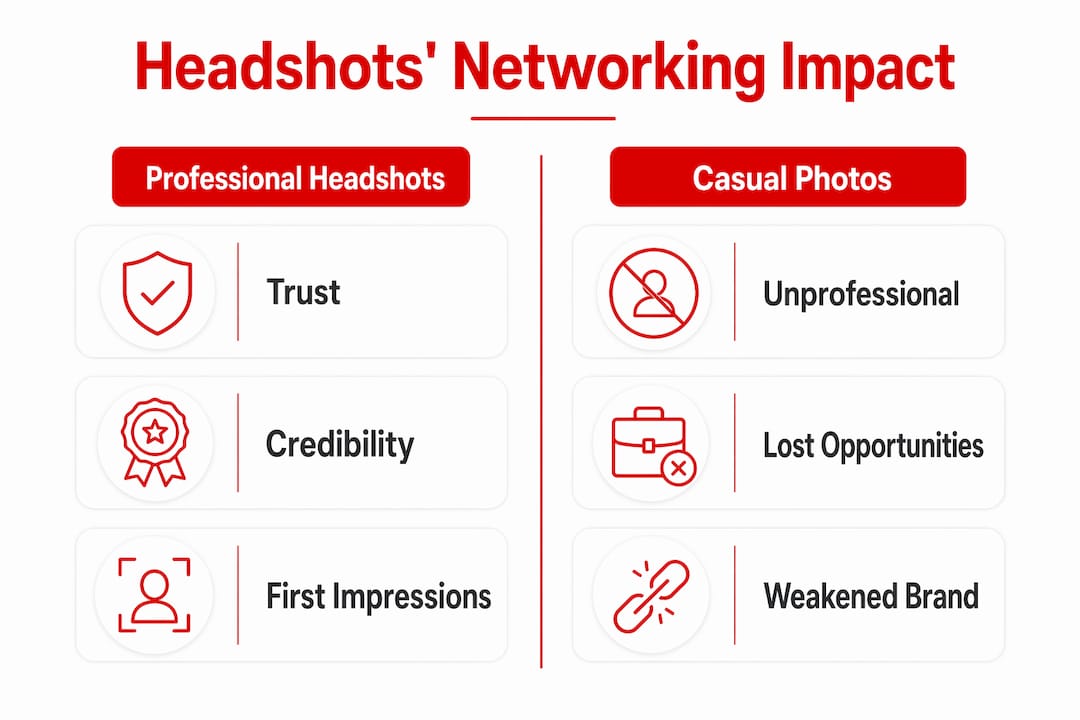
The executive who shows up to a LinkedIn search with a grainy conference photo or a cropped group shot is telling their network something unintentional. They are communicating that their image is not a priority. In networking, that message travels fast.
Consider a C-suite leader preparing for a board introduction or a speaking engagement. The event organizer pulls their bio photo for the program. If that photo is three years old and no longer reflects their current appearance, the disconnect at the event creates a subtle but real moment of confusion. That moment costs trust.
Pro Tip: Before your next major speaking engagement or conference, audit every platform where your photo appears. If any image is more than two years old or no longer looks like you, schedule a refresh session with a professional photographer.
How executives should maximize networking benefits from their headshots
Having a great photo is only half the equation. Strategic deployment of your headshot is equally important, enabling you to control your image and reduce friction across every networking touchpoint. The executives who get the most from their professional imagery treat their headshot like a business asset, not a one-time task.
Here is a practical framework for getting full value from your executive portrait:
Update your headshot every 2–3 years. Photos older than two to three years or those that no longer reflect your current appearance should be refreshed. Authenticity matters. When your photo matches your real-world appearance, you build transparency and trust from the first introduction.
Optimize for each platform’s specifications. LinkedIn favors a square crop with your face filling roughly 60% of the frame. Your corporate website bio may need a wider horizontal shot. Your email signature works best with a small, high-contrast image. Commission multiple crops from your session so you are never forced to use the wrong format.
Build a media kit folder. Maintain a folder with your headshot in high-resolution (at least 300 DPI for print), web-optimized versions (72 DPI for digital), and both color and black-and-white formats. When a journalist, event organizer, or board secretary requests your photo on short notice, you can respond in minutes. That speed signals professionalism.
Use variety for different networking contexts. A formal portrait works for your corporate bio and board materials. A slightly more relaxed shot suits your LinkedIn profile and speaking bios. A candid professional image works well for thought leadership articles and personal branding content. One session with a skilled photographer can yield all three.
Align your headshot with your brand message. Your background, attire, and expression should reflect the industry you serve and the clients you want to attract. A financial executive and a creative director send very different signals, and both are correct for their audience. The executive portrait photography guide from Metroplex Headshots walks through exactly how to make those choices intentionally.
Include your headshot in your email signature. This is one of the most underused networking tools available to executives. Every email you send is a touchpoint. A professional photo in your signature reinforces recognition and makes your communication feel more personal and credible.
Where executives should deploy their headshots for maximum impact
Knowing where to place your headshot is as important as the quality of the image itself. LinkedIn remains the primary platform where executive networking initiates visually. It is the first place a recruiter, potential partner, or prospective client will look. Your profile photo there is not optional. It is the opening frame of your professional story.
Beyond LinkedIn, the benefits of headshots in business extend across every channel where your name appears:
- Speaking engagements and event bios: Conference organizers, podcast hosts, and panel moderators all need a current, high-resolution photo. A strong headshot in these contexts positions you as a credible authority before you say a word on stage.
- Email signatures: A professional photo in your signature turns routine correspondence into a personal connection. Recipients put a face to your name, which accelerates rapport and recall.
- Corporate websites and team pages: Your company’s website is often the first stop for due diligence. An outdated or inconsistent photo on your team page undermines the credibility of the entire organization.
- Press kits and media inquiries: Journalists and editors need publication-ready images quickly. Maintaining updated high-resolution images available for media on short notice is a mark of executive readiness.
- Business cards and printed materials: Physical networking still happens. A headshot on your business card makes you memorable long after the event ends.
The executives who treat their headshot as a living, deployable asset rather than a static file see the clearest return. Your personal branding headshots should work as hard as you do, showing up consistently and compellingly across every channel where your name appears.
Key takeaways
A professional headshot is the single most cost-effective tool an executive can deploy to build trust, reinforce credibility, and accelerate networking outcomes across digital and in-person channels.
| Point | Details |
|---|---|
| Trust starts visually | Eye contact and approachable expressions in headshots directly signal reliability to new contacts. |
| Casual photos cost opportunities | Low-quality images create hesitation and undermine executive credibility before a conversation starts. |
| Update every 2–3 years | Outdated photos that no longer match your appearance erode authenticity and professional transparency. |
| Deploy strategically | Maintain high-resolution and web-optimized versions ready for LinkedIn, press kits, and event bios. |
| Consistency builds recognition | Matching imagery across all platforms creates brand alignment and reinforces your executive presence. |
What i’ve learned about headshots after years behind the camera
I’m Traci Schowmeyer, and I want to share something I’ve observed that most articles on this topic miss entirely.
Executives consistently underestimate the compounding effect of image consistency. They invest in one great session, post the photo to LinkedIn, and then forget about it for five years. Meanwhile, that same photo ends up on a conference website, a board profile, and a trade publication, each with slightly different crops and color treatments. The result is visual drift, and it quietly chips away at the cohesive executive presence they worked hard to build.
The other pattern I see is executives who treat their headshot as a vanity exercise rather than a strategic asset. The truth is the opposite. Your photo is doing networking work every single day, on platforms you are not even monitoring. It is being seen by people who will decide whether to reach out, whether to recommend you, and whether to trust you, all before you know they exist.
My advice is simple: treat your headshot the way you treat your financial statements. Keep it current, keep it accurate, and make sure it reflects where you are today, not where you were three years ago. The executives I work with who do this consistently report that introductions feel warmer, conversations start faster, and opportunities arrive with less friction. That is not coincidence. That is the secret sauce of professional branding working exactly as it should.
— Traci Schowmeyer
How metroplex headshots helps executives build networking credibility
Your headshot is an extension of your brand, and it deserves the same strategic attention you give every other executive decision. Metroplex Headshots specializes in executive portrait photography that reflects who you are, the environment you work in, and the impression you want to make on every client and contact who finds you online.
From tailored session preparation to retouched images optimized for LinkedIn, press kits, and corporate websites, Metroplex Headshots delivers photography that works as hard as you do. Whether you need a single polished portrait or a full suite of images for multiple platforms, explore the headshots vs. portraits comparison to find the right session format for your goals. For executives who need flexibility, national headshot services are also available. Your next great introduction starts with the right image.
FAQ
Why do professional headshots matter for executive networking?
Professional headshots build trust and credibility before any conversation begins. LinkedIn confirms that a professional photo is critical for networking because it shapes first impressions and signals competence to recruiters, clients, and partners.
How often should executives update their headshots?
Executives should refresh their headshots every 2–3 years or whenever their appearance changes significantly. Photos that no longer match your current look undermine authenticity and professional transparency.
What makes a headshot effective for networking?
Direct eye contact, an approachable expression, and a clean background are the core elements. These visual cues communicate openness and reliability, which are the qualities that accelerate trust in executive networking contexts.
Where should executives use their professional headshots?
LinkedIn is the primary platform, but executives should also deploy their headshot in email signatures, speaking event bios, corporate websites, press kits, and business cards. Consistent imagery across all channels reinforces brand alignment and executive presence.
Does photo quality really affect networking outcomes?
Low-quality or casual photos cause hesitation and negative impressions among business peers and clients. That friction translates into missed connections and opportunities that go to executives who present a more polished, credible image.