


What are the essential executive photography styles for Dallas-Fort Worth professionals?
Your executive portrait is your digital handshake. Before a prospect reads your bio, checks your LinkedIn, or sits across from you at a Plano conference table, they have already formed an impression based on your image. Getting that image right means choosing a style that reflects your actual professional identity, not just what looks generically “corporate.”
For DFW professionals, three core styles dominate the market:
- Classic corporate: Clean studio backdrop, controlled lighting, formal attire. Communicates authority and reliability. Works well for finance, law, and C-suite executives.
- Modern professional: Softer backgrounds, natural or mixed lighting, business-casual wardrobe. Signals approachability alongside competence. Popular with tech leaders, consultants, and entrepreneurs.
- Environmental portrait: Shot on location, whether a Dallas skyline, a branded office, or a co-working space. Adds context and personality. Ideal for executives whose brand story is tied to a specific industry or place.
Each style shapes perception differently. A tight, studio-lit headshot reads as polished and authoritative. A wider environmental shot adds warmth and context. The right choice depends on who you are trying to reach and what you want them to feel.
Table of Contents
- How different photography styles shape your professional brand image
- How to align your executive photos with your personal brand
- How to prepare effectively for your executive photography session in Dallas-Fort Worth
- Core photography principles that shape impactful executive headshots
- Key Takeaways
- What most DFW executives get wrong about their executive portraits
- Your next step toward a portrait that works as hard as you do
How different photography styles shape your professional brand image
Style is not just aesthetics. Every element of an executive portrait, from the color temperature of the light to the distance between camera and subject, sends a message about who you are professionally.
Lighting is the most immediate signal. Hard, directional light creates definition and strength. Soft, diffused light reads as warm and approachable. Most DFW executives benefit from a blend: enough definition to project confidence, enough softness to stay relatable. Neither extreme alone serves a business leader well.
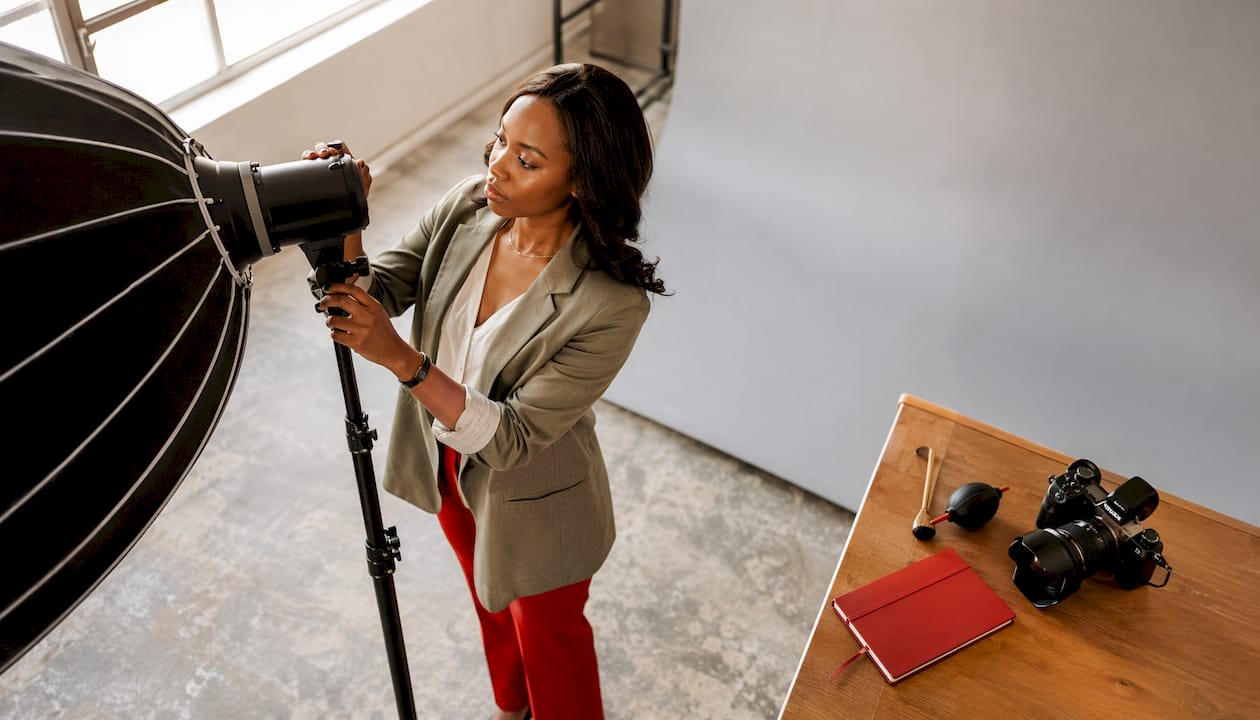
Background choices carry equal weight. A neutral gray or white studio background keeps the focus entirely on you, which is exactly right for LinkedIn profiles, annual reports, and press materials. A branded office environment or a recognizable Dallas location adds narrative depth, but only when it genuinely connects to your role. Using a trendy backdrop that has nothing to do with your business creates visual drift, a disconnect between image and identity that clients pick up on even when they cannot name it.
Consider these factors when selecting your executive photography style for the DFW market:
- Your industry: Financial services and legal firms typically expect classic corporate; creative agencies and startups have more latitude.
- Your audience: Who will see this image most, clients, investors, or hiring managers? Each group responds to different visual cues.
- Your existing brand assets: Does your website use warm tones or cool ones? Your portrait should feel like it belongs in that same visual world.
- Platform context: A LinkedIn headshot has different framing needs than a speaking engagement bio photo or a company website banner.
- Longevity: Trend-chasing in executive photography ages poorly. Timeless beats trendy every time.
How to align your executive photos with your personal brand
Think of your executive portrait as a personal branding headshot rather than a compliance photo. The difference is intent. A compliance photo proves you exist. A personal branding headshot actively works for you, building trust before you say a word.
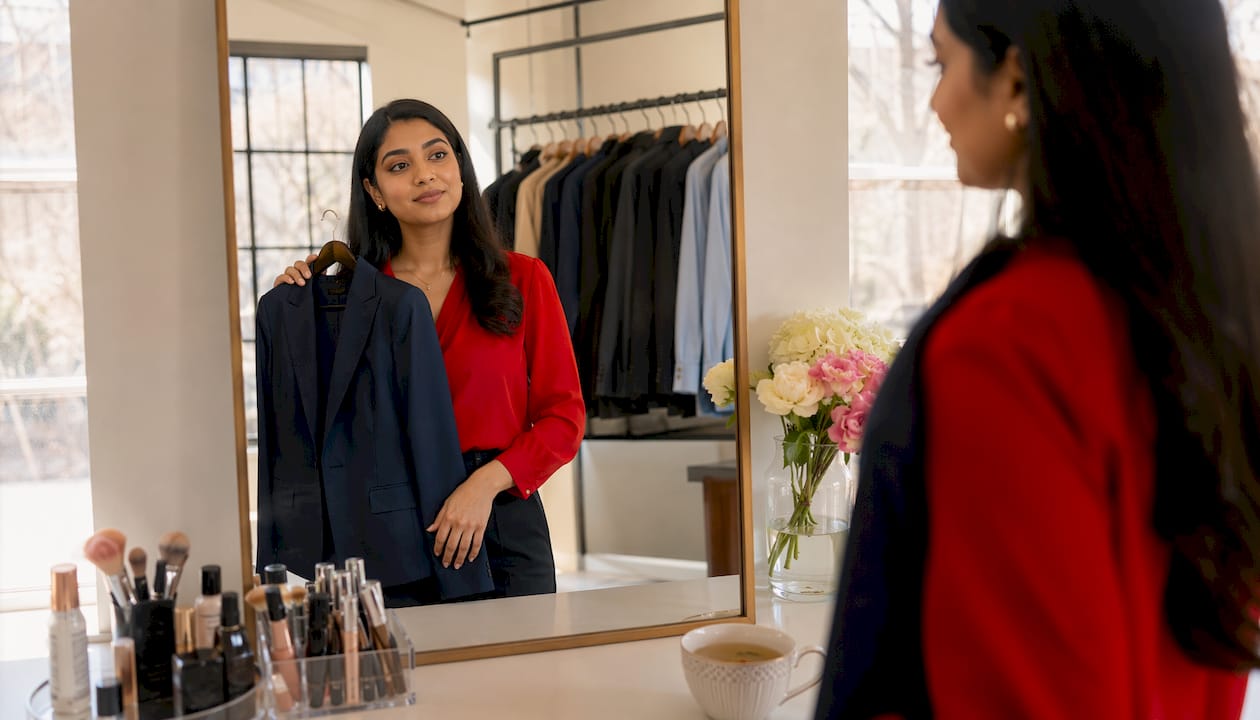
Brand alignment starts with your wardrobe. Colors should echo your brand palette without being a literal match. If your company uses navy and gold, wearing a deep blue suit reinforces that visual identity subconsciously. Avoid patterns that distract or colors that clash with your background. Solid, mid-tone colors photograph cleanly and keep the focus on your face and expression.
Your setting should tell a supporting story, not compete with you for attention. An executive at a Fort Worth energy company might choose a location that subtly references their industry. A Dallas-based marketing consultant might opt for a modern, light-filled space that signals creativity. The setting is context, not the subject.
Here are practical branding alignment tips to carry into your session:
- Audit your existing brand materials before booking: website colors, logo palette, and any brand photography already in use.
- Bring two to three outfit options that span the range from formal to business-casual, giving your photographer choices.
- Communicate your brand personality in writing before the session, whether that is “trusted authority,” “approachable expert,” or “bold innovator.”
- Match your expression to your brand voice. A warm smile fits a client-facing service brand. A composed, direct gaze fits a high-stakes advisory role.
- Review competitor imagery to understand the visual norms in your space, then decide whether to meet them or deliberately stand apart.
Professional headshots also support executive networking success in ways that go beyond first impressions. When your image is consistent across platforms, it builds recognition over time.
How to prepare effectively for your executive photography session in Dallas-Fort Worth
Preparation is where most executives either win or lose the session before it starts. Showing up with the right wardrobe, a clear sense of your brand goals, and a rested, confident mindset produces images that look natural rather than forced.
Start with your wardrobe at least a week out. Steam or press every option. Check that colors photograph well under studio lighting, since some fabrics and shades shift under artificial light. Avoid busy patterns, logos, and anything that fits poorly. Fit matters more than brand in executive photography.
Grooming deserves the same lead time. Schedule a haircut seven to ten days before your session, not the day before. For those who wear makeup, a professional application on the day of the shoot is worth considering. Skin preparation, hydration, and rest in the 48 hours before your session make a measurable difference in how your face reads on camera.
Pro Tip: Brief your photographer on your brand goals before the session, not during it. Send them your website URL, your LinkedIn profile, and a short note about the impression you want to leave. A photographer who understands your brand can direct your posing and expression with that goal in mind, rather than just producing technically correct images.
A useful framework for structuring the session divides shooting time into safe, standard shots to guarantee a usable result, followed by a longer period for creative exploration with different angles, expressions, and lighting setups, and finishing with a shorter time for bolder, riskier shots that might produce something unexpected and memorable. This structure protects you while giving your photographer room to find something genuinely distinctive.
Preparation checklist for your DFW executive session:
- Confirm session location, parking, and arrival time the day before
- Pack two to three outfit options plus backup accessories
- Bring any brand props relevant to your role (a specific tool, a product, or branded materials)
- Review reference images of executive portraits you admire and share them with your photographer
- Get a full night’s sleep and avoid alcohol the evening before
- Arrive 15 minutes early to settle in and review the plan with your photographer
Core photography principles that shape impactful executive headshots
The 5 C’s of photography, Composition, Color, Contrast, Clarity, and Content, form the technical and creative backbone of every strong executive portrait. Understanding them helps you evaluate your images with confidence rather than just reacting to how you feel about them.
Composition determines where you sit in the frame and what surrounds you. The rule of thirds, placing your eyes at the upper third of the frame, is the standard for headshots because it feels natural and balanced. Color sets the emotional register of the image. Warm tones read as approachable; cool tones read as precise and authoritative. Contrast gives the image depth and prevents it from looking flat. Clarity is simply sharpness, your eyes must be in focus, always. Content is the message: what story does this image tell about who you are professionally?
Mastering content and composition together is what separates an executive portrait that functions as a marketing asset from one that merely documents your appearance. Pre-visualizing the final image before the shutter fires is a discipline that experienced photographers bring to every session.
The Pareto principle applied to photography reinforces a practical truth: focusing on a small set of high-impact techniques, specifically lighting, composition, and subject distance, produces the majority of your strongest results. You do not need elaborate setups. You need mastery of the fundamentals.
Subject distance is one of the most underestimated variables in executive portraiture. A tighter crop, from the shoulders up, conveys expertise and focus. A wider frame that includes your environment adds approachability and context. Most DFW executives benefit from having both in their portfolio, using the tight version for LinkedIn and press, and the wider version for speaking bios and website about pages.
Post-processing follows the same logic. Curating ruthlessly means keeping only the strongest images from a session and displaying only the best of those publicly. A portfolio of five exceptional images outperforms a gallery of thirty mediocre ones every time. Retouching should enhance without altering: smooth skin texture, correct color balance, and remove temporary blemishes, but preserve the features that make you recognizable.
Key principles for DFW executive portraits:
- Sharp eyes are non-negotiable; everything else can be adjusted in post-processing
- Lighting should complement your skin tone, not fight it
- Retouching standards should be agreed upon before the session, not after
- Consistency across your image library prevents visual drift across platforms
- Executive portrait photography is a strategic investment, not a one-time administrative task
Key Takeaways
A polished DFW executive portrait requires style alignment, deliberate preparation, and mastery of core photographic principles to function as a genuine brand asset.
| Point | Details |
|---|---|
| Style drives perception | Choose classic corporate, modern professional, or environmental based on your industry and audience. |
| Brand alignment is intentional | Match wardrobe, setting, and expression to your existing brand palette and personality. |
| Preparation determines outcome | Brief your photographer on brand goals, prepare wardrobe early, and use the 20-60-20 session framework. |
| The 5 C’s guide quality | Composition, Color, Contrast, Clarity, and Content are the technical foundation of every strong executive portrait. |
| Metroplex Headshots | Metroplex Headshots combines technical mastery with brand-aligned direction for DFW executives seeking portraits that work as marketing assets. |
What most DFW executives get wrong about their executive portraits
The most common mistake I see is treating an executive portrait like a driver’s license photo: something you get done, file away, and forget. That mindset produces images that look exactly like what they are, obligatory rather than intentional.
The DFW business market is competitive and relationship-driven. Whether you are closing a deal in Uptown Dallas, presenting to investors in Fort Worth, or building your profile for an executive search process, your image is doing work before you walk in the room. A portrait that communicates warmth, competence, and confidence is not vanity. It is strategy.
What I find most professionals underestimate is the role of the photographer’s direction. Technical skill matters, but the ability to draw out a genuine expression, to make someone who hates being photographed look like they own the room, is what separates a good portrait from a great one. That direction comes from a photographer who understands your brand goals, not just your camera settings.
The other overlooked factor is consistency. One great headshot used everywhere is far more powerful than six different images across your platforms that create visual confusion. Your LinkedIn, your website, your speaking bio, and your email signature should all feel like they belong to the same person and the same brand. That coherence is the secret sauce of professional branding, and it starts with a single, well-planned session.
Your next step toward a portrait that works as hard as you do
Most executives know they need better photos. What stops them is not knowing exactly what “better” looks like for their specific brand and role. That is precisely where Metroplex Headshots delivers something different from a generic studio appointment.
Metroplex Headshots works with DFW business professionals and small business owners to produce executive portraits that are strategically aligned with their brand, not just technically correct. Every session is built around your professional identity, your industry context, and the impression you want to leave with clients, investors, and peers. The result is a headshot session that produces images you will actually use, across every platform where your name appears.
Ready to invest in a portrait that reflects the professional you have built? Book your session with Metroplex Headshots and bring your brand image in line with the work you do every day.

