


Profile photography is the art of capturing a single subject in a way that communicates who they are and what they stand for, with the primary goal of making the right impression on the right platform. Your first move: match the style to your audience, then lock in three non-negotiables: eyes in sharp focus, flattering light, and a genuine expression.
- Pick a neutral or on-brand background that won’t compete with your face.
- Smile with your eyes, not just your mouth — a relaxed jaw and slightly raised cheekbones read as warm and confident on any screen.
Table of Contents
- What profile photography styles work best for your goals?
- How do you shoot a great profile photo? The practical recipe
- How does a profile photo differ from a headshot?
- How to prepare for your profile photo session
- Should you hire a pro or do it yourself?
- Metroplex Headshots’ 4-step method for consistent professional portraits
- Key Takeaways
- Why authenticity is winning in profile photography right now
- What to expect when you book with Metroplex Headshots
- Useful resources for further reading
What profile photography styles work best for your goals?
Not every portrait serves the same purpose, and choosing the wrong style is one of the most common mistakes professionals make. A classic headshot that works perfectly on LinkedIn can feel stiff and out of place on a speaker’s website. Below is a breakdown of the five most-used styles, when each one earns its place, and what to look for when building a reference gallery.
| Style | Best Platform Fit | What It Communicates |
|---|---|---|
| Classic headshot | LinkedIn, corporate bio, legal/medical directories | Authority, professionalism, trust |
| Environmental portrait | Company website, speaker/author pages | Context, expertise, approachability |
| Lifestyle/personal brand | Instagram, coaching, creative industries | Personality, energy, relatability |
| Candid/snapshot | Social media stories, team culture pages | Authenticity, warmth, humanity |
| Creative/expressive | Actor/model portfolios, entertainment, editorial | Range, character, visual impact |
Classic headshot: Clean background, face and shoulders, direct eye contact. This is the workhorse of business headshot photography and the default for any high-stakes professional context.
Environmental portrait: The subject is photographed in a meaningful setting, a law office, a medical clinic, a construction site. The environment adds a layer of credibility that a plain background cannot.
Lifestyle/personal brand: Looser framing, natural light, and a sense of movement. This style suits coaches, consultants, and anyone whose brand is built on personality as much as credentials.
Candid/snapshot: Caught-in-the-moment energy. Useful for humanizing a brand on social media, but rarely strong enough to anchor a professional bio page on its own.
Creative/expressive: Dramatic lighting, bold color, or unconventional framing. Reserved for actors, models, and creatives where visual range is the entire point.
Pro Tip: When building your reference gallery, search for images where the background color sits within your brand palette. A warm-toned background reads very differently than a cool gray, and that tonal choice shapes how viewers feel about you before they read a single word.
How do you shoot a great profile photo? The practical recipe
The most reliable result for a professional portrait comes from a short telephoto lens, a moderate aperture, and controlled light. Three-point lighting, appropriate focal lengths, and aperture choices are the core technical practices for flattering portrait images and controlling background separation. Here is how to put them together.
Lighting setups
Three-point lighting (studio standard): A key light at roughly 45 degrees to the subject’s face, a fill light on the opposite side at lower intensity to soften shadows, and a hair/rim light behind the subject to separate them from the background. This setup gives you full control and consistent results across a full session.
Window light plus reflector (accessible alternative): Position the subject two to three feet from a large north-facing window. Place a white foam-core reflector on the opposite side to bounce light back into the shadow side of the face. This produces soft, dimensional light that rivals a studio setup at a fraction of the cost. For a visual walkthrough of how profile lighting patterns work in practice,
is worth ten minutes of your time.
Camera and lens settings by setup
| Setup | Focal Length | Aperture | ISO | Shutter Speed |
|---|---|---|---|---|
| Studio headshot | 85–135mm | f/2.8–f/4 | — | — |
| On-location environmental | 85–135mm | f/4 | — | — |
| Smartphone social profile | Portrait mode | Auto (software bokeh) | Auto | Auto |
A short telephoto in the 85–135mm range compresses facial features in a flattering way and keeps the subject at a comfortable working distance. Stopping down one stop from wide open, say f/4 instead of f/2.8, keeps both eyes in focus without losing meaningful background separation.
Posing checklist
- Angle the torso roughly 30–45 degrees away from the camera, then turn the face back toward the lens. This slims the frame and adds dimension.
- Drop the far shoulder slightly to avoid a rigid, square-on look.
- Tilt the chin very slightly down and forward — this defines the jawline and prevents the “looking up the nose” angle.
- Relax the hands. If hands are in frame, rest them naturally rather than clasping or gripping.
- Coach the expression with a cue, not a command. “Think about the last time a client said thank you” produces a more genuine smile than “say cheese.”
Pro Tip: Before the first frame, spend two minutes in conversation with your subject about something they genuinely enjoy. The micro-expressions that follow, slightly raised cheeks, relaxed eyes, a real smile, are nearly impossible to fake and immediately visible in the final image.
How does a profile photo differ from a headshot?
A headshot is a portrait focused on the face, commonly used for professional profiles, casting, and online promotional purposes. A profile photo is a broader category: it can be a headshot, but it can also be a three-quarter-length environmental portrait or a lifestyle image, depending on what the platform and audience require.
The practical rule: Use a headshot when the platform demands immediate identification and authority, such as LinkedIn, a legal directory, or a medical practice website. Use a broader profile portrait when the platform rewards personality and context, such as a speaker bio, an author page, or an Instagram business profile. The question to ask is not “What looks good?” but “What does my audience need to feel confident about me in the first three seconds?”
For a deeper look at where the two formats overlap and diverge, this comparison of headshots and portraits breaks down the distinctions by use case.
Platform shapes the decision more than most people realize. LinkedIn’s small circular crop rewards tight framing and direct eye contact. A corporate website bio page has room for an environmental portrait that shows you in context. An actor’s casting roster needs range, so multiple looks across both headshot and three-quarter formats are standard. Matching the format to the platform is not a stylistic preference; it is a functional one.
How to prepare for your profile photo session
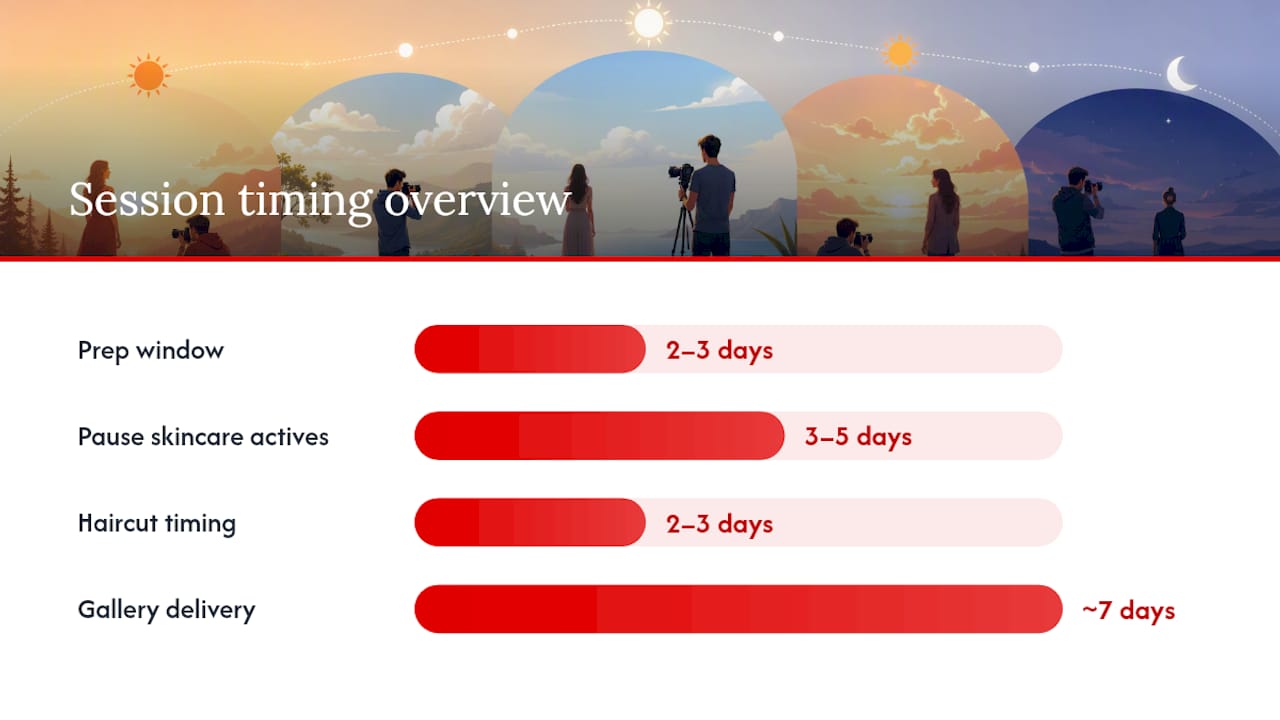
The 48–72 hours before your session are more consequential than most people expect. Prep decisions in that window, including sleep, hydration, and pausing new skincare actives, materially affect how images look. Treat that window as part of the shoot itself.
The three controllable variables:
- Sleep: Two nights of solid rest reduces puffiness around the eyes and gives skin a more even tone. One late night can undo a week of good preparation.
- Hydration: Well-hydrated skin catches light more evenly and retouches more cleanly in post.
- Wardrobe: Lay out two to three complete outfits the night before. Solid colors in mid-tones photograph most reliably. Avoid busy patterns, logos, and anything that wrinkles easily.
Pre-shoot checklist:
- Pause new skincare actives (retinoids, exfoliants, strong acids) three to five days before the session to avoid redness or peeling.
- Get a haircut or blowout two to three days prior, not the morning of, so it settles naturally.
- Skip heavy jewelry that competes with your face; small, clean pieces work best.
- For skin: a light, even-toned foundation or powder reduces shine without looking overdone on camera.
For a full wardrobe and styling walkthrough, the Metroplex Headshots session prep guide covers outfit strategy and timing in detail.
Session logistics: A single-subject headshot session typically runs about half an hour to an hour and includes time for outfit changes and real-time image review. Most studios deliver a final gallery within about a week, with retouching included or available as an add-on. Pricing in the U.S. varies by market and scope, but a professional session generally includes a session fee covering the photographer’s time, with retouched image licensing priced separately or bundled. Always confirm what is included before you book.
Retouching note: Business clients expect natural retouching, clarity about what edits are included, and timely turnaround. Retouch policy directly affects perceived value — ask specifically whether skin smoothing, background cleanup, and color correction are part of the base price.
Should you hire a pro or do it yourself?
Hire a professional when the stakes are high and the image is public-facing. Executives, attorneys, healthcare providers, real estate agents, and anyone whose first impression is made online before a handshake should not be working from a smartphone selfie. Team cohesion is another strong reason: a set of mismatched photos across a company website signals visual drift and undermines brand credibility.
DIY is acceptable for quick social media updates, internal directories, or low-stakes platforms where a clean, well-lit photo is enough. If you go that route, three things matter most: a neutral background, a window to your left or right (not behind you), and a phone propped at eye level rather than held at arm’s length.
Questions to ask any photographer before booking: What is included in the session fee? How many retouched images are delivered? What is the turnaround time? Who owns the usage rights, and are there restrictions on where you can publish the images? A photographer who cannot answer these clearly is a red flag regardless of portfolio quality.
Red flags worth noting: no published portfolio, no clear retouching policy, turnaround times longer than two weeks without a stated reason, and vague language around image licensing. Minimum expectations for a professional engagement are a curated gallery delivered within seven business days and at least basic retouching included.
Metroplex Headshots’ 4-step method for consistent professional portraits
Metroplex Headshots advocates a methodical 4-step approach designed to produce on-brand, impactful images every time. The logic is simple: consistency comes from process, not luck.
- Step 3 — Shoot: — The session runs with real-time coaching on posing and expression. You see images as they are captured, so adjustments happen in the moment rather than after the fact.
Professional headshots function as an extension of your brand strategy, not just a photo on a website. The brief should be about the reaction you want to trigger in your audience, not simply “a good-looking photo.”
Pro Tip: Ask your photographer to show you a test frame on a laptop or tethered screen before the full session begins. Seeing the actual image, not the camera’s LCD, lets you catch lighting issues, wardrobe problems, and posing habits early, when they are easy to fix.
Key Takeaways
A strong profile photo requires the right style for the platform, controlled light, sharp eyes, and a genuine expression — everything else is refinement.
| Point | Details |
|---|---|
| Match style to platform | Classic headshots suit LinkedIn and directories; environmental portraits work better for speaker and author pages. |
| Nail the 48–72 hour prep window | Sleep, hydration, and wardrobe choices in the days before your session have a direct impact on image quality. |
| Use a short telephoto and moderate aperture | An 85–135mm lens at f/2.8–f/4 flatters faces and separates subjects from backgrounds cleanly. |
| Ask the right questions before booking | Confirm deliverables, retouching scope, turnaround time, and usage rights before any session fee changes hands. |
| Metroplex Headshots | Offers a structured 4-step process, in-studio and on-location sessions in Dallas–Fort Worth, real-time image review, and fast retouched delivery. |
Why authenticity is winning in profile photography right now
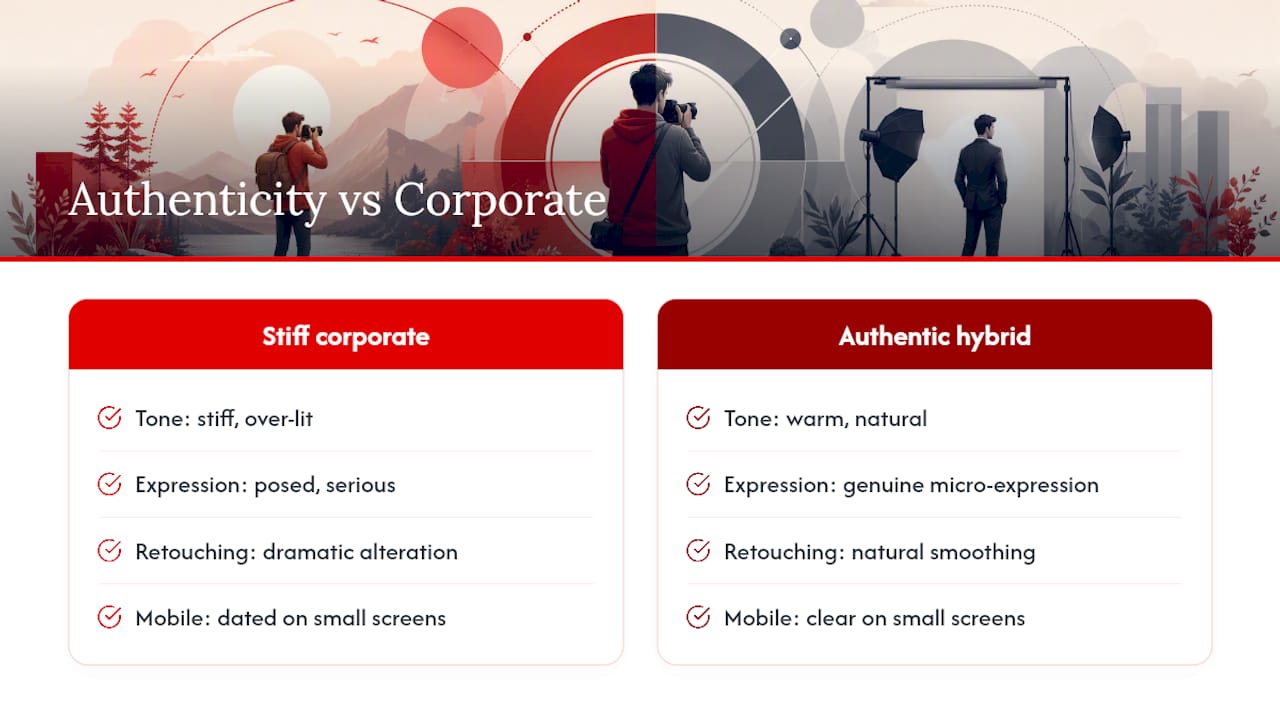
The dominant shift in professional portrait work over the past few years is not a technical one. It is a tonal one. The stiff, over-lit corporate headshot that dominated LinkedIn through the 2010s is giving way to something warmer: the business-lifestyle hybrid, a portrait that reads as professional but feels like a real person took it.
This matters for a few reasons. Mobile-first platforms crop images tightly and display them small, which means expression carries more weight than ever. A genuine micro-expression, the kind you get from real conversation rather than a posed “smile,” reads clearly even at 40 pixels wide. An over-processed, overly formal image reads as dated at the same size.
The retouching conversation has shifted too. Clients today expect natural retouching, not transformation. Smoothing a blemish or correcting uneven color is standard and expected. Dramatically altering facial structure or skin tone is not, and it creates a credibility gap when the photo does not match the person walking into the room. The ethical standard is simple: the retouched image should look like you on your best day, not like someone else entirely.
My honest take is that the photographers still selling the “power pose, dark background, serious expression” formula are solving for a visual trend that peaked a decade ago. The professionals gaining the most traction from their profile photos right now are the ones who look like themselves, just sharper, better lit, and clearly intentional about the impression they are making.
What to expect when you book with Metroplex Headshots
Metroplex Headshots delivers professional headshot sessions for executives, corporate teams, attorneys, healthcare providers, real estate professionals, and actors across the Dallas–Fort Worth Metroplex, with both in-studio and on-location options, including a mobile studio that comes to your office or event.
Every session includes a pre-shoot consultation, real-time image review during the shoot, professional retouching, and background editing. Turnaround is fast, and the retouch scope is communicated clearly before you book, so there are no surprises on delivery. Whether you need a single executive portrait or a full team refresh, the process is built to produce consistent, on-brand results without a half-day commitment.
Ready to see what a structured, brand-aligned session looks like? Browse headshot examples or book your session to get started.
Useful resources for further reading
- How to Prepare for a Headshot Session (2026 Guide) – Tov Studio Photo
- Head shot
- Portrait photography
- Professional Portrait Investment Benefits for Business Growth
- Ultimate Professional Headshot Session Guide
- Headshot Retouching for Business: What Professionals Need to Know
- Cool Professional Headshots: Master 4 Steps

