


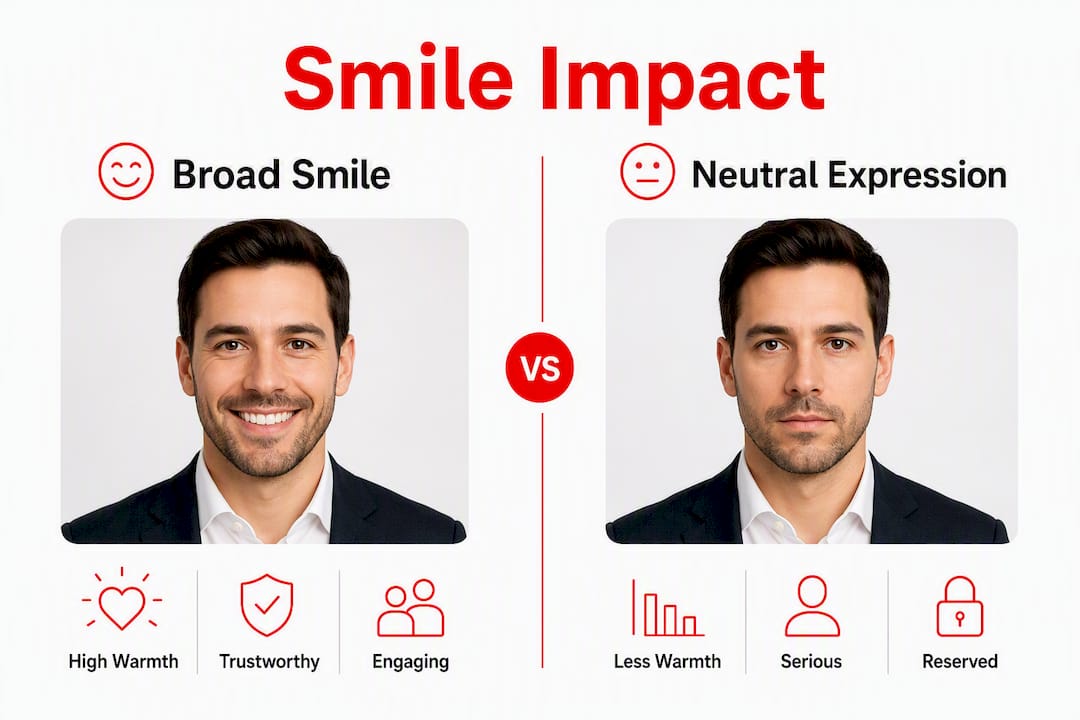
Yes, a well-chosen smile almost always strengthens a professional portrait. The reason comes down to trust: viewers form trait judgments about warmth and approachability within milliseconds of seeing a face, and a genuine smile is the single fastest signal you can send. Two findings anchor this:
- Rapid first impressions form before conscious evaluation, meaning your expression does most of the work before a viewer reads your name.
- A Duchenne smile (one that engages the eyes, not just the mouth) increases credibility more reliably than a controlled, posed expression.
The practical takeaway: book at least one smiling shot and one neutral shot in every session. That way you have options calibrated to different audiences and platforms, and you never leave a first impression to chance.
Table of Contents
- Why smiling changes first impressions in professional photos
- Which smile fits your role?
- How do you produce a natural smile during a headshot session?
- How clothing, posture, and head orientation affect your smile
- When a neutral expression serves you better
- Key Takeaways
- The expression most professionals get wrong
- Your next step toward a portrait that builds trust on sight
- Selected sources and further reading
Why smiling changes first impressions in professional photos
The science here is more specific than most people expect. Trait judgments about trustworthiness and warmth are not deliberate assessments. Research shows that subtle happy expressions seen earlier increase trustworthiness ratings even when viewers later see neutral images of the same person. The smile creates a durable halo that persists beyond the photo itself.
That halo effect matters for professionals because warmth does not stay siloed. Once a viewer registers warmth from your expression, that positive impression tends to spill over into their assessment of your competence and likeability. Empirical research confirms that smiling in professional photos raises perceived trustworthiness and can lift measurable outcomes like interview invitations and funding inquiries.
Smile intensity, though, is where the nuance lives. Research from the University of Central Florida found that broad smiles increase perceived warmth but can reduce perceived competence compared to slight smiles, with the tradeoff moderated by the audience’s goals and the perceived stakes of the decision. A broad smile works well when your audience is promotion-focused and the relationship is low-risk. When the audience is evaluating you for a high-stakes role, a controlled smile often reads as more authoritative.
The strategic sweet spot: a genuine, moderate smile that engages the eyes signals both warmth and credibility without sacrificing either. Leaders often benefit most from this controlled Duchenne expression rather than a full, open-mouthed grin.
Real-world data reinforces the point. A study of profile photos on a major short-term rental platform found that smiling hosts saw an increase in booking demand, with male hosts in one subgroup seeing notably higher gains. The mechanism is the same one at work in your LinkedIn headshot: a smile reduces perceived risk and makes a stranger more willing to say yes.
| Signal | Broad smile | Slight/Duchenne smile | Neutral expression |
|---|---|---|---|
| Perceived warmth | High | Moderate-high | Low |
| Perceived competence | Can decrease in high-stakes contexts | Maintained or increased | Highest in authority roles |
| Credibility (Duchenne) | Moderate | High | Neutral |
| Best use case | Client-facing, sales, social profiles | Leadership, LinkedIn, speaker bios | Security, legal, high-authority roles |
Which smile fits your role?
Expression choices are not one-size-fits-all. Your role, your audience’s risk perception, and the platform where the photo appears should all shape the smile you bring to a session.
- Executives and senior leaders: A controlled Duchenne smile (eyes engaged, mouth corners lifted, no wide-open grin) protects perceived authority while still signaling approachability. Pair this with your executive presence goals. A full, teeth-baring smile can undercut the gravitas a C-suite portrait needs.
- Sales and business development professionals: — A broader, open smile with visible teeth works well here. Your audience is evaluating whether they like you before they evaluate whether they trust your product, so warmth is the priority signal.
- Technical and analyst roles (engineers, developers, financial analysts): — A slight, closed-mouth smile or a subtle Duchenne expression tends to read as confident and approachable without suggesting you are overselling your personality. Research on software developer portraits confirms that expression affects perceived competence even in roles where facial qualities seem secondary.
Capture both a smiling and a neutral variation in every session. Your LinkedIn profile, your firm’s leadership page, and your speaker bio often call for different expressions, and having both on file means you are never locked into one read.
Pro Tip: Ask your photographer to shoot a few frames immediately after a genuine laugh or a moment of real conversation. Those frames often produce the most natural Duchenne expressions because the eye engagement happens involuntarily.
How do you produce a natural smile during a headshot session?
The biggest mistake professionals make is trying to hold a smile. A held smile stiffens within seconds, and the camera catches it every time. The goal is to generate the smile fresh for each frame rather than sustain it.
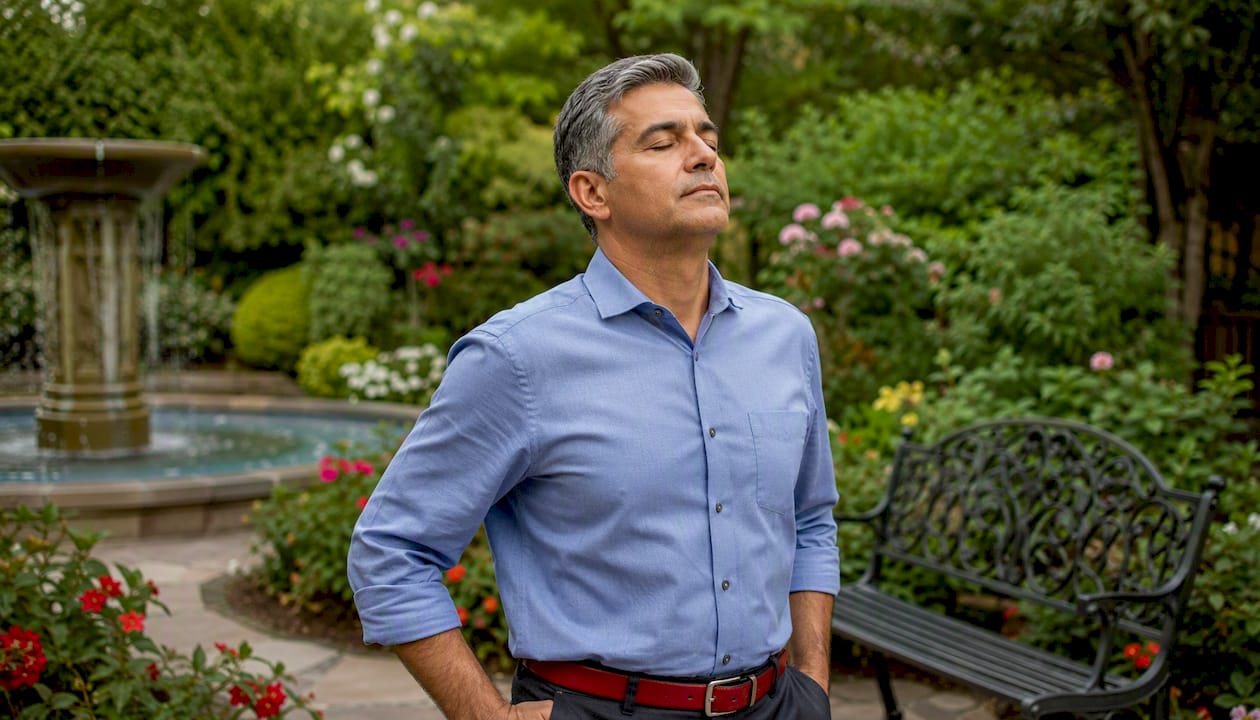
Psychological warm-ups are the most reliable starting point. Before the session begins, spend two minutes recalling a specific memory that genuinely makes you laugh. Not a category (“something funny”) but a specific scene, a specific person, a specific line. The more concrete the memory, the more reliably it produces a real expression on cue. This technique is used in authentic emotion work for portrait sessions across photography disciplines because it bypasses the self-consciousness that kills natural expressions.
Facial mechanics matter too. A Duchenne smile involves the zygomatic major (which pulls the lip corners up) and the orbicularis oculi (which creates the slight crinkle around the eyes). You cannot fully control the orbicularis oculi voluntarily, but you can approximate it by thinking of something genuinely warm rather than just moving your mouth. The instruction “smile with your eyes” is a practical shorthand for this. Deliberately practiced Duchenne smiles can still produce credibility gains if the eye engagement is present, so training this muscle memory before your shoot pays off.
Breathing and timing are often overlooked. Drop your shoulders, exhale slowly, and let your mouth relax between shots. A photographer who uses real-time image review during a session can show you the difference between a relaxed frame and a held one, which recalibrates your expression faster than any verbal instruction.
Pro Tip: Arrive at your session five minutes early and spend that time in light conversation with your photographer rather than reviewing your phone. The social warm-up primes your face for natural expression before the first frame is shot.
How clothing, posture, and head orientation affect your smile
Your expression does not exist in isolation. The clothing, posture, and head angle you bring to a session either reinforce the warmth your smile signals or work against it.
- Color: Navy, medium blue, and warm neutrals (camel, soft gray, warm white) support approachability and read cleanly on camera. Avoid busy patterns, high-contrast stripes, and colors that clash with your skin tone. A color that competes visually pulls attention away from your face, which is where your smile needs to land.
- Posture: A slight forward lean toward the camera (from the waist, not the neck) reads as engaged and confident. Leaning back, even slightly, creates psychological distance that a warm smile cannot fully overcome.
- Chin angle: Dropping the chin slightly and angling it forward elongates the neck and prevents the camera from looking up into the nostrils. This small adjustment also softens the face, which pairs naturally with a warm expression.
- Accessories: Keep eyewear simple and glare-free. Anything that obscures the eyes reduces the visibility of the orbicularis oculi crinkle that makes a Duchenne smile legible. For the same reason, hair that falls across the eyes should be pinned back for at least some frames.
For LinkedIn, lean toward approachable colors and a genuine smile. For a firm leadership page, a more structured outfit with a controlled smile signals authority. For a speaker bio, energy and warmth tend to outperform gravitas, so a fuller smile with a slightly more relaxed outfit often works best.
When a neutral expression serves you better
Not every professional context rewards a smile. Knowing when to hold back is as strategically important as knowing when to lean in.
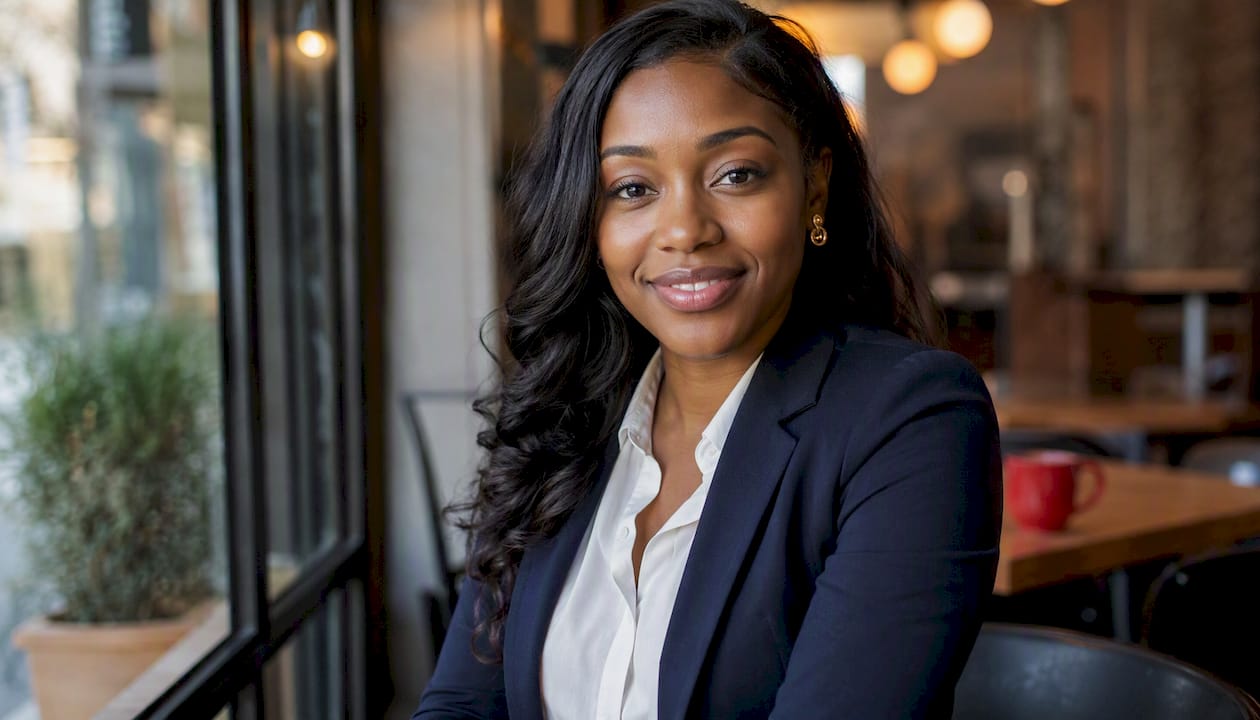
- High-authority and security roles: — Judges, law enforcement executives, and senior military officers are often better served by a composed, neutral expression. The research on smile intensity confirms that in high-stakes, prevention-focused contexts, a serious expression can increase perceived competence and authority.
Even in these cases, capture at least one smiling frame during the session. Contexts change, platforms multiply, and having a warm option in your library costs nothing extra.
Key Takeaways
A genuine, eye-engaging smile almost always strengthens a professional portrait by signaling trustworthiness and warmth before a viewer reads a single word about you.
| Point | Details |
|---|---|
| Smile for trust, not just likability | Smiling in professional photos raises perceived trustworthiness and can lift outcomes like interview invitations and funding inquiries. |
| Match smile intensity to your role | Broad smiles increase warmth; slight Duchenne smiles protect perceived competence in leadership and high-stakes contexts. |
| Capture both expressions every session | Always shoot at least one smiling and one neutral variation so you have options for LinkedIn, firm pages, and speaker bios. |
| Train the eye engagement | A genuine Duchenne smile requires orbicularis oculi activation; practice “smiling with your eyes” before your shoot to produce credible, natural frames. |
| Metroplex Headshots guides the expression | Sessions include real-time image review and guided expression coaching so professionals leave with both warm and authoritative options. |
The expression most professionals get wrong
Most professionals walk into a headshot session thinking about their outfit. Almost none of them think about their expression until the camera is pointed at them, and that is exactly when self-consciousness takes over.
What I see consistently is this: the professionals who get the best results are not the ones who practice their smile in the mirror for a week. They are the ones who show up willing to be coached in the moment. A real-time review during a session changes everything. When you can see the difference between a held smile and a genuine one on a screen right in front of you, the adjustment happens in seconds rather than frames.
The research on Duchenne smiles is worth taking seriously here. The credibility gap between a genuine eye-engaging expression and a posed mouth smile is not subtle. Viewers pick it up without knowing why, and it shapes their willingness to reach out, book, or trust. That is not a soft, intangible benefit. It is the difference between a portrait that works as a digital handshake and one that just fills a slot on your website.
My honest opinion: the professionals who invest in a guided session, capture multiple expression variations, and use real-time feedback walk away with portraits that actually do the job their brand needs. The ones who rush through a session with a fixed smile and no feedback loop often end up with technically competent photos that feel flat. Expression coaching is not a luxury add-on. It is the core of what makes a headshot worth the investment.
Your next step toward a portrait that builds trust on sight
Metroplex Headshots is built for professionals who want their portrait to do real work, not just check a box. Every session includes guided expression coaching, real-time image review so you can see and adjust your smile on the spot, and the option to capture both warm and authoritative variations in a single shoot.
Whether you need an executive headshot for your firm’s leadership page, a LinkedIn portrait that increases profile engagement, or a full team shoot at your Dallas–Fort Worth office, the process is designed to remove the guesswork from expression choices. On-location and in-studio options are both available, with professional retouching and fast delivery included.
See what a guided session looks like and review your portrait investment options, or browse headshot examples to find the expression style that fits your brand before you book.
Selected sources and further reading
The findings cited in this guide draw from peer-reviewed psychology research, practitioner studies, and platform-level data. The sources below are listed by evidence type so you can assess the weight of each claim directly.
Academic and peer-reviewed:
- Smile Big or Not? Effects of Smile Intensity on Perceptions of Warmth and Competence — University of Central Florida; core source for smile-intensity tradeoffs between warmth and competence.
- Face Value and Credible Signaling: Duchenne Smiles Increase Credibility — PMC/peer-reviewed; explains the credibility gap between genuine and posed smiles.
- Mandatory First Impressions: Happy Expressions Increase Trustworthiness Ratings of Subsequent Neutral Images — SAGE Journals; documents the durable halo effect from smiling expressions.
- How Facial Expression Affects Perception of Competence in Professional Photos — Australian Journal of Psychology; examines expression effects in role-specific professional portraits.
Practitioner and platform-level:
- Should You Smile in Your Profile Photo? Here’s What Research Shows — Forbes; covers platform booking-demand data and practical implications.

