


Executive portrait photography is defined as a specialized form of professional portraiture designed to capture a business leader’s authority, credibility, and personal brand through carefully planned, high-quality images. Unlike a standard corporate headshot, executive portrait photography produces multiple coordinated images built for LinkedIn profiles, press releases, investor decks, conference bios, and board presentations. For any professional whose reputation travels ahead of them, this is not a vanity exercise. It is a strategic business investment with measurable impact on how clients, investors, and journalists perceive you before you ever speak a word.
What is executive portrait photography and how does it work?
Executive portrait photography, also called executive brand photography in professional services circles, is the practice of producing a curated set of leadership images that communicate professional identity across multiple platforms simultaneously. The process involves deliberate decisions about lighting, setting, wardrobe, expression, and cropping, all aligned with the leader’s role, industry, and personal brand. A CEO photographed for a fintech company requires a different visual tone than a nonprofit director or a creative agency founder. The photographer’s job is to translate that distinction into images that feel authentic, not theatrical.
What separates this from a standard headshot session is scope and intent. A typical corporate headshot produces one or two images for an employee directory. Executive portrait photography produces a coordinated set of images with different crops, expressions, and moods tailored to specific downstream uses. The formal boardroom portrait serves investor materials. The warmer, slightly relaxed image works for LinkedIn. The press-ready three-quarter shot fits media kits. Each image is planned upfront so the leader never has to scramble for the right photo when an opportunity appears.
The session itself typically involves pre-shoot consultation, multiple wardrobe changes, and both studio and environmental setups. Retouched images are delivered in formats sized for web, print, and social media. This level of preparation is what makes executive portrait photography a distinct specialty within professional photography.
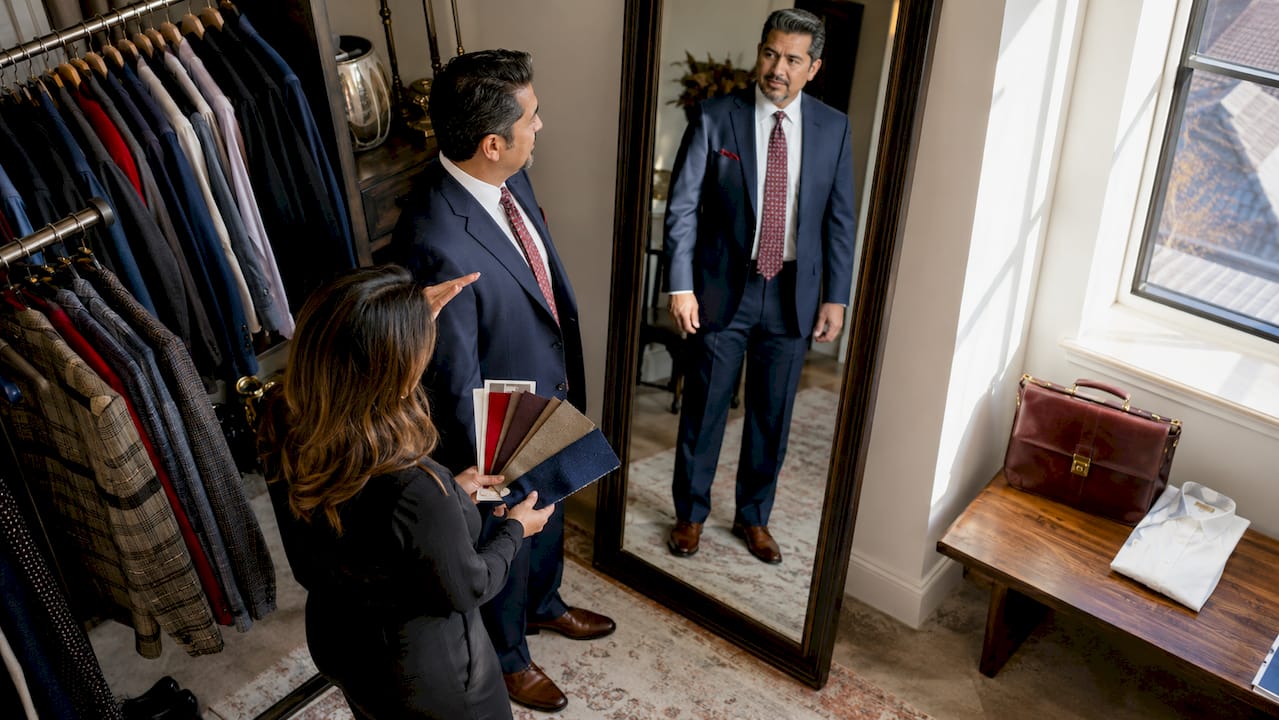
How executive portraits differ from standard business headshots
The distinction matters because conflating the two leads to underinvestment. Here is a direct comparison of what each delivers:
| Feature | Standard corporate headshot | Executive portrait session |
|---|---|---|
| Number of final images | 1 to 3 | 6 to 15+ across multiple looks |
| Primary use | Employee directory, email signature | LinkedIn, press, investor decks, bios |
| Wardrobe coordination | Single outfit | Multiple outfits, styled for each use |
| Setting options | Studio backdrop only | Studio plus environmental/location |
| Expression range | Neutral professional | Formal, approachable, authoritative |
| Cropping variety | Headshot only | Headshot, half-body, three-quarter |
| Retouching depth | Basic | Full professional retouching |
| Brand alignment | Generic | Tailored to personal and company brand |
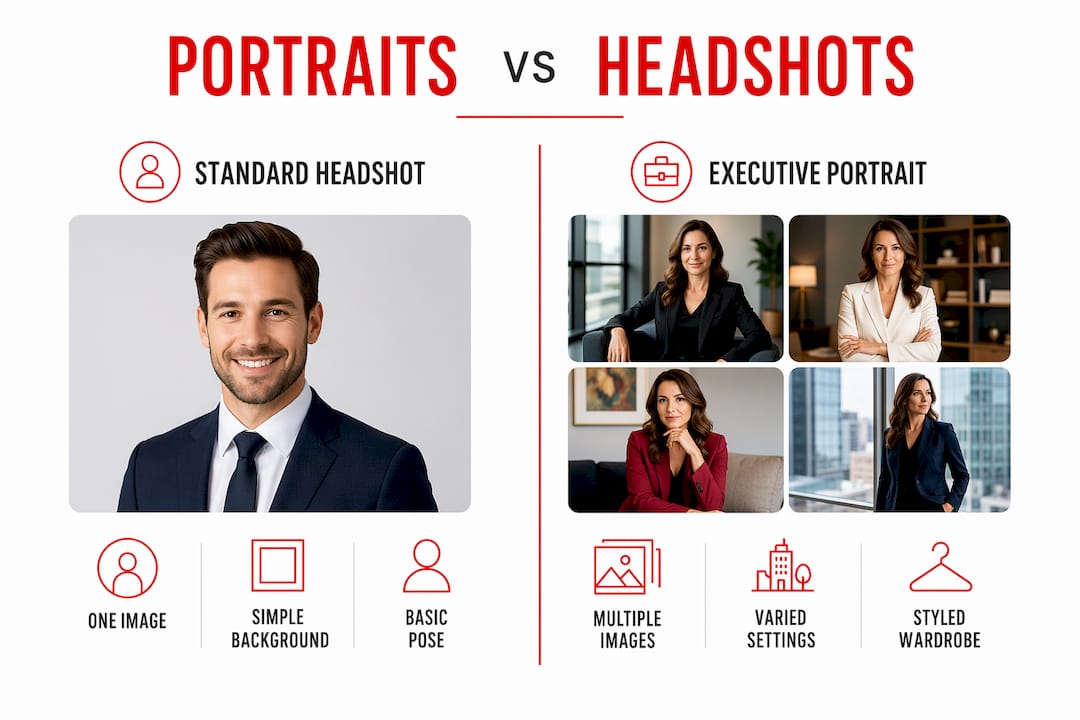
The difference between corporate and executive portraits comes down to purpose. A standard headshot says “I work here.” An executive portrait says “I lead here, and here is what that leadership looks like.” Expression, setting, and wardrobe all carry meaning. A leader photographed in a glass-walled conference room communicates a different kind of authority than one photographed in a warmly lit office with books and awards visible in the background. Neither is wrong. Both are intentional.
The role of expression in executive portraits is often underestimated. A slight forward lean, a composed but not stiff posture, and a confident gaze communicate competence without appearing unapproachable. The best portraits balance approachability with professionalism without crossing into the theatrical. That balance is what a skilled executive portrait photographer is trained to achieve.
Key benefits of consistent executive photo branding
Consistent, current executive portraits reduce friction in professional interactions. That is the clearest way to state it. When a journalist searches for your photo, when a conference organizer needs your headshot, or when a potential client looks you up on LinkedIn before a meeting, the image they find either reinforces your credibility or quietly undermines it. Outdated or incongruent photos make leaders appear less prepared, regardless of their actual qualifications.
The benefits of consistent executive photo branding extend well beyond aesthetics:
- First impression alignment: Your photo is often the first thing a prospect, investor, or journalist sees. A polished, current image sets the right expectation before any conversation begins.
- Platform consistency: When your LinkedIn photo, company bio, and press kit all feature the same visual identity, it signals organizational discipline and personal attention to detail.
- AI search presence: Executive personal branding now influences how you appear in AI-generated search results and social proof panels, where a professional image contributes directly to perceived authority.
- Reduced repeat sessions: Planning for multiple uses upfront means one well-executed shoot covers your needs for two to three years, avoiding costly piecemeal reshoots.
- Career and deal momentum: A professional executive headshot travels with introductions, articles, and investor decks long after the shoot, quietly supporting every opportunity it accompanies.
Pro Tip: Book your executive portrait session before a major announcement, board presentation, or speaking engagement. Having press-ready images prepared in advance means you control how you are represented when visibility is highest.
Types of executive portrait styles ranked by purpose
Not all executive portrait styles serve the same function. Understanding which style fits which context saves time and prevents the wrong image from appearing in the wrong place. Here is a breakdown of the most common types of executive branding photography ranked by professional versatility:
| Style | Best use | Setting | Formality level |
|---|---|---|---|
| Formal studio portrait | Annual reports, board bios, investor materials | Neutral studio backdrop | High |
| Environmental portrait | Company website, speaking profiles, feature articles | Office, boardroom, or branded space | Medium to high |
| LinkedIn-optimized headshot | Social media, email signature, digital profiles | Studio or clean environmental | Medium |
| Press and media portrait | PR kits, media coverage, conference programs | Studio or editorial location | High |
| Casual authority portrait | Blog posts, podcast appearances, thought leadership | Relaxed office or outdoor setting | Low to medium |
The formal studio portrait carries the most institutional weight. It is the image that appears in annual reports and on the “Leadership” page of a company website. The environmental portrait is the secret sauce of executive brand photography because it tells a story. A professional avatar placed in a recognizable professional context communicates both role and culture in a single frame.
Press-ready portraits deserve special attention. Media outlets often crop images unpredictably, so a press portrait needs adequate headroom and shoulder space to survive editorial handling. Planning for downstream cropping during the shoot, rather than after, is what separates a well-prepared executive portrait session from one that produces images that cannot be used where they are needed most.
How to prepare for your executive portrait session
Preparation determines the quality of the final images more than any single technical factor. Advanced preparation optimizes results and prevents the most common pitfalls executives face when they arrive underprepared.
Follow these steps before your session:
- Define your image uses upfront. Tell your photographer exactly where each image will appear. LinkedIn, press kits, investor decks, and conference bios each have different cropping and resolution requirements. Knowing this before the shoot shapes every decision made during it.
- Select two to three outfits. Choose clothing that reflects your industry and leadership level. A dark suit works for formal portraits. A business casual look in a brand-aligned color works for LinkedIn and thought leadership content. Avoid busy patterns and logos that distract from your face.
- Coordinate with your photographer on setting. Discuss whether a studio backdrop, your office environment, or an external location best serves your brand. Choosing the right photographer for your executive portrait means finding someone who asks these questions before picking up a camera.
- Plan your grooming in advance. Schedule haircuts and any grooming appointments two to three days before the session, not the day before. This allows any changes to settle naturally.
- Review reference images. Bring three to five examples of executive portraits you find compelling. This gives your photographer a concrete visual brief and reduces guesswork during the session.
Pro Tip: Wear your most confident outfit first. The energy you bring to the opening frames of a session is typically the strongest, and starting with your primary look captures that momentum.
Consistent brand image across staff photos also benefits from this preparation model. When a company coordinates wardrobe guidelines, background choices, and lighting standards across an entire leadership team, the result is a cohesive visual identity that reinforces organizational credibility at every touchpoint.
Key takeaways
Executive portrait photography requires multiple coordinated images, deliberate style choices, and upfront planning to serve the full range of leadership visibility needs across platforms.
| Point | Details |
|---|---|
| Definition clarity | Executive portrait photography produces a curated set of leadership images, not a single headshot. |
| Multiple outputs matter | Plan for LinkedIn, press, investor decks, and bios in one session to avoid repeat shoots. |
| Consistency builds trust | Outdated or mismatched photos reduce credibility before any conversation begins. |
| Style serves purpose | Formal, environmental, and casual authority portraits each serve distinct professional contexts. |
| Preparation drives quality | Outfit coordination, setting selection, and photographer communication determine session outcomes. |
Why I think most executives underestimate this investment
I’m Traci Schowmeyer, and after years of photographing business leaders across industries, the pattern I see most often is this: executives who invest heavily in every other aspect of their professional presence treat their portrait as an afterthought. They use a photo taken at a conference three years ago, or a cropped group shot from a company event. Then they wonder why their LinkedIn engagement is flat or why journalists use a grainy image that does not reflect who they are today.
The uncomfortable truth is that your photo is doing work for you around the clock. It appears in Google search results, AI-generated knowledge panels, speaker profiles, and press coverage. Executives need credible, consistent images across all media to maximize career advancement, and that is not a soft benefit. It is a measurable factor in how opportunities find you.
The mistake I see most often is treating the session as a single-output event. Leaders come in, take one look, and leave. Then six months later they need a press photo and the one image they have does not crop correctly for the publication’s format. Planning for multiple outputs from the start is not extra work. It is the only approach that makes the investment worthwhile.
What I tell every executive I work with: your portrait is your digital handshake. Make it count.
— Traci Schowmeyer
How Metroplex Headshots delivers executive portraits that work
Metroplex Headshots specializes in executive portrait sessions designed to produce multiple coordinated images for every platform you need to show up on. From formal boardroom portraits to LinkedIn-optimized headshots and press-ready images, each session is planned around your specific professional context and brand identity.
Whether you are a C-suite leader preparing for a board presentation, a founder building investor visibility, or a senior professional updating your digital presence, Metroplex Headshots delivers retouched images built for real-world use. Explore the headshots vs. portraits comparison to find the right session format for your goals, or browse top headshot examples to see what a well-executed executive portrait looks like in practice.
FAQ
What is the difference between a headshot and an executive portrait?
A headshot is a single close-cropped image used for directories and profiles. An executive portrait session produces multiple images across different styles, settings, and crops designed for LinkedIn, press kits, investor materials, and conference bios.
How often should executives update their portraits?
Most professionals benefit from updating their executive portraits every two to three years, or sooner after a significant change in role, appearance, or company brand. Outdated photos weaken first impressions and create inconsistency across platforms.
What should I wear for an executive portrait session?
Bring two to three outfits that reflect your industry and leadership level. Solid colors in navy, charcoal, or brand-aligned tones photograph well. Advanced outfit preparation is one of the highest-impact steps you can take before a session.
How does executive portrait photography support personal branding?
Executive personal branding influences investors, customers, recruiters, and journalists before any direct contact occurs. A professional portrait contributes to strong AI search results and social proof, making it a core component of any leadership visibility strategy.
Can one session cover all my image needs?
Yes, when planned correctly. A well-structured executive portrait session produces images for LinkedIn, press, investor decks, and company bios from a single shoot. Coordinating multiple outputs upfront eliminates the need for costly repeat sessions.

