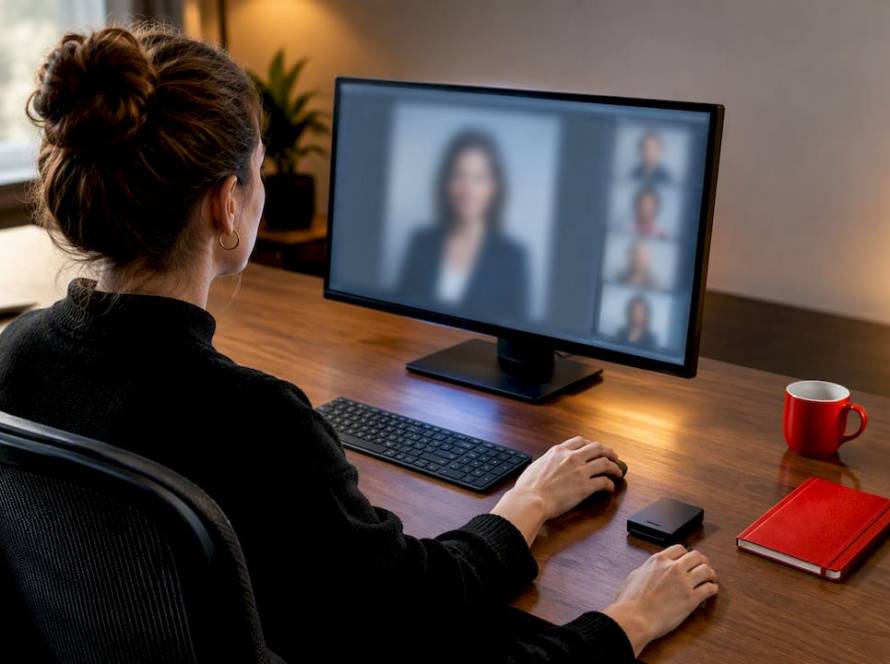
Executive presence is defined as the combination of visual and behavioral cues that signal leadership readiness to others before you speak a single word. Your professional headshot is the first of those cues. It appears on LinkedIn, company bios, conference programs, and media profiles long before any in-person meeting occurs. Understanding why executive presence starts with your headshot means recognizing that your photo is not decoration. It is a deliberate communication tool that shapes how clients, investors, and colleagues decide whether to trust you.
Executive presence combines gravitas, clarity, composure, and communication, signaling authority and trustworthiness to everyone who encounters your image. That combination does not begin in a boardroom. It begins the moment someone pulls up your profile photo.
Why executive presence starts with the headshot: the psychology of first impressions
A professional headshot influences perceptions of leadership within seconds of being seen. Viewers form judgments about competence, warmth, and trustworthiness almost instantly from a single image. Those judgments are not random. They follow predictable patterns based on visual cues.
Visual signals including facial expression, posture, and wardrobe choices directly influence how trustworthy a leader appears to others. A direct gaze communicates confidence. Relaxed shoulders signal composure. A genuine smile reads as approachability. Each of these elements works together to tell a story about who you are as a leader before you say anything.
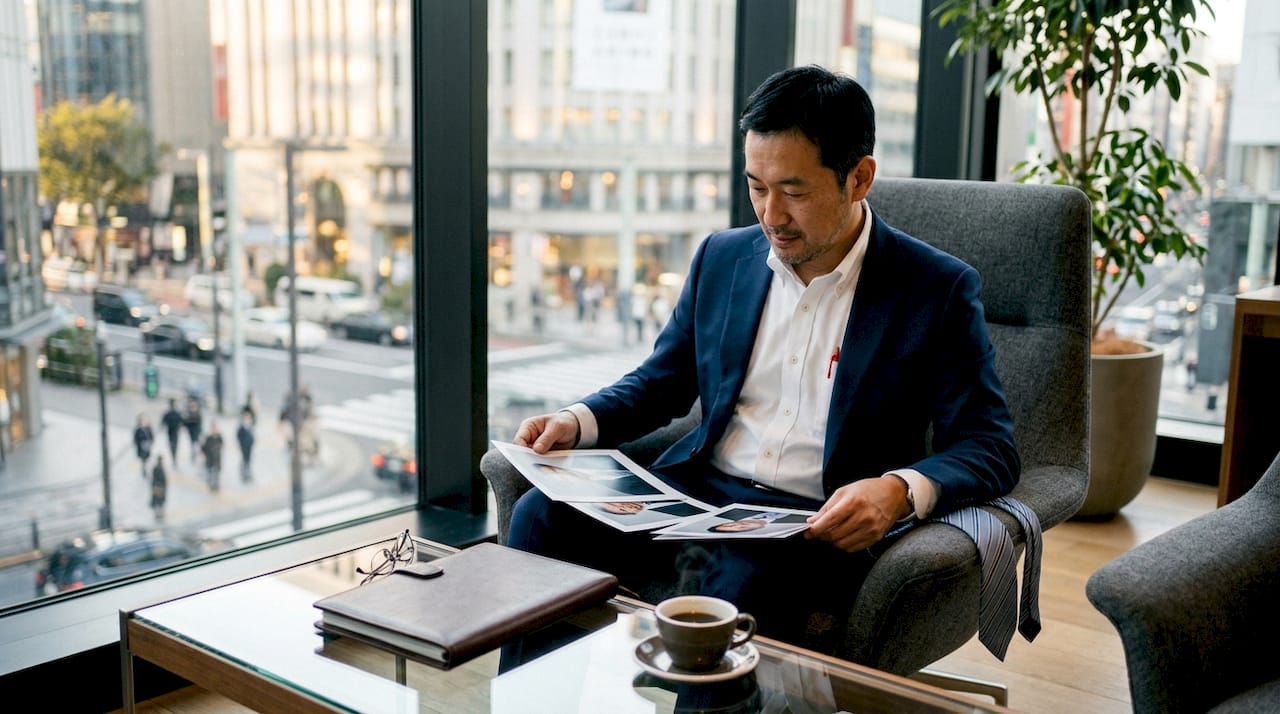
The headshot impact on leadership extends well beyond LinkedIn. Your photo appears in investor decks, speaker bios, press releases, and team pages. Leaders are increasingly evaluated by how they visually communicate composure and clarity in both digital and real-world contexts. A weak photo in any of those places creates friction in the decision-making process of the person viewing it.
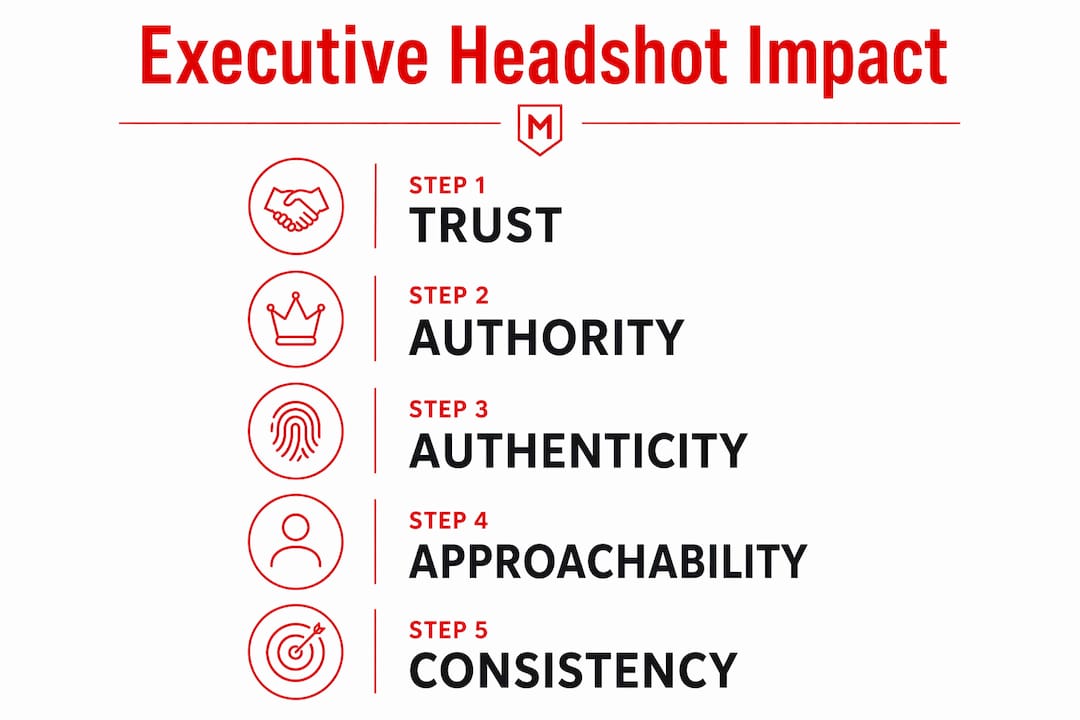
Here is what a strong executive headshot communicates at a glance:
- Confidence: Upright posture and direct eye contact signal that you are comfortable in a leadership role.
- Approachability: A natural expression and open body language show that you are someone others can work with.
- Competence: Polished wardrobe and clean composition reinforce that you take your professional image seriously.
- Consistency: A current, high-quality photo across all platforms shows attention to detail and brand alignment.
Pro Tip: Book your headshot session at the same time you update your LinkedIn profile. Consistency across platforms is one of the fastest ways to strengthen perceived credibility.
Authenticity vs. over-retouching: what actually builds trust
Authentic images, not flawless ones, best communicate confidence and expertise to modern audiences. This is the part most professionals get wrong. The instinct is to retouch heavily, smooth every line, and present the most polished version possible. The result often backfires.
Over-retouching in executive photos reduces authenticity, which audiences increasingly detect and distrust. Investors and stakeholders are particularly sensitive to this. When a photo looks too perfect, it reads as manufactured. That perception transfers directly to how they evaluate the person behind the image.
The most common authenticity pitfalls in executive photography include:
- Stiff posture: Sitting or standing rigidly signals discomfort, not authority.
- Forced smiles: A smile that does not reach the eyes reads as performative rather than genuine.
- Heavy retouching: Removing natural features creates a version of you that does not match in person, which erodes trust at first meeting.
- Outdated photos: Inconsistent or outdated photos weaken perceived readiness and credibility across platforms owned by different teams.
Visual drift is the gap that forms when your headshot no longer looks like you. It is one of the most overlooked credibility risks in executive branding. If your photo is more than three years old, or if your appearance has changed significantly, the disconnect between your image and your in-person presence creates doubt.
Pro Tip: Ask your photographer to show you candid frames alongside posed ones. Candid moments often capture the natural confidence that posed shots miss entirely.
Executive headshots vs. portraits vs. business photos: what sets them apart
Not all professional photos serve the same purpose. Understanding the differences helps you make a deliberate choice about what your image needs to communicate.
| Image type | Primary purpose | Composition style | Key visual goal |
|---|---|---|---|
| Executive headshot | Signal leadership and authority | Tight framing, direct gaze, neutral or branded background | Confidence and approachability in balance |
| Business portrait | Represent the professional broadly | Mid-body framing, varied settings | Personality and role clarity |
| Corporate group photo | Show team cohesion | Wide framing, multiple subjects | Organizational culture |
| Casual LinkedIn photo | Informal networking presence | Selfie or candid style | Relatability |
A good headshot balances competence and approachability, communicating confidence sufficient to lead and openness to collaborate. That balance is what separates an executive headshot from every other category in the table above. A business portrait shows who you are. An executive headshot communicates what you are capable of.
The role of headshots in professional image building is also about context. An executive headshot is composed to work at small sizes on a LinkedIn thumbnail and at large sizes on a conference banner. The framing, lighting, and expression must hold up across both. That is a technical and creative challenge that executive headshot photography addresses differently than standard portrait work.
How to prepare and use your executive headshot effectively
Preparation before the session determines the quality of the result. Most professionals underestimate how much control they have over the outcome before they ever step in front of a camera.
Brief your photographer on your goals. Tell them the platforms where the photo will appear, the audience who will see it, and the leadership qualities you want to project. A photographer who understands your brand alignment will make different choices about lighting, background, and framing than one working from a generic template.
Choose wardrobe that matches your business environment. Wear what you would wear to your most important client meeting. Avoid busy patterns, which distort on screen, and choose colors that complement your skin tone rather than compete with it.
Practice your expression before the session. Stand in front of a mirror and find the expression that feels natural and confident at the same time. Seeing yourself through professional photography reveals the gap between how you see yourself and how others perceive you. Closing that gap starts with awareness.
Use your headshot consistently across every platform. Your LinkedIn profile, company bio, speaker page, email signature, and media kit should all feature the same current image. Inconsistency signals a lack of attention to your own brand.
Update your headshot every two to three years. Leadership evolves, and your image should reflect where you are now, not where you were five years ago.
The role of headshots in professional image building is cumulative. Every time your photo appears in a new context, it either reinforces or undermines the executive presence you are working to build. Powerful headshots enhance perceived leadership in networking contexts specifically because they arrive before you do.
Key takeaways
A professional headshot is the single most visible element of executive presence, and it shapes leadership perception before any in-person interaction occurs.
| Point | Details |
|---|---|
| First impressions are visual | Viewers form trust and competence judgments from a headshot within seconds of seeing it. |
| Authenticity outperforms perfection | Over-retouched images erode trust; natural, current photos build credibility with investors and stakeholders. |
| Executive headshots have a distinct purpose | They balance authority and approachability in ways that business portraits and casual photos do not. |
| Consistency across platforms matters | Using the same current headshot everywhere prevents visual drift and reinforces brand alignment. |
| Preparation drives results | Briefing your photographer on goals, wardrobe, and audience directly improves the quality of the final image. |
What I have learned from watching executives get this wrong
I’m Traci Schowmeyer, and after years of photographing executives across industries, the pattern I see most often is not a lack of effort. It is a misunderstanding of what the photo is actually for.
Most professionals treat a headshot session like a formality. They show up, smile, and assume the camera will handle the rest. What they miss is that executive presence is observable behavior, not just an internal state. The camera captures what you project, not what you intend. If you walk in tense, the photo will show tension. If you walk in without a clear sense of the story you want to tell, the image will be generic.
The executives whose headshots genuinely open doors are the ones who treat the session as a communication exercise. They know their audience. They know what they want the photo to say. And they work with their photographer to get there deliberately. That is the secret sauce of professional branding that most people skip entirely.
Modern leadership presence in 2026 is less about projecting dominance and more about projecting engaged confidence. Your headshot needs to reflect that shift. The executives who still lead with a stiff, formal pose are communicating a version of leadership that feels dated to the audiences they are trying to reach.
— Traci Schowmeyer
How Metroplex Headshots helps executives build presence through photography
Your headshot is an extension of your brand, and it deserves the same care you put into every other part of your professional image. Metroplex Headshots works with executives and business professionals to capture authentic, current imagery that communicates leadership from the first glance.
Every session at Metroplex Headshots is built around your specific goals, your business environment, and the emotion you want to convey to your audience. The result is not just a photo. It is a professional headshot that works as hard as you do across LinkedIn, company bios, speaker pages, and media appearances. If you are ready to close the gap between how you see yourself and how the world sees you, Metroplex Headshots is the place to start.
FAQ
Why does executive presence start with a headshot?
Executive presence is built on visual and behavioral cues, and the headshot is the first visual cue most people encounter. It shapes perceptions of confidence, competence, and trustworthiness before any in-person interaction takes place.
How often should executives update their headshots?
Executives should update their headshots every two to three years, or sooner if their appearance or role has changed significantly. Outdated photos create a credibility gap between the image and the person viewers meet in person.
What makes an executive headshot different from a regular business photo?
An executive headshot is composed specifically to balance authority and approachability, using tight framing, deliberate lighting, and a direct gaze. A standard business photo prioritizes general professional representation without the same focus on leadership signaling.
Does over-retouching hurt executive credibility?
Over-retouched images reduce authenticity, which modern audiences, particularly investors and stakeholders, detect and distrust. Natural, believable images consistently build more credibility than heavily edited ones.
How can I improve my executive presence through photography?
Brief your photographer on your audience and goals, choose wardrobe that matches your business environment, and use your headshot consistently across all platforms. Preparation and intentionality before the session produce images that genuinely communicate leadership.