


Your First Impression Happens in 100 Milliseconds — Make It Count
Headshot photo examples are the fastest way to understand what separates a forgettable profile photo from one that actually opens doors.
Here are the most common professional headshot styles you’ll find — and what each one communicates:
| Headshot Style | Best For | Key Signal |
|---|---|---|
| Corporate/Executive | C-suite, finance, law | Authority, trustworthiness |
| Creative/Lifestyle | Designers, marketers | Personality, approachability |
| LinkedIn-Optimized | All professionals | Confidence, credibility |
| Actor/Performer | Talent, casting | Range, character type |
| Real Estate | Agents, brokers | Warmth, relatability |
| Healthcare | Doctors, therapists | Calm, competence |
| Outdoor/Environmental | Coaches, entrepreneurs | Authenticity, energy |
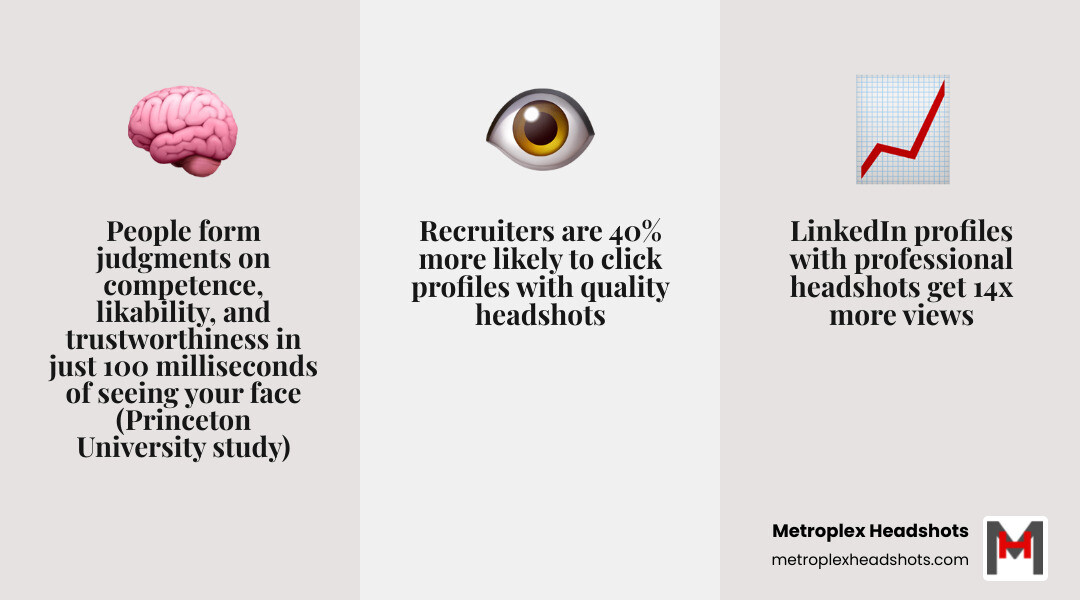
A Princeton study found that people form snap judgments about your competence, likability, and trustworthiness within 100 milliseconds of seeing your face. That’s not enough time to read your title or your credentials — it’s just your photo doing all the work.
This is the Halo Effect in action. A strong headshot doesn’t just make you look good. It primes people to trust you before you’ve said a word.
And the numbers back this up. LinkedIn profiles with professional headshots receive 14 times more profile views than those without. Recruiters are 40% more likely to click on a profile with a quality photo.
Your headshot is not vanity. It’s strategy.
I’m Traci Schowmeyer, owner of Metroplex Headshots and a commercial photographer since 1999, and I’ve spent decades helping executives and professionals create headshot photo examples that reflect who they truly are — from new hires to C-suite teams at Fortune 100 companies. In this guide, I’ll walk you through the styles, techniques, and real-world inspiration you need to get your next headshot right.
Essential Framing Styles in headshot photo examples
When you start looking at headshot photo examples, you’ll notice they aren’t all cropped the same way. The “frame” refers to how much of your body is visible in the shot. Choosing the right crop is the first step in directing the viewer’s attention.
1/4 Close-up (Head and Shoulders)
This is the “classic” headshot. It starts from the mid-to-upper chest and ends just above the head. This framing is the gold standard for LinkedIn and corporate directories because it keeps the focus entirely on your facial features and expressions. In industries like acting, one-quarter headshots are essential for catching a casting director’s eye by highlighting your unique look and personality.
1/2 Waist-up
Starting from the waist, this shot provides more context. It allows for more expressive body language, such as hands in pockets or a slight lean. It’s a great middle ground for “about me” pages where you want to appear professional but accessible.
3/4 Mid-thigh
The three-quarter shot starts at the mid-thigh. This is incredibly popular for models’ comp cards and editorial portraits. It shows off your physique and style while still keeping your face clear. For professionals in Dallas or Southlake who want a “power” portrait for a magazine feature, this is often the go-to choice.
Full-body
A full-body shot includes you from head to toe. While less common for a standard LinkedIn profile, it is vital for speakers, authors, and performers who need to show their full presence. It conveys the most “story” but requires the most attention to wardrobe and posture.
Industry-Specific Inspiration for Your Next Portrait
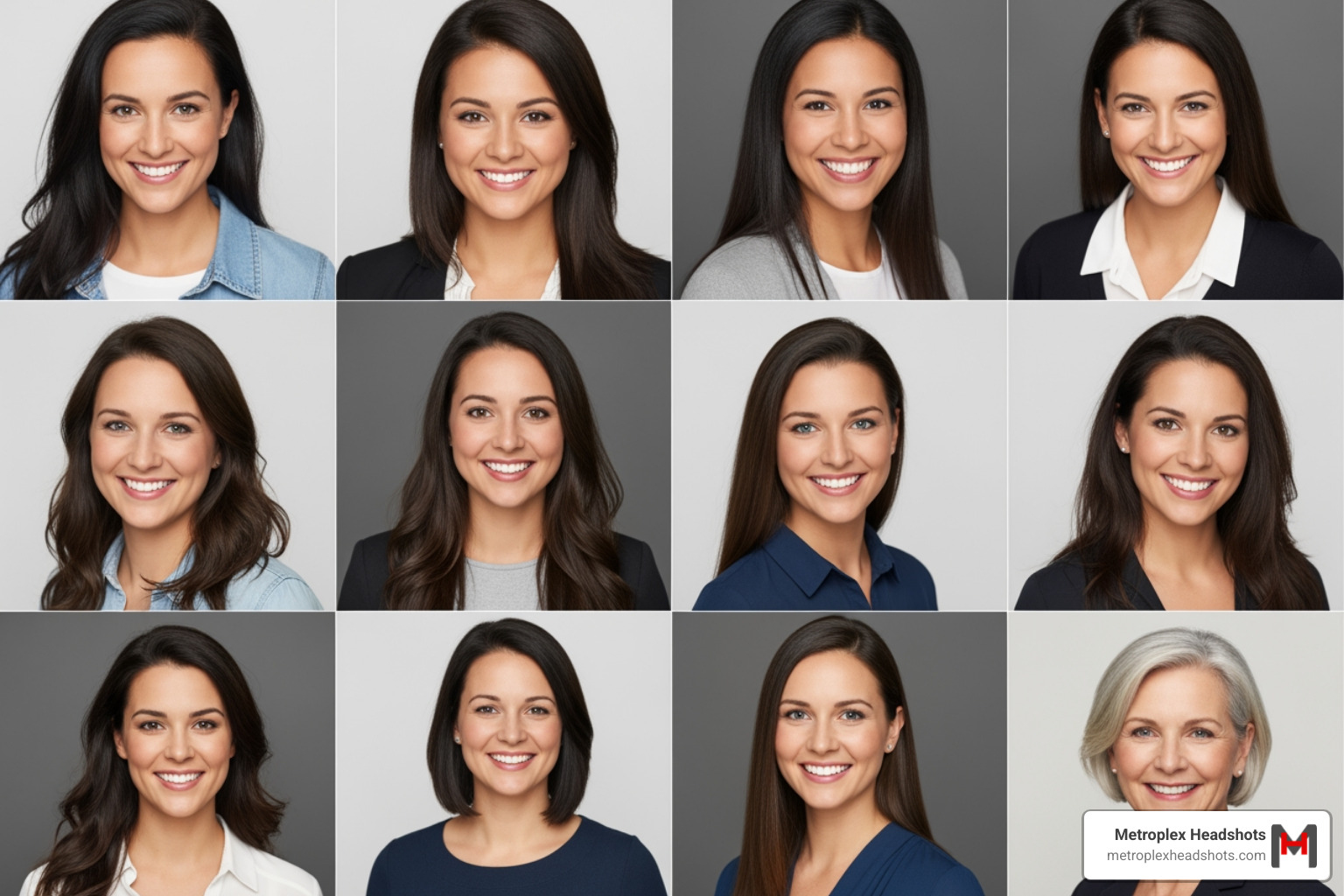
The “perfect” headshot doesn’t exist in a vacuum; it depends entirely on your industry. A lawyer in Fort Worth shouldn’t have the same headshot as a graphic designer in Deep Ellum. Your photo should be a visual shorthand for your professional identity, blending modern professional headshot ideas with the standards of your specific field.
Corporate and Executive headshot photo examples
For executives, the goal is to project a balance of authority and trustworthiness. This is often achieved through:
- Neutral Backgrounds: Slate gray, navy, or classic white keep the focus on the person.
- Formal Attire: Well-tailored suits, crisp collars, and subtle textures signify leadership.
- Direct Gaze: Looking straight into the lens conveys confidence and transparency.
Research shows that LinkedIn profiles with professional headshots receive 14x more views, but for executives, that photo also acts as a “credibility check” for investors and recruiters.
Creative and Lifestyle headshot photo examples
If you work in a creative field, a stiff corporate photo might actually hurt your brand. You want to ditch the dull and make a statement.
- Environmental Settings: Shooting in a studio that looks like a modern loft or using an architectural backdrop in Grapevine adds “flavor” to your story.
- Bold Colors and Textures: Don’t be afraid of a pop of color in your wardrobe or a unique background hue like lavender or teal to stand out.
- Relaxed Posing: A lean against a wall or a candid-style laugh can make you appear more approachable and innovative.
Specialized Roles: Healthcare, Real Estate, and Legal
- Real Estate: Agents often succeed with big, warm smiles and outdoor settings that suggest they are active in the community.
- Healthcare: Doctors and therapists benefit from soft, even lighting and “approachable” professional wear (like a white coat over a soft-colored shirt) to build patient trust.
- Legal: Attorneys often opt for high-contrast, dramatic lighting to signal a serious, “win-at-all-costs” attitude.
Technical Elements That Make a Headshot Look “Expensive”
Why do some headshot photo examples look like they cost thousands of dollars while others look like “mall glamour shots”? It usually comes down to technical precision. Understanding what makes a headshot good or bad is about looking past the face and seeing the light.
Depth of Field and “Bokeh”
High-end headshots use a shallow depth of field. This means the subject (you) is in razor-sharp focus while the background is softly blurred. This blur, known as “bokeh,” eliminates distractions and makes you “pop” off the screen.
Lighting: The Secret Sauce
Lighting is the most critical factor. We use professional-grade softboxes to create even, flattering light that fills in shadows and makes eyes sparkle with “catchlights.”
- Studio Lighting: Offers total control. We can create a “rim light” to separate your hair from the background or use “off-axis” lighting to gently shape your face.
- Outdoor Lighting: The “Golden Hour” (just before sunset) provides a warm, natural glow that is hard to replicate.
Comparing Lighting Environments
| Feature | Studio Lighting | Outdoor/Natural Light |
|---|---|---|
| Control | Total control over shadows and highlights | Dependent on weather and time of day |
| Consistency | Identical results for team headshots | Varies as the sun moves |
| Vibe | Polished, formal, “Executive” | Authentic, energetic, “Relatable” |
| Background | Clean solids or gradients | Textures, nature, architecture |
Technical Sharpness
An “expensive” headshot is never grainy. Using professional DSLR or mirrorless cameras with high-quality prime lenses ensures that every detail—from the texture of your tie to the individual strands of hair—is crisp.
Posing, Expressions, and Styling Best Practices
Even with the best lighting in Texas, a forced expression will ruin the shot. At Metroplex Headshots, we specialize in making you feel comfortable because that’s when the best images happen.
The Power of the Smile
Should you show your teeth? According to a PhotoFeeler study, photos showing teeth in a smile scored 10% higher on both likability and competence. However, a “micro-smile” that reaches the eyes (often called a “smize”) can be equally effective for a more serious, authoritative look.
Posing for Confidence
- The Jawline: Slightly extending your chin toward the camera helps define the jawline and eliminates the appearance of a double chin.
- The Lean: A subtle lean toward the camera signals engagement and interest.
- Angle the Shoulders: Facing the camera “dead-on” can make you look wider and stiffer. Angling your shoulders slightly creates a more dynamic, slimming silhouette.
Wardrobe and Styling
When choosing what to wear, follow these rules to ensure you don’t get caught with a bad headshot:
- Solid Colors are King: Busy patterns (like tiny checkers or thin stripes) can create a “moiré effect” on digital screens, making the photo look like it’s vibrating.
- Fit Matters: Clothes that are too baggy look sloppy on camera. Opt for well-fitted garments that hold their shape.
- Matte over Shine: Avoid shiny fabrics or heavy jewelry that might reflect the studio lights and create distracting bright spots.
Frequently Asked Questions about Professional Headshots
How can I prepare for my headshot session?
Preparation starts a week before your shoot.
- Hydration: Drink plenty of water to ensure your skin looks healthy and vibrant.
- Rest: A good night’s sleep is the best “retouching” tool available.
- Grooming: If you need a haircut, get it about 5 days before the session so it has time to “settle.”
- Wardrobe Check: Use a lint roller on your clothes and ensure everything is pressed. We always recommend bringing a backup outfit just in case.
How often should I update my professional headshot?
The industry standard is every 2 to 3 years. However, you should update it sooner if:
- You’ve significantly changed your hair (color or length).
- You’ve gained or lost a significant amount of weight.
- You’ve transitioned into a new industry with a different “vibe.”
Using an outdated photo creates a “trust gap” when you finally meet a client or recruiter in person and don’t match your image.
What are the most common headshot mistakes to avoid?
- Distracting Backgrounds: Avoid “busy” trees, bright exit signs, or cluttered offices.
- Over-Retouching: You want to look like the best version of yourself, not a plastic mannequin. We focus on “minimalist retouching”—removing temporary blemishes but keeping your character lines.
- Poor Lighting: Harsh shadows under the eyes or a “washed out” face from a camera flash are instant signs of an amateur photo.
- Uncomfortable Expressions: If you look worried or stiff, people will subconsciously associate that feeling with your professional competence.
Conclusion
Your headshot is the front door to your digital presence. Whether you are an executive in Dallas, a realtor in Frisco, or a creative in Plano, your image should work as hard as you do. By choosing the right framing, understanding the technical elements, and preparing your “look,” you ensure that your first impression is a lasting one.
At Metroplex Headshots, we don’t just take pictures; we craft professional identities. We understand that most people hate being in front of the camera, which is why our process is designed to be fast, comfortable, and collaborative. From our studios in Southlake and Grapevine to our on-location services in Irving and Fort Worth, we help you project the confidence you’ve earned.
Ready to see more? Browse our gallery for inspiration or learn the difference between professional headshots vs. portraits to see which style fits your needs.
Don’t let a “good enough” photo hold back your career. Book your session with Metroplex Headshots today and let’s create an image that opens doors.

