


The 7 Most Popular Professional Headshot Styles
Professional headshot styles are not one-size-fits-all. The right style depends on your industry, your audience, and the message you want to send before you say a single word.
Here is a quick overview of the most common professional headshot styles:
| Style | Best For | Key Look |
|---|---|---|
| Classic Corporate | Finance, law, consulting | Neutral background, polished attire |
| Executive Portrait | C-suite, board members | Office setting, authoritative expression |
| LinkedIn/Business | Most professionals | Clean background, approachable smile |
| Creative/Editorial | Designers, marketers, creatives | Bold backgrounds, personality-driven poses |
| Environmental | Entrepreneurs, real estate, tech | Real-world setting, contextual storytelling |
| Actor/Performer | Actors, models | Tight crop, expressive, casting-ready |
| Lifestyle/Branding | Coaches, consultants, influencers | Candid feel, brand-aligned wardrobe |
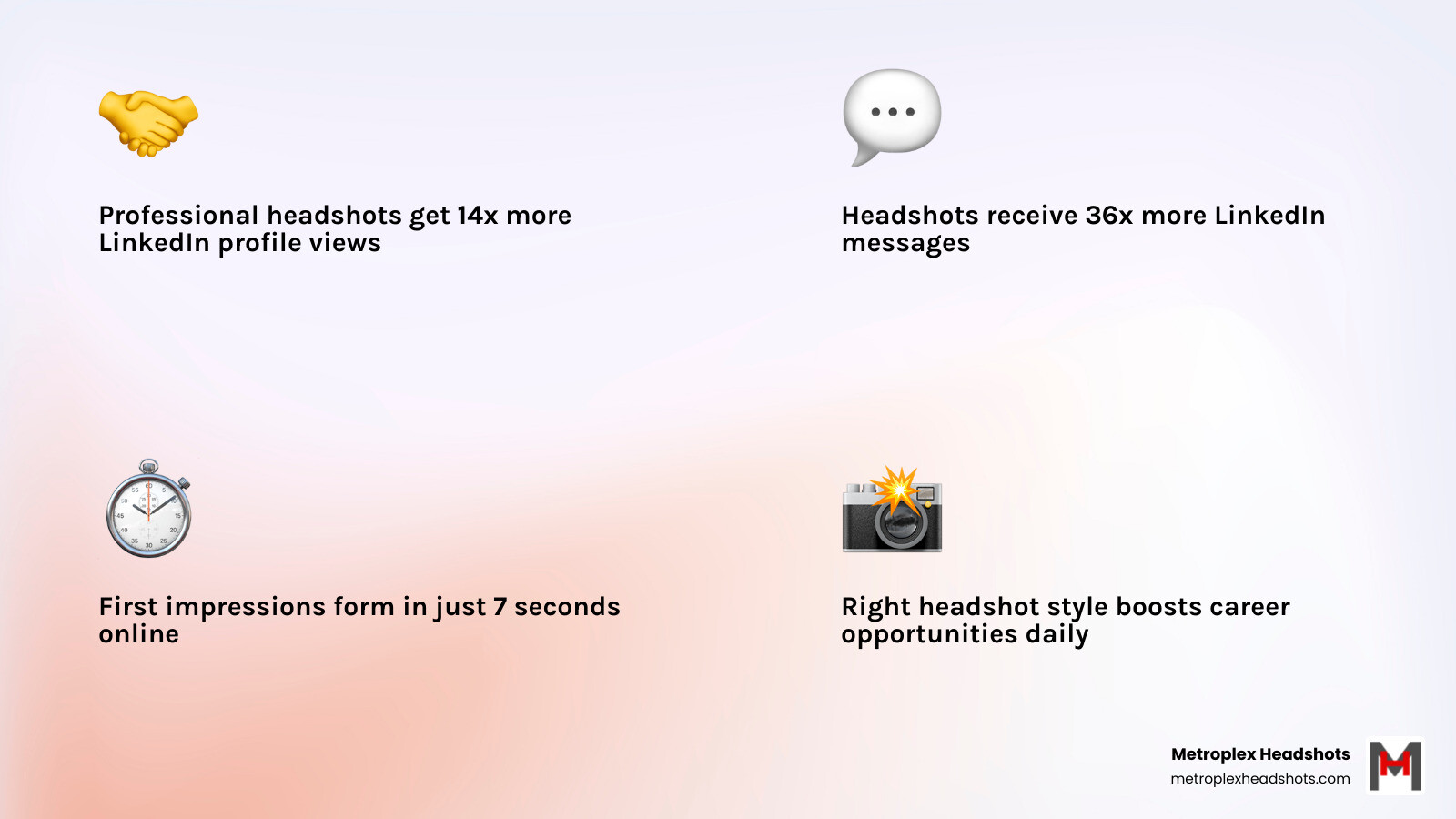
Your headshot is working right now, whether you know it or not. LinkedIn profiles with a professional photo get 14x more views and 36x more messages than those without one. And it only takes 7 seconds to form a first impression online — your headshot does the talking before you ever get the chance.
Choosing the wrong style — or skipping a professional photo altogether — can quietly cost you opportunities every single day.
I’m Traci Schowmeyer, owner of Metroplex Headshots and a commercial photographer with over two decades of experience specializing in professional headshot styles for everyone from new graduates to Fortune 100 C-suite teams. In this guide, I’ll walk you through every major style so you can walk into your next session — or your next opportunity — with total confidence.
Discover more about professional headshot styles:
When you think of a headshot, you might picture a stiff, “school photo” setup with a blue mottled background. Thankfully, those days are long gone. Modern professional headshot styles focus on authenticity and brand alignment.
The style you choose acts as a “digital handshake.” A hiring manager or potential client often scrolls through dozens of profiles before deciding who to contact. Research suggests they make a judgment in roughly 100 milliseconds. If your photo doesn’t match the expectations of your industry, you’ve lost the lead before the page even finishes loading.
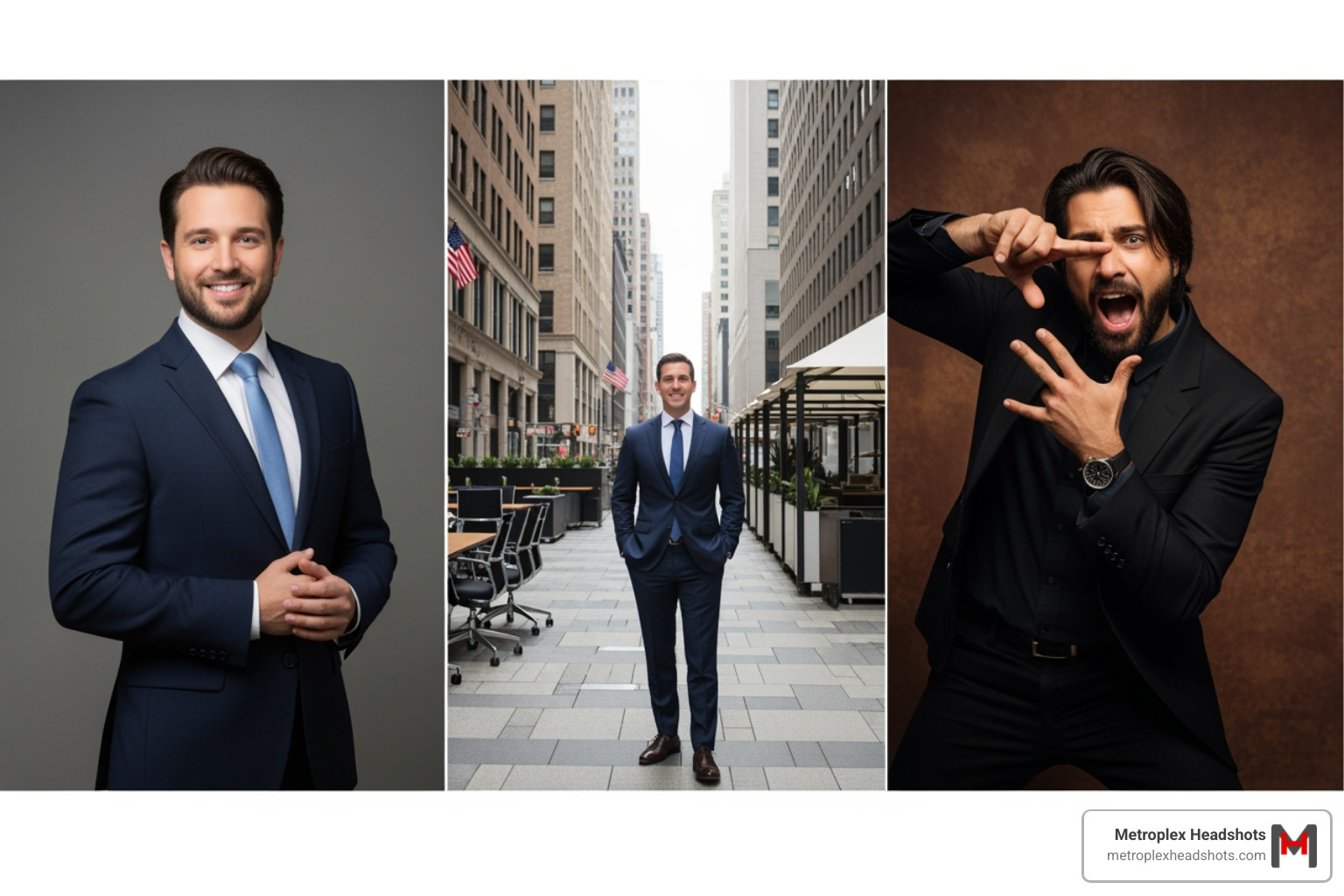
| Feature | Studio Style | Environmental Style |
|---|---|---|
| Background | Solid, neutral, or textured backdrop | Real office, city street, or home |
| Lighting | Fully controlled, consistent | Mixed natural and artificial light |
| Vibe | Polished, timeless, “expert” | Relatable, modern, storytelling |
| Best For | LinkedIn, Team pages, Law, Finance | Tech, Real Estate, Creative roles |
| Consistency | High (easy to replicate for teams) | Variable (depends on location/time) |
The Classic Corporate Headshot Style
This is the “Trust Me With Your Money” shot. It is characterized by clean, neutral backgrounds—think white, light gray, or navy. The focus is entirely on you. For professionals in finance, law, or consulting, this style conveys stability and competence.
We recommend solid colors and a polished look. The goal isn’t to be flashy; it’s to be the most professional version of yourself. In fact, the best corporate headshots are often slightly “boring” on purpose—they don’t distract the viewer with busy patterns or chaotic backgrounds. You can learn more about how this differs from other looks in our guide on Beyond the Suit: How Headshots Differ for Corporate Executives and Business Professionals.
The Modern Creative and Editorial Style
If your job involves “thinking differently,” your headshot should too. Creative and editorial professional headshot styles allow for more personality. We might use bold background colors, dramatic lighting, or dynamic poses that break away from the traditional “shoulders-forward” look.
This style is perfect for marketers, designers, and entrepreneurs who want to make a statement. Instead of just showing what you look like, these photos tell a story about how you work. For more inspiration on breaking the mold, check out Ditch the Dull: Modern Professional Headshots That Make a Statement.
The High-Stakes Executive Portrait
Executive portraits are essentially corporate headshots with the volume turned up. These are designed for C-suite leaders, board members, and keynote speakers. Often, these photos are taken in an office setting or a high-end environment to signal authority and leadership.
The framing is often wider than a standard headshot, and the expression leans toward “calm authority.” You want to look like the person who has the answers. We specialize in helping leaders in the Dallas-Fort Worth area achieve this look through our Commanding the Frame: Your Guide to Executive Headshots framework.
Choosing the Right Framing and Composition
How much of your body should be in the shot? This is a technical choice that changes the “feel” of the image. Different platforms require different crops, and understanding these can help you get more mileage out of your session.
- One-Quarter Headshot: This starts from the mid-to-upper chest and ends just above the head. It’s the standard for LinkedIn and “About Us” pages because it focuses heavily on facial expressions and eye contact.
- Three-Quarter Portrait: Starting at the mid-thigh, this shot highlights both your face and your physique. It’s a staple for models’ comp cards and entrepreneurs who want a more “lifestyle” feel.
- Full-Body Shot: This includes the entire body. It’s less common for corporate use but essential for performers and speakers who need to show their stage presence.
For a deeper dive into these technical differences, see Types of Headshots: The Difference Between 3/4, 1/2, 1/4, and Full-Body Portraits. Once you have your images, make sure you follow LinkedIn’s photo guidance to ensure your face is centered correctly within their circular mask.
Industry-Specific Professional Headshot Styles
Your industry has a “visual language.” For example:
- Tech Startups: Often favor a “smart-casual” look—think a high-quality t-shirt or hoodie against a modern office background.
- Real Estate: Usually benefits from environmental shots (outdoors or in a beautiful home) to show that you are “out there working.”
- Healthcare: Requires a clean, high-key (bright) look that conveys cleanliness and trust.
Whether you are a recent graduate or a veteran CEO, your style should reflect your current career stage. Explore our advice on Headshots for Every Stage of Your Career: Graduates to CEOs to see where you fit.
Posing and Expression for Different Professional Headshot Styles
99% of our clients tell us they feel uncomfortable in front of the camera. That’s normal! Our job is to coach you through micro-expressions. A slight squint of the eyes (the “smize”) can convey confidence, while a genuine, relaxed smile makes you look approachable.
We also focus on body angles. Turning your body 30 degrees away from the lens while keeping your face toward the camera adds dimension and prevents you from looking like a “deer in headlights.” You can learn these techniques in The Art of the Headshot: Posing Secrets Revealed.
Key Elements of a High-Quality Headshot
A professional headshot is more than just a high-resolution photo. It’s a combination of technical precision and human connection.
- Lighting: We use diffused lighting to eliminate harsh shadows and create a “glow” that makes skin look healthy without looking oily.
- Lenses: We typically use 85mm to 110mm lenses. These provide “compression,” which is a fancy way of saying they make your features look their most flattering by preventing the distortion common in smartphone cameras.
- Natural Retouching: The goal is to look like “you on your best day.” We tidy up temporary blemishes and stray hairs but keep your natural skin texture and character. Over-retouching is a major mistake; if you look like a plastic version of yourself, you lose trust.
- Wardrobe: Stick to jewel tones (navy, emerald, burgundy) and avoid neon colors or busy patterns that “vibrate” on screen. For women, we have a specific guide on Ditch the Neon: Finding the Best Colors for Women’s Headshots.
Want to know if your current photo hits the mark? Read Spot the Difference: What Makes a Headshot Good or Bad? to see the common red flags.
Modern Trends: AI vs. Real Photography
In the last year, AI headshot generators have flooded the market. While they are cheap and fast, there is a significant “trust gap.” About 38% of viewers describe AI-generated headshots as “soulless.”
The problem with AI is that it creates a fantasy version of you. If you show up to a meeting in Plano or Frisco and don’t look like your photo, you’ve started the relationship with a lie. Professional photography captures the “spark” in your eyes and the genuine micro-expressions that AI simply cannot replicate.
We use tools like Adobe Lightroom to enhance real photos, ensuring the human connection remains intact. For a full breakdown of why this matters, see An AI Headshot Versus a Real Headshot: Reasons Why the Difference Matters.
Frequently Asked Questions about Professional Headshots
How often should I update my headshot?
You should update your headshot every 18 to 24 months, or whenever your appearance changes significantly (new hair color, new glasses, or significant weight change). A good rule of thumb: If someone who has only seen your headshot wouldn’t recognize you in a coffee shop, it’s time for an update. Don’t get caught with an outdated look; check our list of Don’t Get Caught with a Bad Headshot: What to Look For.
What should I wear for my session?
Solid, mid-tone colors work best. Avoid bright white (it can wash you out) and solid black (it can disappear into dark backgrounds). Layers, like a well-fitted blazer or a simple necklace, add depth to the shot. For more tips on preparation, visit Unlock Your Best Angle: Navigating Professional Photo Sessions.
What is the difference between a headshot and a portrait?
A headshot is a specific type of portrait. It’s tightly framed (usually chest-up) and intended for professional use where your face is the primary focus. A portrait can be wider, more artistic, and often includes more environmental context to tell a broader story. We break this down further in Professional Headshots vs. Portraits.
Conclusion
Your headshot is the most important photo of your career. It’s the face of your brand on LinkedIn, your company website, and every proposal you send out. Whether you need a classic corporate look or a modern editorial style, the key is to choose a photographer who understands the nuances of professional headshot styles.
At Metroplex Headshots, we specialize in making the process easy for busy executives across the Dallas-Fort Worth Metroplex—from Southlake and Westlake to Plano and Frisco. We take the “awkward” out of the session, delivering confident, natural-looking images with same-day selection so you can get back to work.
Ready to upgrade your digital handshake? Book your professional headshot package with us today and let’s make sure your first impression is the right one.

