


Book a strategic company photography session that bundles executive headshots, team portraits, and workplace lifestyle images into one project. That single decision creates a reusable asset library your marketing, HR, and sales teams will pull from for months. Companies using original corporate photography see a 35% higher conversion rate than those relying on stock imagery, which makes the investment straightforward to justify. For DFW businesses, Metroplex Headshots offers exactly this kind of bundled approach, covering everything from executive portraits to on-location team sessions. Request a shot list and quote before you finalize any scope.
Table of Contents
- What does company photography actually include?
- What corporate photography services do businesses typically order?
- Why should your business invest in professional photography?
- How does the company photography process work, start to finish?
- What does company photography cost in the U.S.?
- How do you prepare your team and location for a smooth shoot?
- What file types, retouching levels, and usage rights should you confirm?
- How do you choose the right company photographer?
- Why treat company photography as a strategic asset?
- Key Takeaways
- The case for treating your photos as a brand decision, not a budget line
- Metroplex Headshots brings the studio to your DFW office
- Useful sources and further reading
What does company photography actually include?
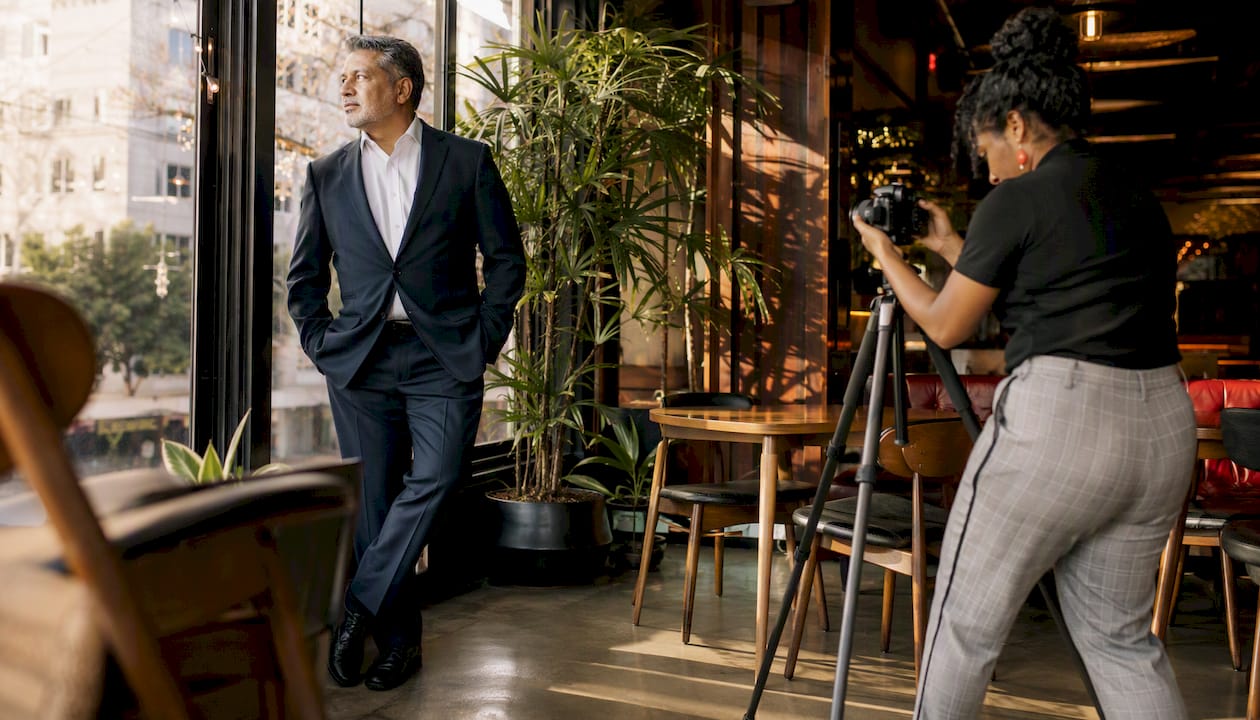
Corporate photography, the industry term for what most people call “company photography,” is the planned creation of original business images for specific professional purposes. It is not a casual phone shoot, and it is not a stock library subscription. Every image is created with a defined business use in mind, whether that is a website hero, a LinkedIn profile, a recruiting page, or a product catalog.
The core subtypes most organizations order:
- Executive headshots: — Individual portraits for leadership teams, used on websites, LinkedIn, press releases, and annual reports.
The distinction from stock photography matters more than most buyers realize. Stock images show generic people in generic spaces. Corporate photography shows your people, your space, and your brand. That specificity is what drives the trust and conversion lift that generic imagery cannot replicate.
What corporate photography services do businesses typically order?
Most companies do not need every service type in a single engagement. The practical starting point is matching each service to the business problem it solves.
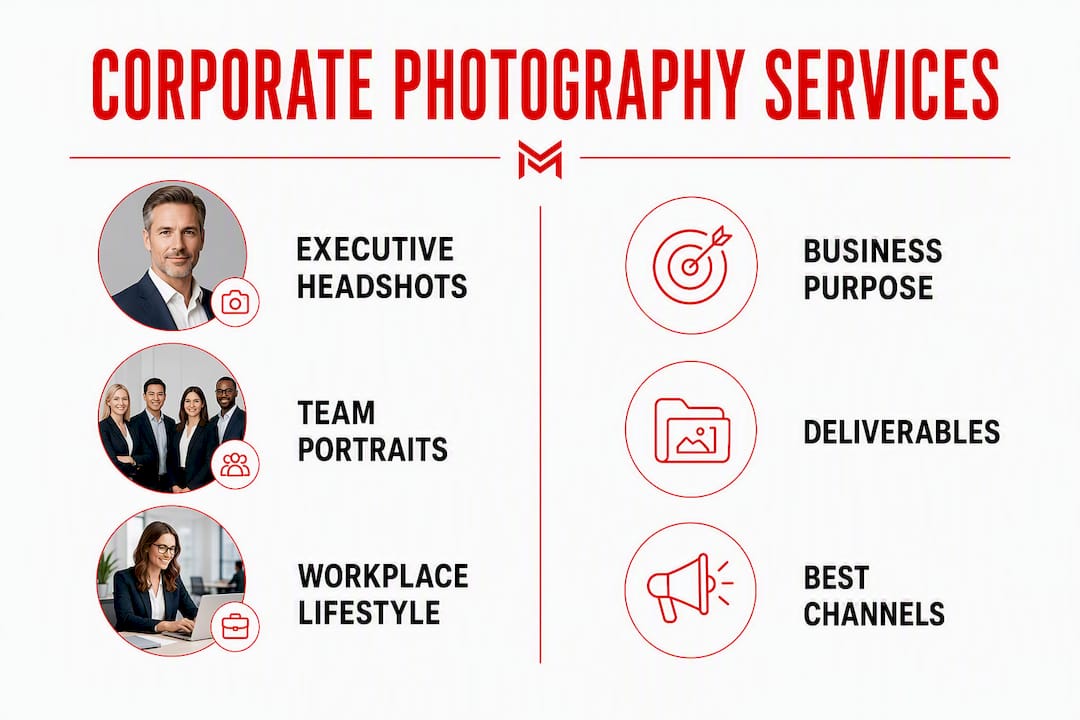
| Service Type | Primary Business Purpose | Typical Deliverables | Best-Use Channels |
|---|---|---|---|
| Executive headshots | Leadership credibility and personal brand | 2–5 retouched portraits per person, web and print sizes | Website, LinkedIn, press, annual report |
| Team portraits | Culture communication and brand alignment | Group and individual shots, consistent background/lighting | About Us page, recruiting, internal comms |
| Workplace/environmental | Authentic culture storytelling | 10–30 lifestyle images of real work settings | Career pages, GMB, social media |
| Product photography | Sales and eCommerce conversion | Clean-background and lifestyle product images | eCommerce, sales decks, print catalogs |
| Business event coverage | Brand visibility and content marketing | — | Social media, press, newsletters |
| 360-degree virtual tours | Local search engagement | Interactive tour embedded via Google | Google Business Profile, website |
Google Business Profiles with 360-degree virtual tours see measurably higher engagement, including more requests for directions, compared to listings without them. For service businesses with a physical location, that alone can justify the investment.
Pro Tip: When deciding between on-location and studio sessions, choose studio for maximum consistency across a large team, and on-location when your physical environment is part of your brand story. Many companies do both in a single shoot day.
Why should your business invest in professional photography?
Professional photography is the digital handshake your business extends before anyone picks up the phone. The conversion data backs this up: original corporate images outperform stock by 35% on conversion rate—a figure that applies across landing pages, LinkedIn profiles, and proposal decks.
The LinkedIn effect is particularly striking for executives. Professional headshots are linked to dramatically higher profile views, with industry-cited figures such as 21x more views compared to profiles without a professional portrait. For a business development leader or a managing partner, that visibility gap is a real pipeline issue.
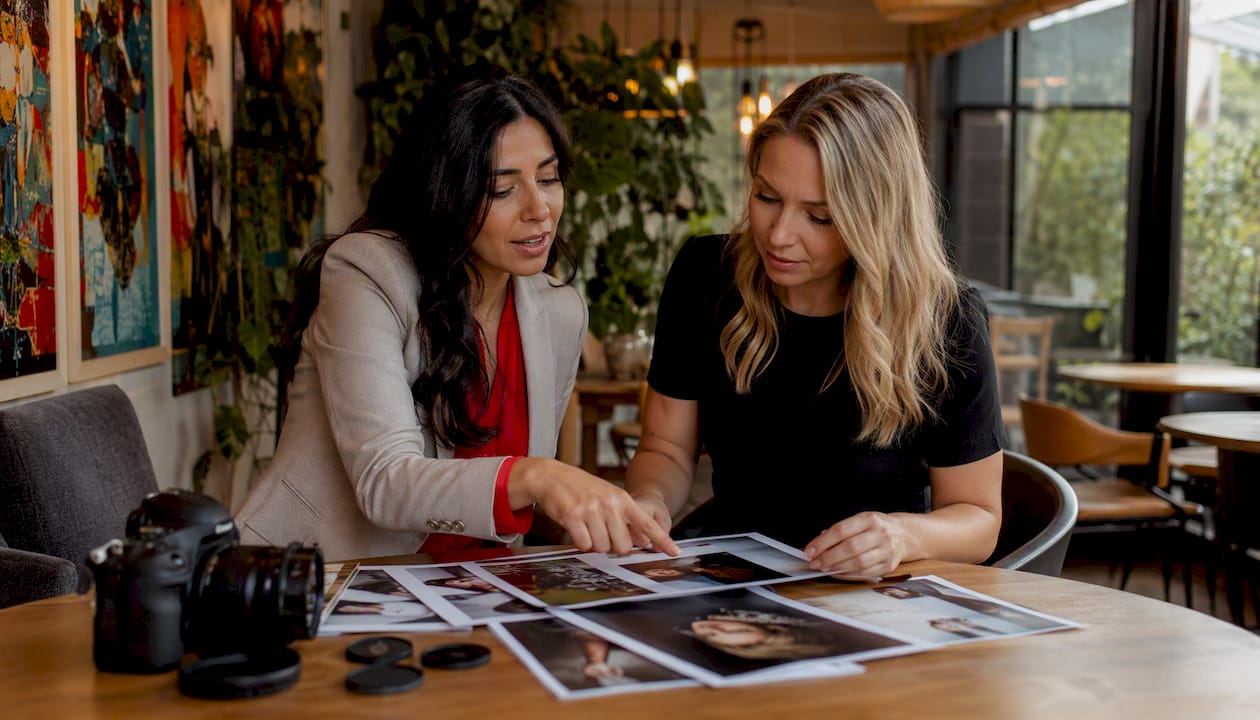
Recruitment is the second major lever. Authentic environmental images make companies more attractive to high-caliber candidates than sterile stock imagery. Jobseekers actively look for genuine glimpses of workplace culture before they apply, and authentic imagery consistently outperforms stock across every marketing and recruitment channel. A career page built on real photos of your actual team in your actual office signals something a stock photo never can: that this is a real place where real people want to work.
Beyond trust and recruitment, the secondary benefits compound over time:
- Brand alignment across touchpoints: Consistent lighting, backgrounds, and styling across all team photos prevent the visual drift that happens when images are collected piecemeal over years.
- Multi-channel asset reuse: One well-planned shoot supplies images for your website, social media, email campaigns, press kits, and sales decks simultaneously.
- Reduced stock licensing risk: Original images carry no usage restrictions, expiration dates, or surprise licensing fees.
How does the company photography process work, start to finish?
The workflow follows a clear arc: consult, shot list, shoot day, proofing, retouching, delivery. Understanding each phase helps you plan your calendar and set realistic expectations with your team.
- Initial consultation (1–2 weeks before booking): Discuss your goals, the number of subjects, locations, and the channels where images will be used. A good photographer asks about your brand guidelines, not just your schedule.
- Shot list and pre-shoot planning (1–2 weeks before shoot): A standard pre-shoot planning phase includes a confirmed shot list, location scouting or studio booking, wardrobe guidance sent to participants, and a timeline with buffers for late arrivals.
- Shoot day (half-day or full-day): Execution of the shot list. For team headshot days, a mobile studio setup allows the photographer to come to your office, which minimizes employee downtime. Real-time image review during the shoot, using tethered capture or a mobile studio monitor, lets you approve selects on the spot.
- Image proofing (2–5 business days after shoot): You receive a proof gallery, typically a password-protected online gallery, and select your final images. Real-time review options speed selection and reduce revision cycles significantly.
- Retouching (3–7 business days after selection): Professional retouching covers skin smoothing, background cleanup, color correction, and brand-consistent adjustments. Expedited retouching is available from many photographers for an additional fee.
- Final delivery (1–2 weeks after shoot, or faster with expedited options): Files delivered via a download link, typically including web-optimized JPEGs, high-resolution files for print, and social-crop variants.
Typical deliverables to confirm in writing: retouched JPEGs at web resolution (72 dpi, sRGB), high-resolution TIFFs or JPEGs for print (300 dpi), and social-format crops sized for LinkedIn, Instagram, and your website header.
What does company photography cost in the U.S.?
Pricing depends on three variables: scope (how many subjects, locations, and service types), retouching level, and licensing terms. Here are the common U.S. benchmarks for the most frequently ordered project types:
| Project Type | Typical U.S. Price Range | Notes |
|---|---|---|
| Individual headshot session | — | Includes 1–3 retouched images; studio or on-location |
| Small team on-site day rate | — | Covers 5–20 subjects; mobile studio setup included |
| Office environment shoot | — | Workplace lifestyle images; may include team portraits |
| Business event coverage | — | Half-day to full-day; edited gallery delivery |
| Brand campaign shoot | — | Multi-location, creative direction, extended licensing |
Factors that commonly push a quote higher:
- Retouching volume: Per-image retouching fees add up quickly for large teams; confirm whether retouching is included or billed separately.
- Usage rights: Broad licensing (national advertising, unlimited digital use) costs more than internal or web-only use.
- Travel and location fees: On-location sessions outside a photographer’s standard service area typically carry a travel surcharge.
- Hair and makeup: On-set styling services are often available as an add-on, particularly for executive portrait sessions.
- Creative direction: Concept development, prop sourcing, and art direction for brand campaigns add to the day rate.
For a deeper look at how professional portrait investment maps to business outcomes, the pricing model makes more sense when you calculate cost per asset rather than cost per shoot.
How do you prepare your team and location for a smooth shoot?
The single most effective prep step is distributing a clear shot list and schedule to every participant at least 48 hours before the shoot. When people know exactly when they are up and what to expect, late arrivals and wardrobe surprises drop sharply.
For employees and subjects:
- Wear solid colors or subtle patterns; avoid busy prints, bright white, or neon, which can create exposure problems.
- Grooming should be camera-ready: hair styled as you would for an important client meeting, minimal jewelry that could distract.
- Arrive 10–15 minutes early to settle in and review any posture or expression guidance from the photographer.
- Bring two outfit options when possible, particularly for executives who may need both formal and business-casual looks.
- Avoid heavy fragrance if hair and makeup artists are working in a small space.
For the location:
- Clear clutter from any area that will appear in environmental shots; a tidy background reads as a confident, organized company.
- Coordinate building access and parking for the photographer and any equipment cases in advance.
- Identify the best natural light windows and confirm whether window blinds can be adjusted on shoot day.
- Decide in advance which signage, branding elements, or product displays you want visible, and which to exclude.
- Send a brief pre-shoot email to all participants covering: arrival time, wardrobe guidance, location of the setup area, and a contact name for questions on the day.
Pro Tip: For large team shoots, assign an internal coordinator to manage the schedule and escort subjects to the setup area. This one step typically saves 30–45 minutes on a full-day shoot.
What file types, retouching levels, and usage rights should you confirm?
Always confirm usage rights and file formats before you sign a proposal. Post-delivery surprises, like discovering your license only covers web use when you need print, are avoidable with a five-minute conversation upfront.
File types and deliverable standards to request in writing:
- High-resolution JPEGs or TIFFs at 300 dpi for print and large-format use
- Web-optimized JPEGs at 72 dpi in sRGB color profile for websites and email
- Social-format crops (1:1 for LinkedIn and Instagram, 16:9 for website hero banners)
- Specify exact pixel dimensions for any platform-specific needs (LinkedIn profile: 400×400 px minimum; website hero: 1920×1080 px or wider)
Licensing checklist:
- Perpetual vs. time-limited rights: Most corporate headshot sessions grant perpetual use; brand campaign images may carry a one- to three-year license.
- Geographic scope: Confirm whether the license covers U.S.-only use or global distribution.
- Print vs. digital differentiation: Some contracts restrict high-volume print runs (billboards, national ad buys) under a standard license.
- Model releases: Confirm who signs them, when, and that the photographer retains signed copies. For employees photographed on company time, a standard employment agreement may cover this, but verify with your legal team.
Pro Tip: Specify exact deliverable crops and color profiles before the shoot, including 16:9 web hero, 1:1 social crop, sRGB web files, and Adobe RGB for print. Include these specs in the shot list and contract to avoid re-cropping or re-exporting later.
How do you choose the right company photographer?
Prioritize portfolio relevance, process clarity, and licensing transparency over the lowest quote. A photographer who is $200 cheaper but vague about usage rights or inconsistent in their portfolio style will cost you more in the long run.
Questions to ask during a consult:
- Can you show me headshot or team portrait work from companies in my industry or of similar size?
- What does your typical shoot-day schedule look like for a team of our size?
- Is retouching included, and how many rounds of revisions are standard?
- What happens if images need to be reshot due to technical issues?
- Do you carry professional liability insurance and backup equipment?
- Can you provide two or three client references I can contact?
- What does your standard licensing cover, and what would an expanded license cost?
Red flags to watch for:
- No clear licensing language in the proposal or contract
- A portfolio that jumps between wildly different styles, lighting setups, and quality levels
- Vague delivery timelines (“a few weeks”) with no written commitment
- No client testimonials, case studies, or references available
- Inability to explain their pre-shoot planning process or shot list approach
- Pressure to book immediately without a written scope of work
For scalable corporate photography across multiple office locations, also ask how the photographer maintains visual consistency between sessions held months apart.
Why treat company photography as a strategic asset?
A well-planned shoot becomes a multi-channel asset library that reduces future spending and supports recruitment and conversion simultaneously. One or two well-planned shoots can supply a year’s worth of marketing assets, keeping marketing teams moving without constant ad-hoc shoots.
The strategic framing shifts the math entirely. Instead of asking “What does this shoot cost?” the better question is “How many assets does this shoot produce, and what would each cost to source individually?” A half-day team shoot that yields 80 edited images, covering website, social, recruiting, and sales decks, is a different investment than a single headshot session.
Asset-planning checklist for maximum ROI:
- Bundle all company imagery needs into a single master shoot day whenever possible to minimize setup fees and preserve consistent lighting and style across assets.
- Plan crops for every channel before the shoot day: web hero, social square, email header, print collateral.
- Document styling guidelines (background color, wardrobe palette, lighting setup) so future sessions at other locations match the original.
- Maintain a central asset library with organized folders by subject, date, and approved use so teams can find and deploy images without hunting.
The employer-branding dimension is equally concrete. Authentic workplace photography signals a real, human workplace culture, which directly influences candidate perception during the hiring process. Companies that invest in team headshots for brand trust consistently report stronger candidate engagement on career pages compared to those using stock imagery.
Key Takeaways
Professional company photography is a strategic brand investment that drives conversion, recruitment, and multi-channel asset reuse when planned and licensed correctly.
| Point | Details |
|---|---|
| Conversion lift is documented | Original corporate images produce a 35% higher conversion rate than stock imagery across web and marketing channels. |
| Bundle shoots for maximum ROI | Combining headshots, team portraits, and workplace lifestyle images in one session minimizes cost and creates a consistent visual library. |
| Confirm licensing before signing | Always verify perpetual vs. time-limited rights, geographic scope, and print vs. digital terms in the contract before the shoot day. |
| Pricing scales with scope | U.S. individual headshot sessions run —; full team on-site days run —; brand campaigns start at —. |
| Metroplex Headshots for DFW teams | Metroplex Headshots offers bundled company sessions, mobile studio on-location options, real-time image review, and fast delivery for Dallas–Fort Worth businesses. |
The case for treating your photos as a brand decision, not a budget line
Most businesses approach a company photo shoot the way they approach buying office supplies: find the lowest price, get it done, move on. That mindset is exactly why so many corporate websites look interchangeable. The photography is technically adequate and emotionally inert.
What I see consistently is that the companies whose images actually work, the ones that stop a scroll or make a candidate think “I want to work there,” made one different decision. They treated the shoot as a brand decision. They thought about what emotion they wanted a stranger to feel in the first three seconds of landing on their About page. They briefed their team on wardrobe and posture not because they were being precious, but because they understood that visual consistency is a trust signal.
The businesses that get the most from corporate photography are not necessarily the ones with the biggest budgets. They are the ones who show up with a shot list, a clear sense of their brand identity, and a photographer who asks the right questions before picking up a camera. The secret sauce of professional branding is not the equipment. It is the intention behind the shoot.
If you are a DFW executive, HR leader, or marketing director reading this, the question is not whether to invest in professional photography. The question is whether you are going to treat it as a one-off expense or as the asset-creation exercise it actually is. One approach gets you a folder of headshots. The other gets you a visual identity that works across every channel for the next two years.
Metroplex Headshots brings the studio to your DFW office
For Dallas–Fort Worth businesses that want professional results without pulling their team off-site for half a day, Metroplex Headshots offers a direct alternative: a mobile studio that comes to your location, combined with real-time image review so your team approves selects before the photographer packs up.

Sessions are structured as bundled company packages, covering executive headshots, team portraits, and workplace lifestyle images in a single coordinated shoot day. Half-day on-location headshot days work well for teams of 5–20 people; full-day engagements add environmental and lifestyle coverage for a complete visual library. Retouching is professional and thorough, with expedited delivery available when you are working against a launch or an event deadline. Every session includes a pre-shoot consultation, a confirmed shot list, and background editing options so your images are ready to deploy across web, LinkedIn, and print without additional production work.
Review the corporate headshot packages to find the scope that fits your team, or go straight to the business portrait investment page to understand exactly what you are getting for your budget. Ready to move forward? Contact Metroplex Headshots to request a shot list and quote for your next company session.
Useful sources and further reading
- Corporate Photography Workflow Explained for Business Brands — Metroplex Headshots’ detailed breakdown of the pre-shoot, shoot-day, and post-production phases, including sample timelines and real-time review options.
- Brand Photography Benefits — A practical look at how planned photography sessions reduce ongoing content costs and supply marketing teams with a year’s worth of on-brand imagery.
- A Practical Guide to Corporate Photography Services — Covers service types, LinkedIn visibility data, and the employer-branding case for authentic workplace imagery.

